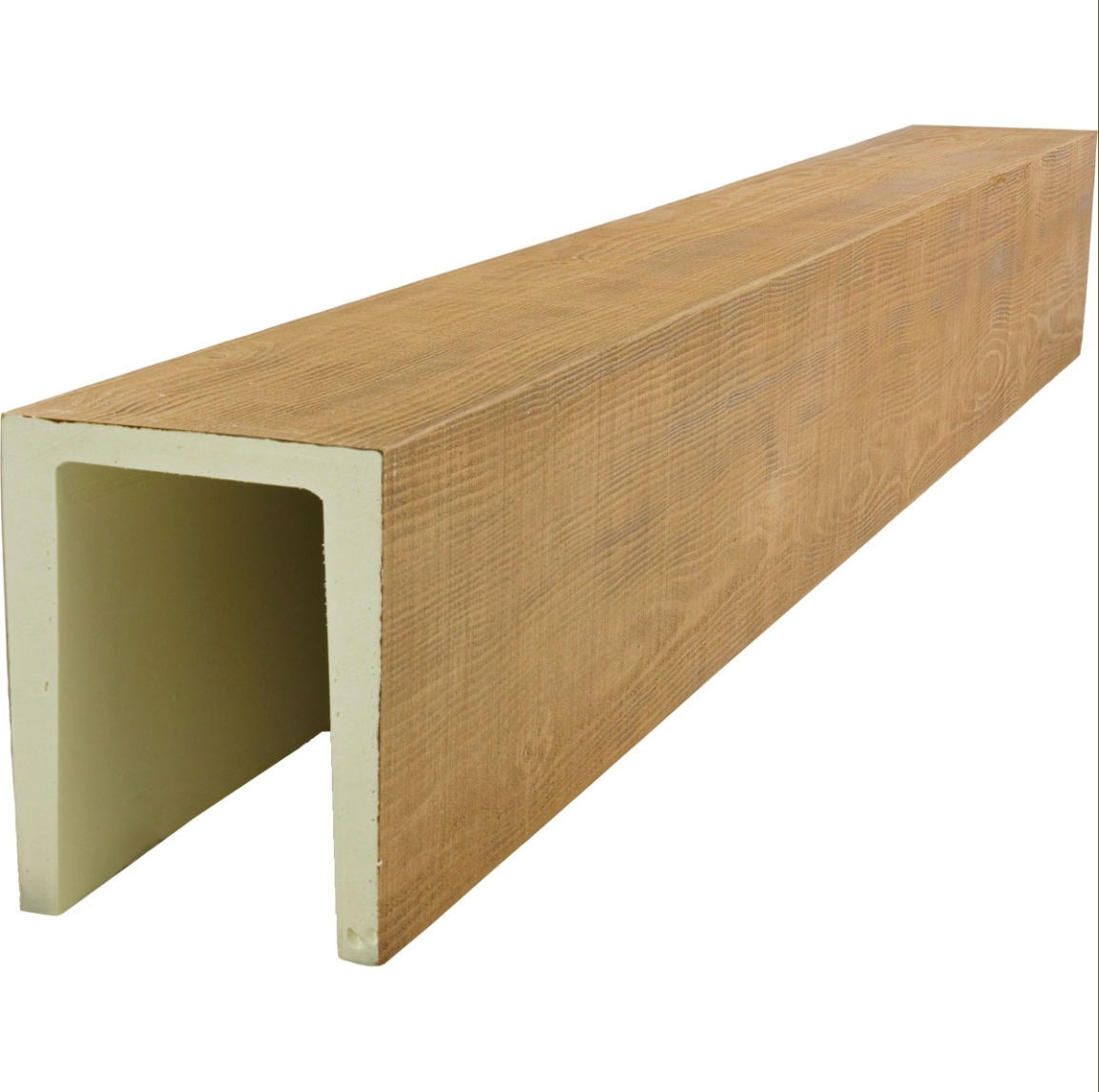
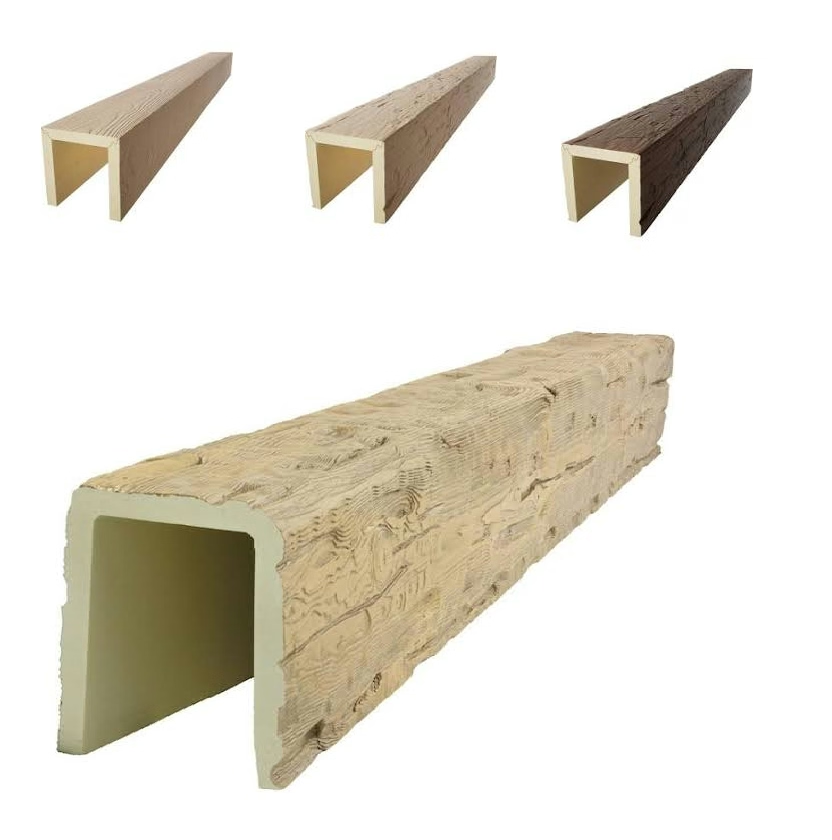
The language of material description reveals assumptions that may no longer reflect reality. "Synthetic" and "man-made" once implied inferiority—cheap imitations of authentic materials, designed to deceive rather than to provide genuine value. Contemporary manufactured products have evolved beyond these associations, with synthetic timber beams offering performance characteristics that natural materials cannot match across multiple dimensions. The eco-friendly dimension adds further justification for choosing manufactured alternatives.
Environmental awareness has transformed how specification professionals evaluate materials. The assumption that natural products are inherently more sustainable than manufactured ones no longer withstands scrutiny. When complete lifecycle analysis replaces surface-level categorization, manufactured products from responsible producers often demonstrate advantages over natural alternatives. Synthetic timber beams merit this sophisticated evaluation.
The Evolution of Synthetic Material Perception
Modern manufacturing has achieved levels of precision and quality control that earlier production methods could not approach. Computer-controlled equipment produces components with tolerances measured in fractions of millimeters. Formulation science has developed materials with property combinations impossible in natural products. Quality assurance processes catch deviations before products reach customers. These capabilities translate to synthetic timber beams that perform consistently at levels natural wood cannot match.
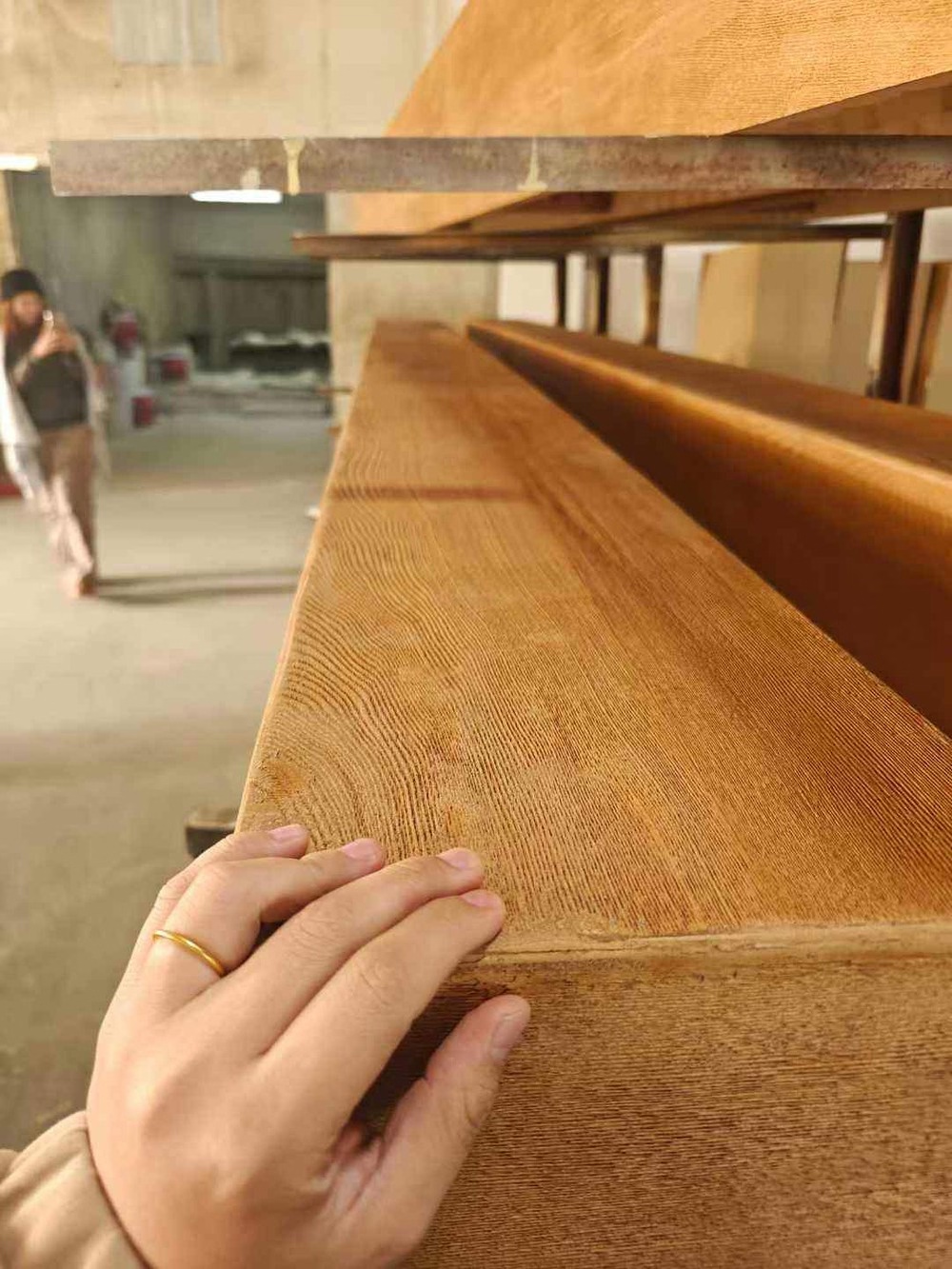
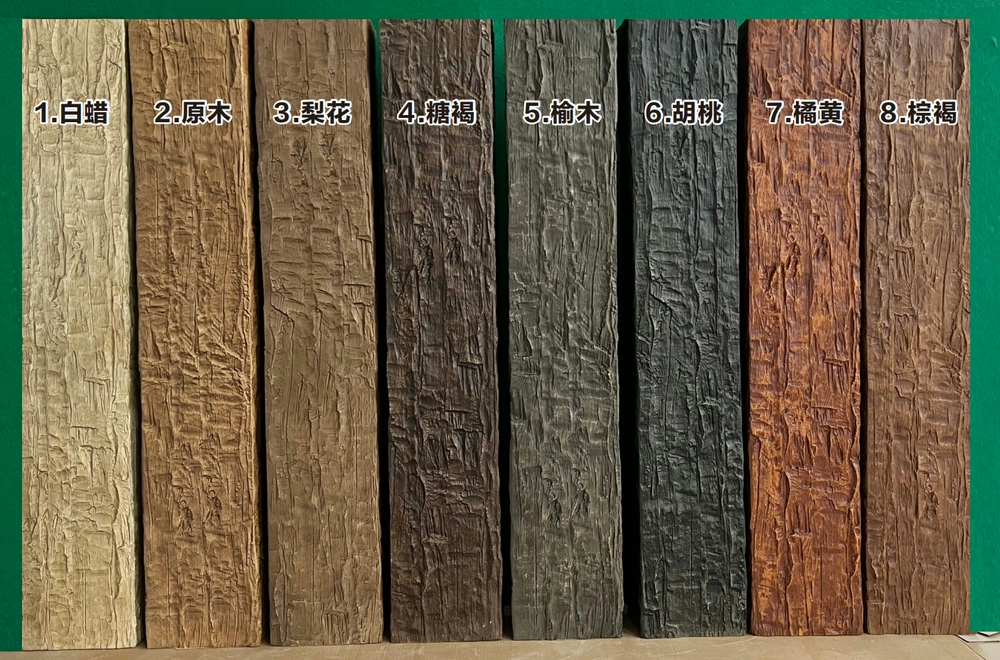
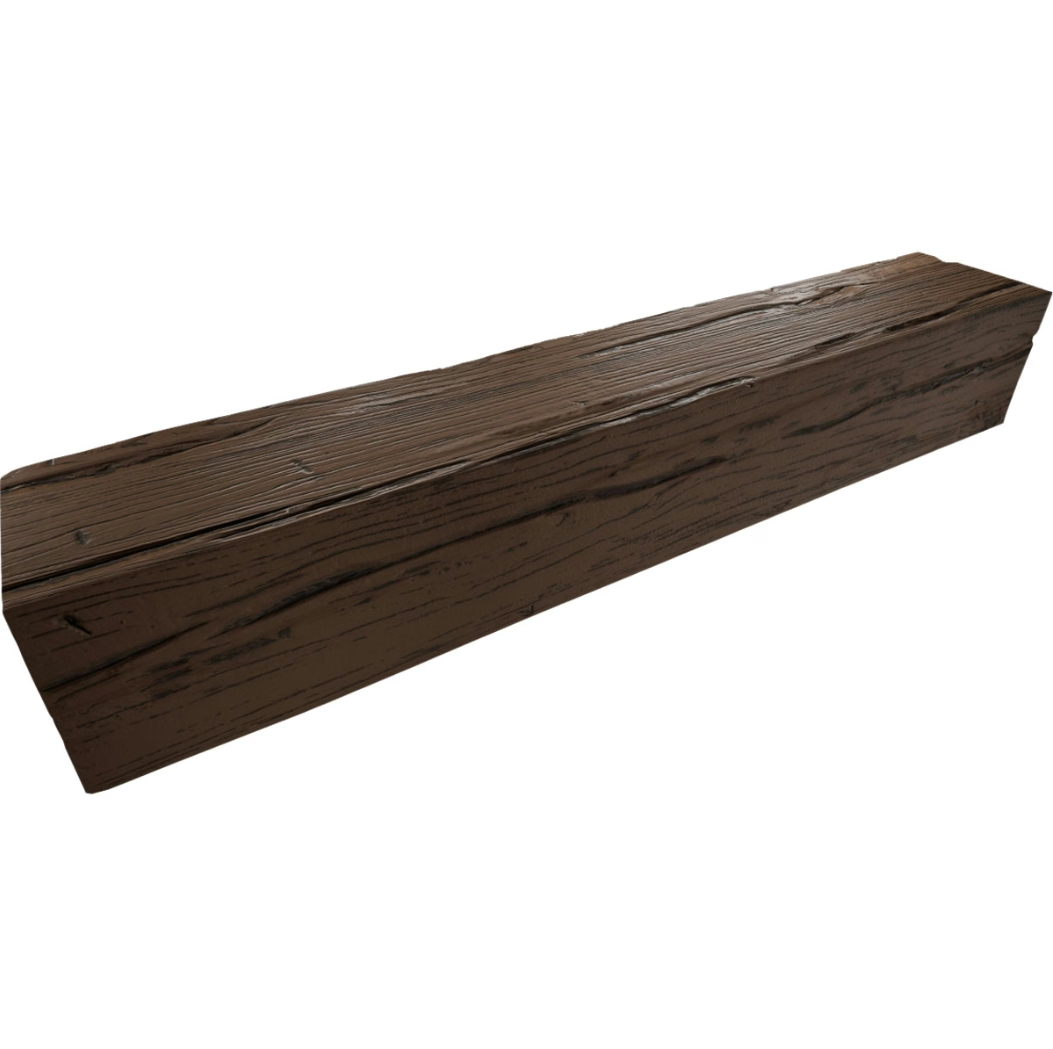
Surface aesthetics have progressed similarly. Early synthetic wood imitations—plastic paneling, painted foam trim—bore little resemblance to genuine timber. Contemporary manufacturing techniques produce textures and appearances that fool casual observers. Grain patterns, color variations, and surface qualities replicate natural wood convincingly while providing benefits authentic timber cannot match.
The gap between perception and reality creates opportunities for education. Design professionals who specify synthetic timber beams based on direct experience with current products find that client concerns about authenticity dissolve when confronted with actual appearance and performance. The "it's synthetic" objection reflects outdated product knowledge rather than current manufacturing capabilities.
Environmental Advantages of Synthetic Production
Manufacturing efficiency of synthetic beams exceeds timber processing across several dimensions. Material utilization—how much of raw input becomes useful product—approaches very high percentages in precision manufacturing. Timber processing generates substantial waste in sawdust, cutoffs, and rejected pieces that never become usable product. This efficiency difference compounds across production volumes to meaningful environmental benefit.
Transportation impacts favor synthetic beams for many applications. Timber, particularly specialty species or large dimensions, often travels substantial distances from forest to mill to distribution to project. Synthetic beams can be produced regionally relative to market areas, reducing transportation distances and associated emissions. The weight advantage—polyurethane is substantially lighter than equivalent wood volumes—further reduces transportation energy requirements.
Production location flexibility allows synthetic manufacturing to locate near renewable energy sources. Facilities powered by solar, wind, or hydroelectric reduce the carbon intensity of production dramatically compared to facilities operating on fossil fuel grids. This advantage will increase as electricity grids continue decarbonizing through renewable deployment.
Durability and the Environmental Cost of Replacement
The extended service life of synthetic beams relative to natural wood provides perhaps their most significant environmental advantage. Every material carries embodied environmental impact from extraction, processing, and manufacturing. Materials that last longer spread these initial impacts across longer service periods, reducing the annual environmental cost of the function they provide.
Wood ceiling beams in demanding environments often require replacement within ten to fifteen years. Moisture exposure, UV degradation, physical damage, or simple style changes drive replacement decisions. Each replacement cycle restarts the environmental accounting, adding new embodied impacts while the old material enters waste streams. Synthetic beams that maintain appearance and performance for decades avoid these replacement cycles.
Maintenance requirements contribute to lifecycle environmental impact. Natural wood often needs periodic refinishing, sealing, or treatment that involves chemical inputs, transportation to apply products, and labor energy. Synthetic beams maintain their appearance with simple cleaning that involves minimal environmental impact. The maintenance differential accumulates substantially over the service life comparison.
Manufacturing Processes and Environmental Innovation
Contemporary synthetic beam manufacturing incorporates environmental innovations that continue improving performance. Water-based formulations replace solvent-based alternatives, eliminating VOC emissions that affected both factory workers and ambient air quality. Recycled material content diverts industrial byproducts from disposal while reducing virgin material demand.
End-of-life planning represents the frontier of manufacturing environmental improvement. Some producers design products for eventual deconstruction and recycling into new applications, creating closed-loop material flows. Others partner with recycling facilities that process polyurethane materials at end of service life. These initiatives move the industry toward circular economy principles that eliminate traditional disposal impacts.
Supply chain transparency enables specification professionals to make informed environmental decisions. Manufacturers that disclose formulation contents, manufacturing locations, energy sources, and environmental certifications allow meaningful evaluation rather than assumption-based selection. This transparency rewards responsible producers while encouraging industry-wide improvement.
Applications Where Synthetic Beams Excel
Humid environments present natural wood with its most significant challenge. Bathrooms, pools, spas, and exterior applications subject beams to moisture conditions that eventually compromise even treated timber. Synthetic beams perform reliably in these conditions, maintaining appearance and structure indefinitely. The environmental benefit of avoiding repeated replacement justifies synthetic specification in these applications.
Large-scale commercial installations often favor synthetic beams for consistency and logistics reasons. Projects requiring hundreds of identical beams benefit from manufacturing precision that ensures exact replication. Natural wood, even from the same batch, exhibits variations that complicate large installations. The efficiency advantages of synthetic production also favor budget-conscious commercial specifications.
Historic restoration projects that require replicating existing woodwork benefit from synthetic reproduction capabilities. Modern manufacturing can match existing profiles precisely, producing replacement elements that blend with original construction. The consistency of synthetic materials also aids matching when multiple replacements are needed across a single project.
Changing the Conversation About Synthetic Materials
The specification conversation has shifted from defending synthetic materials against natural alternatives to presenting them as positive choices with their own merits. Today's synthetic timber beams offer documented performance advantages, environmental benefits through extended service life, and aesthetic qualities that satisfy discerning design professionals. The material category has earned its place in serious design consideration.
Client communication requires updated language that reflects current product capabilities. Rather than apologizing for synthetic materials or justifying their use defensively, specification professionals can present manufactured beams as solutions that address specific project requirements. The vocabulary of possibility—performance, durability, sustainability, consistency—replaces the language of compromise that characterized earlier synthetic material marketing.
The evolution of synthetic timber beams mirrors broader trends in material science and manufacturing. Products that were once clearly inferior to natural alternatives now compete favorably across multiple dimensions. Keeping current with manufacturing advances ensures that specification recommendations reflect actual product capabilities rather than historical reputation.
Technical References
ASTM standards cited in every specification
Test Data
Lab results from internal testing program
Updated 2026
Reviewed against current product specs