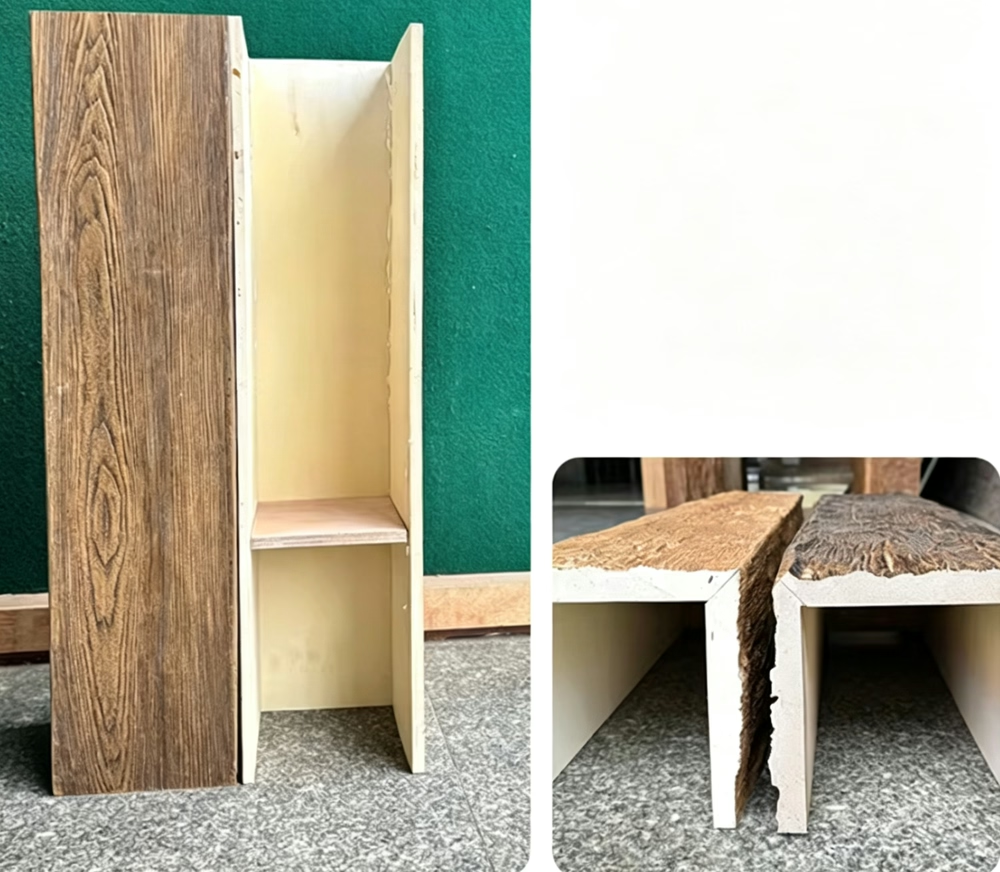
The intersection of polymer chemistry and woodworking creates products that challenge casual differentiation. Synthetic resin simulation technology has progressed to the point where PU beams convincingly replicate wood species, grain patterns, and surface characteristics that once required genuine timber. Understanding how this technology works helps specification professionals make informed decisions about when and how to incorporate these materials effectively.
Resin simulation involves more than surface coating or texturing. The complete material system—base formulation, reinforcement if present, surface texture, color application, and finishing—contributes to realistic appearance. Each component has evolved substantially, with contemporary products bearing little resemblance to earlier generations that might have disappointed early adopters.
The Science of Synthetic Resin
Polyurethane belongs to the broader polymer family, materials built from chained molecular structures that provide particular property combinations. The chemistry of polyurethane synthesis allows substantial formulation flexibility—adjusting molecular weights, crosslink density, and additive packages produces materials ranging from rigid foam to flexible elastomer. For beam applications, rigid formulations with good dimensional stability and surface accept properties provide optimal performance.
The closed-cell structure of quality polyurethane contributes to both performance and appearance. Cells that don't interconnect prevent water penetration while providing consistent substrate for surface treatments. The uniformity of this structure affects how successfully surface texturing and coloring can achieve wood-like appearance; inconsistent substrates complicate realistic simulation.
Additives modify base resin properties to achieve particular characteristics. UV stabilizers resist sunlight degradation. Impact modifiers improve durability. Flame retardants address building code requirements. Colorants provide base tones that surface treatments layer over. Each additive serves specific purposes while affecting the overall material system; formulation expertise determines optimal combinations.
Surface Texture Technology
The surface of a wood beam contributes as much to its character as its color or profile. Wood surfaces exhibit grain patterns, pore structures, machining marks, and subtle wear that combine to create tactile and visual authenticity. Synthetic simulation must address all these texture elements to achieve convincing results.
Grain simulation employs multiple techniques depending on desired effect and manufacturing capabilities. Embossed textures use engraved molds that compress material during forming, creating surface relief that reads as wood grain under appropriate lighting. Cast textures capture mold surface details directly, suitable for smaller-scale features like end grain or knot formations. Applied textures use coatings or overlays that add surface character after primary forming.
The depth and subtlety of texture affects how convincingly beams read as wood at different viewing distances. Heavy texture that reads clearly from across a room might seem exaggerated when examined closely; subtle texture that reads perfectly in direct inspection might disappear in general room viewing. Premium manufacturers balance these requirements across viewing distances, creating textures that satisfy both casual observation and close scrutiny.

Color Application and Realism
Wood coloration involves complex layering of tones, grain highlighting, and finish effects that simple solid colors cannot replicate. Achieving realistic wood appearance requires color application systems that build these layers systematically, creating depth and complexity that single-coat application cannot achieve.
Multi-step color processes begin with base tone application that establishes the wood species fundamental hue. Subsequent layers add grain highlighting, shadowing in pores and recesses, and color variation that suggests natural wood's inherent non-uniformity. These layers interact with each other and with surface texture to produce the complex appearance that reads as authentic.
Toning and glazing techniques, borrowed from wood finishing practice, extend to synthetic materials with appropriate adaptations. Glazes pool in textured recesses to create depth; toners add subtle color shifts across surfaces. These finishing steps require skilled application and appropriate materials but produce results that distinguish premium products from commodity alternatives.
Knot and Character Mark Reproduction
Knots present particular simulation challenges due to their irregular shapes, complex color transitions, and position-specific appearance variations. A knot at a board's end differs from one at the center; tight knots differ from loose ones; dark knots differ from light. Convincing knot simulation must address this variability while maintaining consistency across beam installations.
Premium manufacturers invest in knot reproduction that captures authentic character rather than creating generic approximations. Reference specimens guide mold development; multiple variations ensure that adjacent beams don't appear duplicative; color application addresses the complex tonal transitions that make knots visually distinctive. The investment in this detail separates premium from economy products.
Character marks beyond knots—mineral streaks, burl formations, bark inclusions, checking and cracking—add authenticity when appropriately applied. Not every beam requires heavy character marking; restrained application creates subtle naturalness while aggressive marking creates parody. Judgment about appropriate character levels affects whether simulation reads as authentic or theatrical.
Performance Advantages of Resin Simulation
Beyond aesthetics, resin simulation enables performance characteristics impossible in natural wood. Moisture resistance eliminates the dimensional instability that affects timber in humid conditions. UV-stable formulations resist the surface degradation that eventually affects even protected wood. Impact resistance prevents the dents and damage that wood surfaces accumulate through normal use.
These performance advantages translate to practical benefits for building owners. Installations that maintain their initial appearance for decades without replacement, refinishing, or repair represent value that initial material costs alone cannot capture. The total cost of ownership over building service life often favors synthetic materials despite higher initial investment.
Maintenance requirements diminish substantially with synthetic resin beams. Natural wood benefits from periodic refinishing, sealing, and protective treatment that involves ongoing cost and disruption. Synthetic beams maintain their appearance through simple cleaning, freeing building owners from maintenance obligations that natural materials impose.
Evaluating Simulation Quality
Hands-on inspection reveals simulation quality that photographs cannot communicate. Running fingers across beam surfaces detects texture authenticity; examining edge details confirms manufacturing precision; comparing adjacent beams verifies consistency. These tactile and visual checks matter more than specifications when evaluating actual product quality.
Lighting variation affects how convincingly any surface reads. Natural daylight, incandescent, fluorescent, and LED sources all produce different appearance effects. Evaluating beams under multiple lighting conditions—showroom lighting, natural daylight, and intended installation lighting—reveals how convincingly the simulation holds up across practical viewing conditions.
Manufacturer reputation and portfolio provide indirect quality indicators. Companies with established histories producing high-quality faux wood products have refined their simulation techniques over years of development. Visiting completed installations or viewing documentation from similar projects provides realistic expectations about what specific products deliver.
Technical References
ASTM standards cited in every specification
Test Data
Lab results from internal testing program
Updated 2026
Reviewed against current product specs


