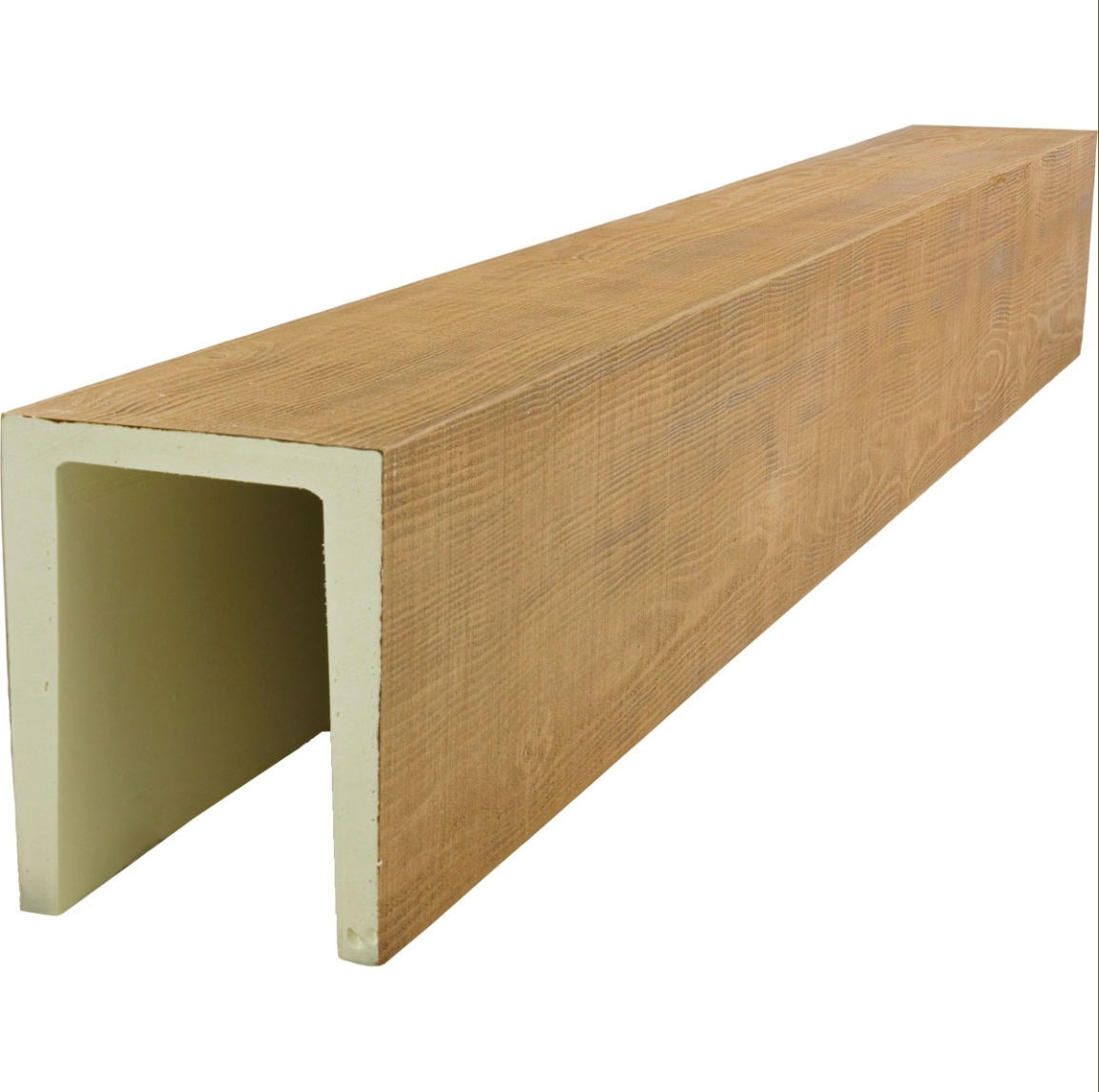
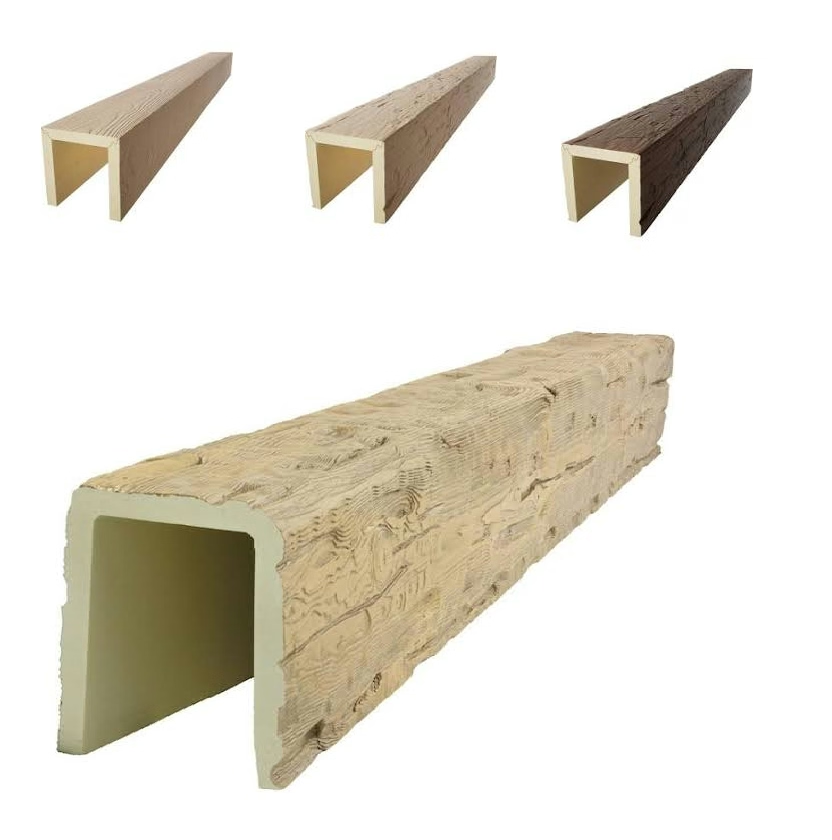
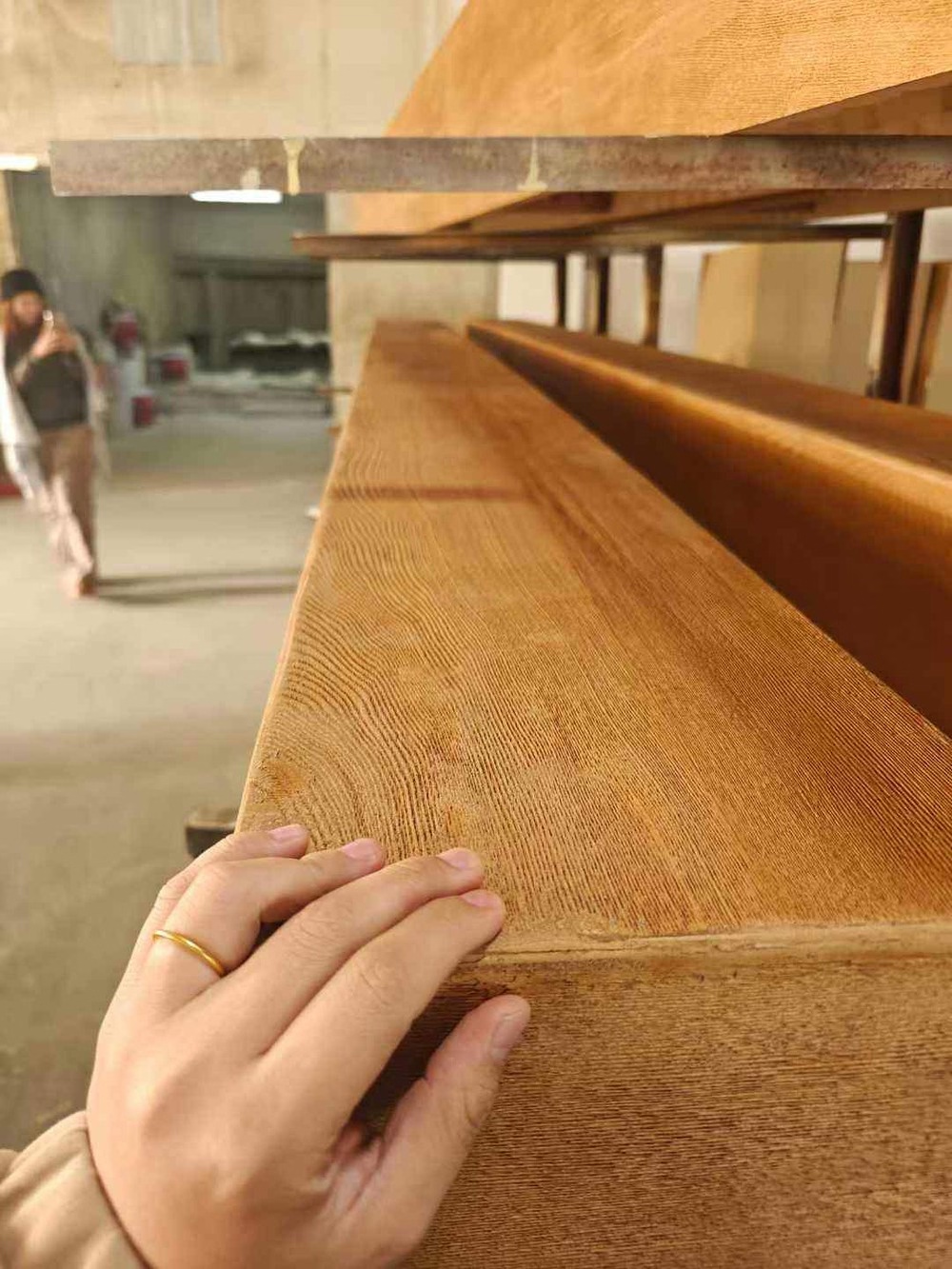
Moisture tolerance represents a critical performance parameter for ceiling beam materials, particularly in applications where humidity, condensation, or direct water exposure occurs. Understanding polyurethane's moisture tolerance characteristics enables informed specification decisions that match material capabilities to application requirements. This technical guide provides the detailed information architects, designers, and specification professionals need.
The comparison between polyurethane and natural wood moisture performance frequently arises in beam selection discussions. While natural wood absorbs moisture that leads to dimensional instability, rot, and structural degradation, polyurethane's closed-cell structure prevents moisture penetration entirely. This fundamental difference in material behavior explains polyurethane's superior performance in moisture-challenged applications.
Material Composition and Moisture Resistance
Polyurethane's moisture resistance derives from its closed-cell structure, where cells are completely enclosed and do not interconnect. This cellular geometry prevents liquid water from penetrating the material regardless of surface exposure duration or intensity. Water might coat the surface but cannot enter to affect dimensional stability or structural integrity.
The formulation of polyurethane affects moisture resistance quality. Premium formulations maintain closed-cell structure consistently throughout the material cross-section. Lower-quality formulations might include additives or processing variations that create pathways for moisture intrusion. Specification from established manufacturers with documented quality processes ensures consistent moisture resistance.
Density affects moisture resistance indirectly through cell structure quality. Higher-density formulations generally produce more consistent cell structure with fewer defects that might allow moisture penetration. While polyurethane at any density resists moisture better than wood, premium applications may warrant premium density specifications for maximum reliability.
Water Absorption Testing and Results
Standard testing protocols quantify moisture resistance through water absorption measurements. These tests submerge specimens in water for specified durations, then measure weight gain to determine absorption percentage. Quality polyurethane typically absorbs less than 2% by weight even after extended submersion, compared to wood species that may absorb 20-30% or more.
Long-term immersion testing extends beyond standard protocols to evaluate performance under sustained exposure conditions. Specimens submerged for weeks or months demonstrate whether initial moisture resistance maintains or degrades over time. Premium polyurethane formulations show no significant change in absorption rates regardless of immersion duration.
Accelerated aging tests simulate long-term exposure through cycling between wet and dry conditions, temperature extremes, and UV exposure. These tests evaluate whether moisture resistance remains consistent despite environmental stress that might degrade other materials. Polyurethane's stability under these conditions demonstrates its suitability for demanding applications.
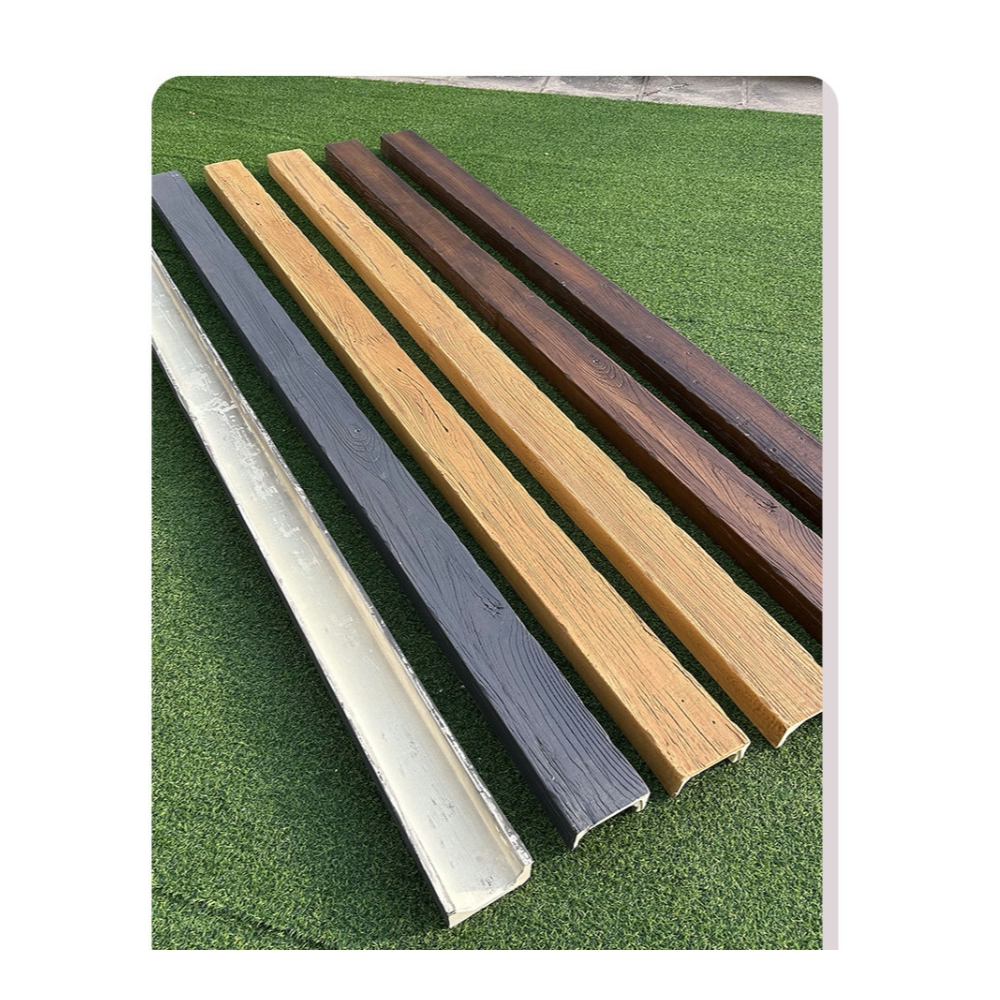
Dimensional Stability Under Moisture Exposure
Water absorption causes natural wood to expand, with dimension changes that create fitting problems, joint failures, and appearance degradation. Polyurethane's moisture impermeability prevents this dimensional instability, maintaining precise dimensions regardless of atmospheric moisture content or occasional water exposure.
Thermal cycling in humid conditions particularly challenges materials that absorb moisture. Water within material structure expands when frozen, creating internal stresses that accumulate over cycles. Polyurethane's closed cells contain no free water to freeze and expand, avoiding this failure mode entirely.
Humidity cycling—repeated transitions between humid and dry conditions—causes wood to expand and contract continuously, eventually creating checking, cracking, or joint separation. Polyurethane's dimensional stability under these conditions prevents the cumulative damage that affects natural materials.
Performance in Specific Application Environments
Bathroom installations expose beams to sustained high humidity from shower steam and bathing activities, punctuated by occasional direct water contact. Polyurethane beams in these conditions maintain appearance and dimensions indefinitely, while natural wood alternatives typically show moisture damage within years.
Kitchen environments present cooking vapor, temperature fluctuations, and potential water spills. Beams above ranges or near sinks experience humid conditions that accumulate over time. Polyurethane handles these conditions without the maintenance interventions that wood typically requires.
Indoor pool areas, spas, and aquatics facilities represent the most demanding moisture environments in residential and light commercial contexts. Constant high humidity, chemical exposure from water treatment, and potential direct water contact create conditions where only polyurethane or specially-treated wood can perform adequately. Polyurethane's consistent performance makes it the obvious choice for these applications.

Temperature Effects on Moisture Performance
The relationship between temperature and moisture varies with material type. Wood's moisture absorption rate changes with temperature, creating dimensional variations as environmental conditions shift. Polyurethane's moisture impermeability is not temperature-dependent, maintaining consistent performance across the temperature range buildings experience.
Cold temperatures create condensation when warm, moist indoor air contacts cool surfaces. Water that condenses on polyurethane surfaces evaporates when conditions normalize without affecting the material. Water that penetrates wood causes problems proportional to absorption amount.
Freeze-thaw cycling affects wet wood severely as water within the structure expands when freezing. Polyurethane contains no free water to freeze, avoiding this damage mechanism regardless of temperature cycling severity.
Humidity Rating Specifications
Industry standards provide humidity ratings that classify materials by acceptable exposure conditions. Interior applications typically involve relative humidity below 60%, which all quality polyurethane handles easily. Humid environments may reach 80% or higher; polyurethane tolerates these conditions without degradation.
Condensation potential relates humidity to surface temperatures. When surface temperature falls below dew point, condensation forms regardless of material type. The significance of this condensation depends on material response—polyurethane ignores it while wood absorbs it.
Mold resistance complements moisture tolerance. Mold requires moisture and organic food source to grow. Polyurethane provides neither—its closed surface offers no moisture absorption and its chemistry provides no mold food. This combination makes polyurethane beams inherently mold-resistant in ways wood cannot match.
Installation Considerations for Moisture-Prone Areas
Proper installation in moisture-prone areas requires attention to complementary details. Ventilation that reduces humidity levels below saturation protects all materials including finishes. Drainage that prevents water accumulation on beam surfaces prevents any potential surface issues.
Fastener selection affects long-term moisture performance. Metal fasteners in humid environments risk corrosion that stains or damages adjacent surfaces. Stainless steel, polymer-coated, or non-metallic fasteners maintain appearance and function despite moisture exposure.
Sealant application at joints and connections prevents water penetration into hidden spaces. Even though polyurethane resists moisture directly, water entering gaps might reach fasteners, adjacent wood components, or structural elements. Professional installation addresses these details systematically.
Quality Verification and Warranty Considerations
Manufacturer documentation should verify moisture resistance claims with test data. Products claiming moisture resistance without supporting documentation rely on marketing rather than engineering. Requesting technical data sheets and test reports validates performance claims.
Warranty coverage for moisture-related claims indicates manufacturer confidence in product performance. Comprehensive warranties that explicitly address moisture exposure demonstrate the reliability premium manufacturers expect from their products.
Third-party certification from organizations specializing in building material testing provides independent verification. Products carrying certifications from recognized testing laboratories have been evaluated against established standards, providing specification confidence beyond manufacturer claims alone.
Technical References
ASTM standards cited in every specification
Test Data
Lab results from internal testing program
Updated 2026
Reviewed against current product specs