Premium faux wood ceiling beams have established themselves as essential elements in contemporary interior design, offering architects and homeowners practical alternatives to reclaimed timber without sacrificing authentic character. Understanding what distinguishes premium products from economy alternatives enables informed specification decisions that serve projects well over time.
Density and Structural Characteristics
Premium classifications begin with material density specifications that directly influence visual quality and durability. Products weighing between 18 and 22 pounds per cubic foot balance realistic mass with manageable installation weight, enabling single-person handling of pieces up to 16 feet long. Lighter alternatives often sacrifice detail depth necessary for convincing wood replication.
The relationship between density and detail resolution deserves careful attention during specification. Higher-density polyurethane formulations accept sharper router bits and more aggressive carving tools, producing textures that capture fine woodgrain details and authentic saw marks. This capability translates directly to visual authenticity that withstands close inspection from below.
Impact resistance improves with density, protecting beams from job-site damage during installation and subsequent service. Premium products resist denting from accidental contact and maintain surface integrity through routine cleaning and maintenance. This durability proves particularly valuable in commercial installations where furniture moving and merchandise handling create ongoing impact risks.
Texture Classification Systems
Professional texture classification provides common language for specifying surface characteristics. Standard categories include rough-sawn, hand-hewn, skip-troweled, and sandblasted finishes, each requiring specific manufacturing techniques and tooling configurations. Understanding these categories prevents specification mismatches that delay projects while replacements are fabricated.
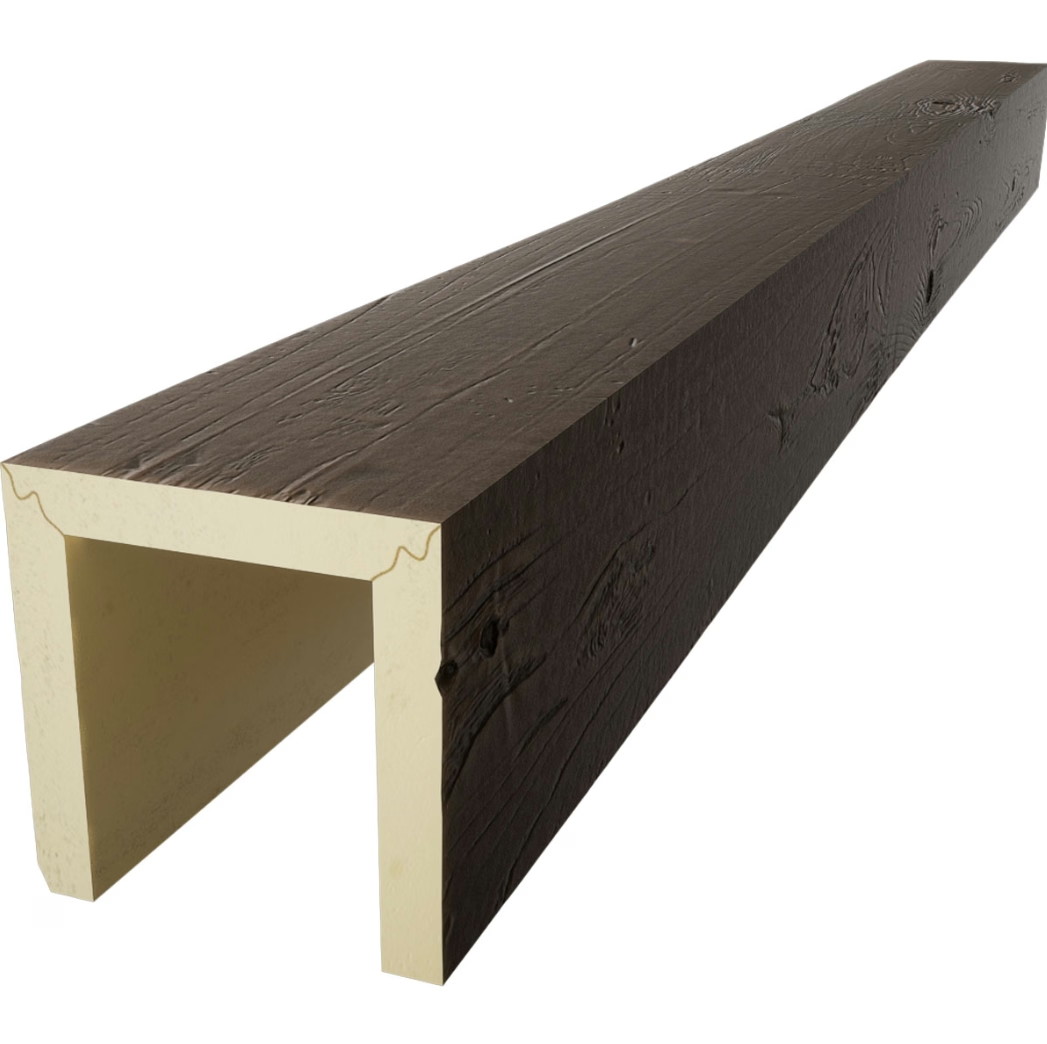
Rough-sawn textures replicate lumber milled with aggressive blades, creating deep furrows and pronounced grain patterns characteristic of reclaimed barn wood. Manufacturing processes use specialized router bits that score polyurethane surfaces with randomized patterns, avoiding the repetitive appearance that plagues cheap imitations. Premium products incorporate multiple passes with varying bit depths to build authentic complexity.
Hand-hewn textures simulate timbers shaped by axe and adze, featuring characteristic flat spots and curved gouges where tools removed material. Creating convincing hand-hewn appearance requires understanding traditional timber preparation—builders would hew from two opposing faces, leaving rounded corners where tool paths met. Premium manufacturers replicate these characteristics through programmed tool paths that vary depth and direction.

Fire Performance and Building Code Compliance
Ceiling installations face stringent fire performance requirements in most jurisdictions. Premium products should carry documented flame spread ratings tested according to ASTM E84 or equivalent standards, with Class A ratings typically required for commercial applications and often preferred for residential installations. Documentation from accredited laboratories provides verification that marketing claims meet actual performance.
Smoke development ratings matter as much as flame spread for life safety considerations. Products generating excessive smoke during burning create evacuation hazards that flame spread ratings alone don't address. Premium manufacturers optimize formulations to minimize smoke production while maintaining flame resistance, achieving balanced performance across multiple fire characteristics.
Thermal barrier requirements may apply to certain ceiling installations depending on building type and occupancy classification. Understanding whether assemblies require tested fire-rated assemblies helps determine beam specifications and supporting structure requirements. Premium manufacturers often provide tested system configurations that simplify compliance documentation.
Finish Technology and Color Systems
Factory-applied finishes on premium products deliver consistent quality exceeding field finishing capabilities. Multi-step coating processes include primer application, base coat coverage, color coat layering, and protective topcoat sealing. This systematic approach produces durable surfaces that resist fading, scratching, and moisture penetration while maintaining authentic appearance.
Color matching across beam lengths and batches requires formulation consistency that premium manufacturers guarantee through quality systems. Natural wood variation within authentic timber creates challenges when matching existing installations or extending previous work. Premium products offer color uniform across pieces, or controlled variation patterns that simulate natural timber's organic character without appearing defective.
Custom color matching services accommodate project-specific requirements beyond standard offerings. Design teams providing paint chips, fabric samples, or physical wood specimens enable manufacturers to develop matching formulations. Extended lead times and minimum quantities typically apply to custom color production, requiring early coordination during project scheduling.

Dimensional Standards and Length Capabilities
Standard length offerings determine design flexibility for typical applications. Premium products commonly extend to 16 feet in standard profiles, with engineered options reaching 20 or 24 feet for grander spaces. Understanding these capabilities informs design decisions about seam placement and visual continuity expectations.
Cross-sectional profile availability varies by manufacturer, with standard offerings including rectangular, square, tapered, and corbel-style configurations. Premium manufacturers expand options to include custom profiles developed for specific projects, enabling architectural visions that standard catalog items cannot achieve. Development timelines and cost premiums apply to non-standard configurations.
Tolerances for premium products meet tight specifications that ensure seamless joints and consistent appearance. Thickness variations within ±1/32 inch, length tolerances of ±1/8 inch, and twist limitations of 1/16 inch per foot maintain installation precision that premium installation techniques expect. These tolerances enable construction-grade fit without custom fitting that extends installation time.
Climate Performance Considerations
Ceiling installations experience temperature fluctuations that test material stability. Premium polyurethane maintains dimensional stability across typical interior ranges, with thermal expansion coefficients documented and accounted for in engineering specifications. Spaces with extreme temperature variation—sunrooms, churches, and enclosed porches—benefit from premium formulations designed for challenging environments.
Humidity resistance distinguishes premium polyurethane from wood alternatives in humid climates. Premium products resist moisture absorption that causes natural wood to swell, warp, or develop mold growth. This characteristic proves especially valuable in coastal regions, pool enclosures, and bathrooms where moisture concerns limit wood material options.
UV resistance prevents color fading and surface degradation in sun-exposed installations. Premium products incorporate UV stabilizers that extend appearance life even in spaces with substantial natural light exposure. Without adequate UV protection, even premium products may show premature aging that diminishes authentic appearance.
Selecting premium faux wood ceiling beams requires evaluating multiple technical specifications alongside aesthetic considerations. Products meeting rigorous standards across density, texture, fire performance, finish quality, and dimensional consistency deliver installations that satisfy discerning clients while providing lasting value.

Technical References
ASTM standards cited in every specification
Test Data
Lab results from internal testing program
Updated 2026
Reviewed against current product specs


