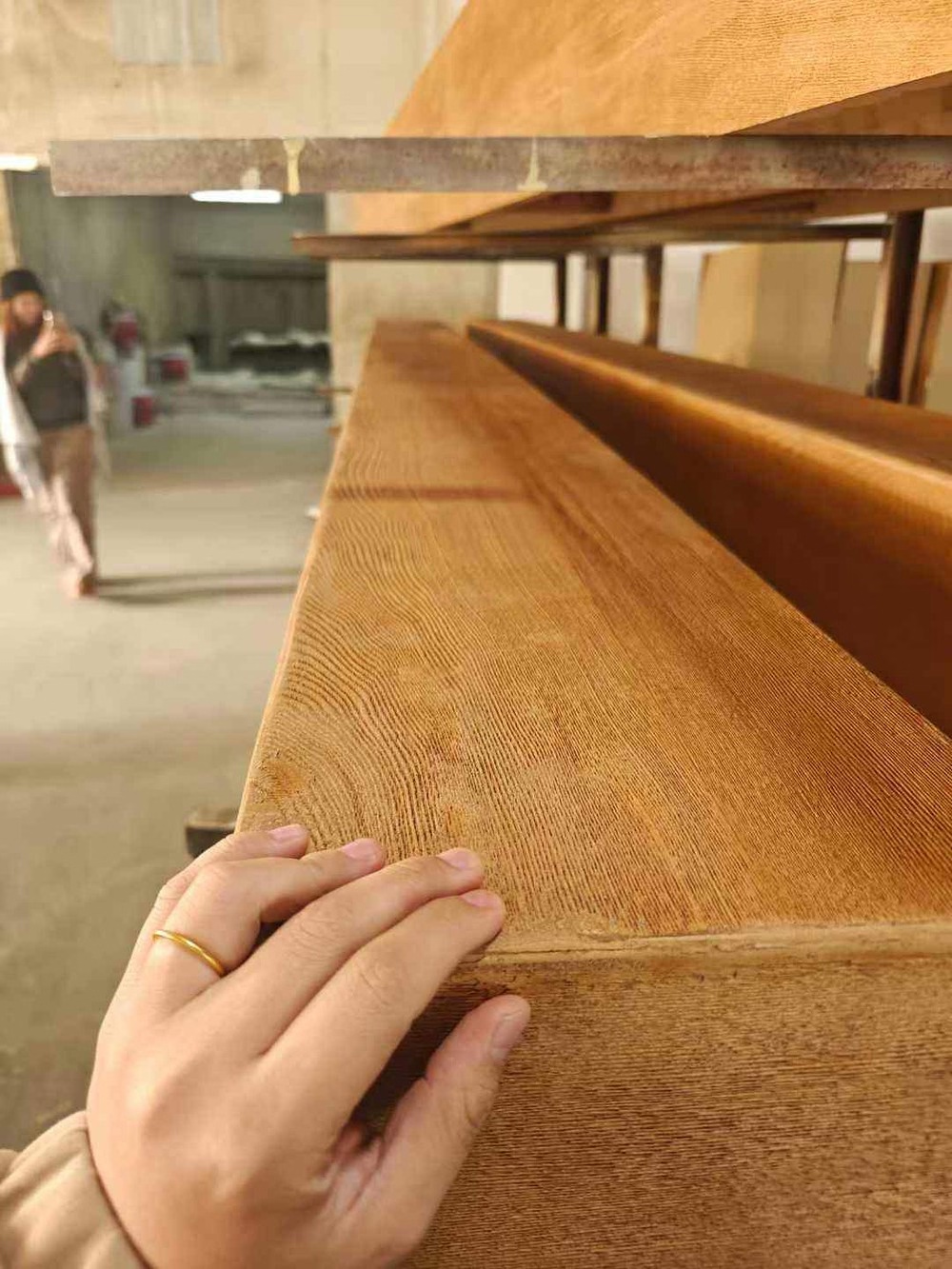
Performance comparisons between termite-resistant polyurethane faux beams and natural wood reveal fundamental differences that favor synthetic alternatives for most applications. While authentic timber offers undeniable character, modern polyurethane formulations deliver practical advantages that increasingly make synthetic beams the superior choice for discerning property owners.
Dimensional Stability Fundamentals
Natural wood's hygroscopic nature creates continuous dimensional response to moisture changes. This movement manifests as seasonal expansion and contraction, with accumulated stress eventually causing checking, splitting, and structural degradation. Polyurethane's synthetic molecular structure absorbs no moisture, maintaining perfect dimensional stability regardless of humidity conditions.
Warping and twisting represent wood's most visible dimensional stability failures. These distortions create gaps at connections, uneven surfaces, and appearance degradation that requires ongoing correction. Polyurethane beams maintain straight, true dimensions from installation through decades of service without adjustment.
Cupping across beam widths creates uneven surfaces that affect light reflection and paint adhesion. Wood's differential drying between surfaces generates stresses that cupping relieves. Polyurethane's uniform response to temperature and humidity eliminates this failure mode entirely, maintaining consistent cross-sectional geometry indefinitely.
Biological Resistance Comparison
Termite vulnerability represents wood's most significant biological weakness. Despite chemical treatments and preventive measures, termites continue destroying wooden structures worth billions of dollars annually. Polyurethane's petroleum-based chemistry contains no cellulose that termites require for nutrition, providing inherent resistance that no treatment can match.
Wood-decay fungi present complementary biological threats that affect wood in moisture-prone conditions. Brown rot, white rot, and soft rot each consume wood components through different chemical mechanisms, ultimately destroying structural integrity. Polyurethane's resistance to moisture absorption prevents conditions that support fungal colonization, eliminating this failure mode.
Carpenter ants, powderpost beetles, and other wood-boring insects add additional biological concerns that polyurethane sidesteps entirely. Without nutritional value, these insects ignore polyurethane surfaces, eliminating attraction that chemical treatments attempt to address through toxicity rather than palatability.

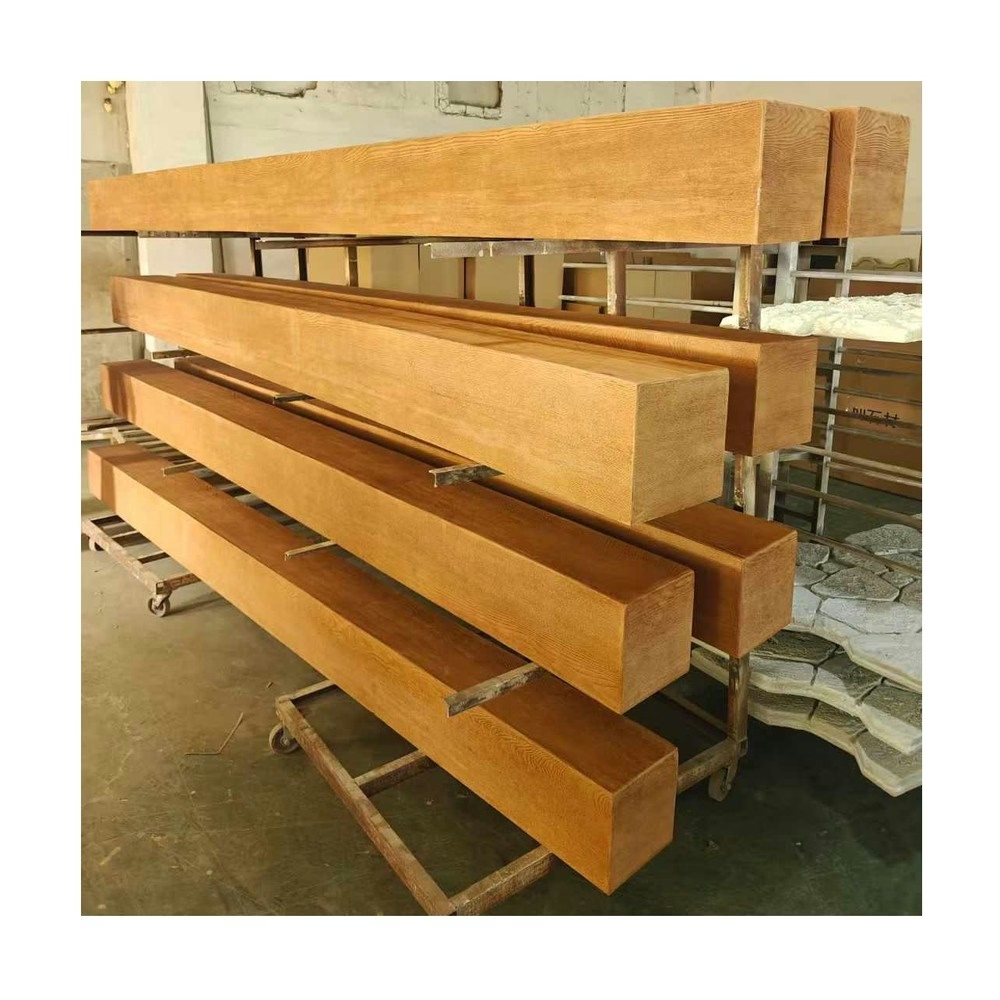
Maintenance Requirement Analysis
Natural wood maintenance encompasses inspection, treatment, and repair activities that accumulate substantial lifetime costs. Termite inspections, moisture barrier maintenance, and periodic refinishing require professional attention that synthetic alternatives never need. This maintenance burden affects both direct costs and lifestyle disruption.
Inspection frequency depends on risk tolerance and building codes, with annual inspections common in termite-prone regions. Each inspection involves scheduling coordination, access preparation, and report review that consumes time beyond direct inspection costs. Synthetic materials eliminate this recurring burden entirely.
Treatment applications address both prevention and remediation, with ongoing chemical applications required even after initial treatment. Reapplication intervals vary by product and conditions, creating ongoing chemical exposure that many property owners prefer avoiding. Polyurethane requires no treatment of any kind—ever.
Appearance Longevity Assessment
Natural wood appearance evolves throughout service life, with color changes, surface degradation, and texture modification occurring continuously. Some property owners appreciate this aging character, while others find it concerning. Polyurethane maintains consistent appearance that either preserves initial installation quality or, with appropriate formulation, gracefully ages in controlled ways.
Color retention differs dramatically between material types. UV exposure causes wood to silver and gray naturally, while polyurethane can be formulated to resist or accept UV effects as desired. This formulation flexibility enables appearance customization that natural wood cannot achieve.
Surface integrity maintenance requires different approaches for each material. Wood surfaces develop checking, splintering, and grain raise that refinishing addresses. Polyurethane surfaces maintain original integrity without intervention, requiring only cleaning to retain pristine appearance.
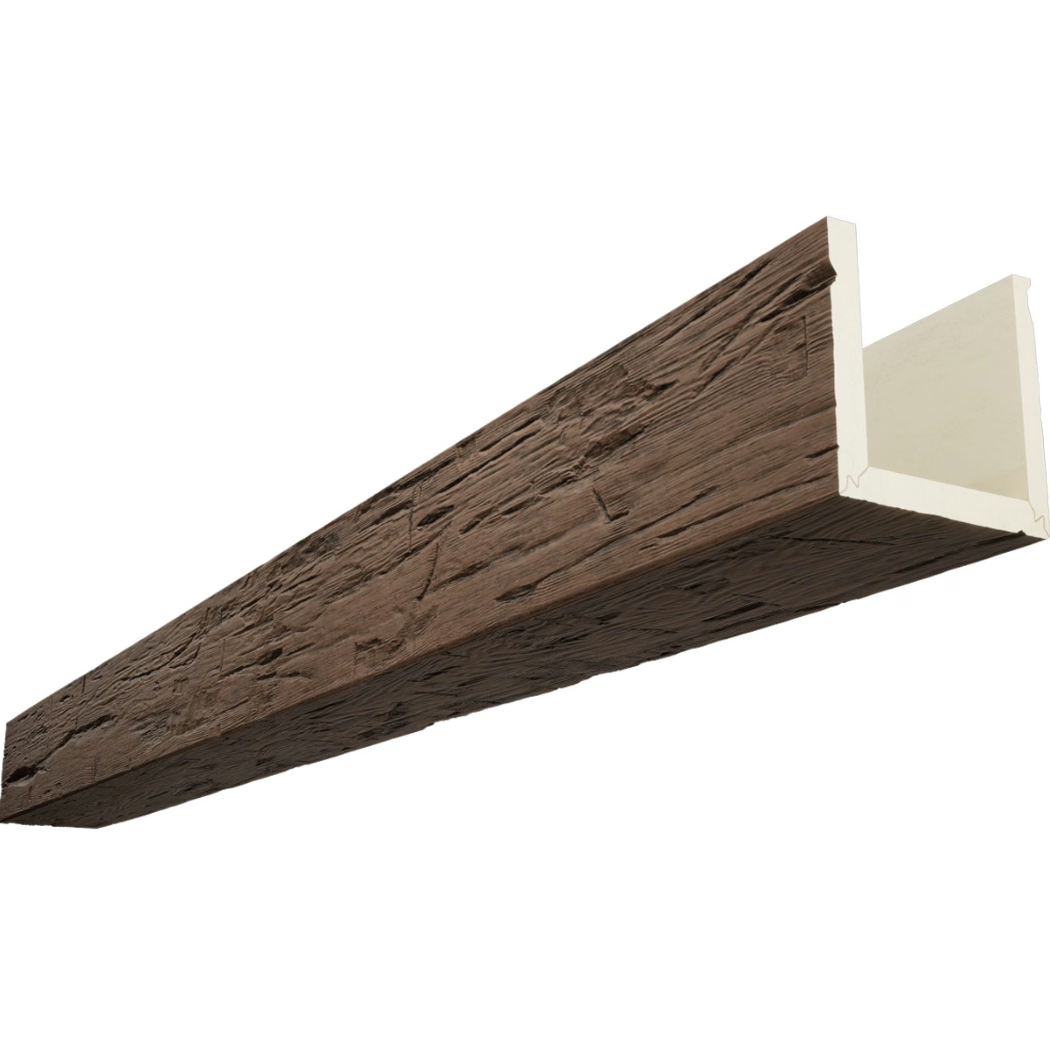
Structural and Installation Implications
Weight differences affect both installation methods and structural requirements. Natural wood density typically runs three to four times polyurethane's density, requiring stronger mounting systems and complicating handling during installation. Lighter polyurethane enables installation approaches impossible for heavy timber.
Connection methods differ fundamentally between materials. Wood accepts nails, screws, and traditional joinery, while polyurethane requires adhesive bonding and mechanical fastening appropriate for synthetic materials. Understanding these differences ensures proper installation techniques that maximize performance.
Structural limitations affect specification decisions for both materials. Natural wood carries actual load that design must account for, while polyurethane typically serves decorative purposes without structural contribution. This difference affects where each material type can appropriately be used.
Total Ownership Cost Comparison
Initial acquisition costs often favor natural wood, particularly for budget-conscious projects. Salvaged timber, utility-grade lumber, and local species can cost substantially less than premium polyurethane alternatives. However, initial cost comparison alone misrepresents true ownership economics.
Lifetime maintenance costs accumulate substantially for natural wood in demanding environments. Treatment contracts, repair reserves, and eventual replacement funds represent ongoing expenses that synthetic alternatives avoid entirely. These avoided costs compound significantly over ownership periods extending decades.
Resale considerations affect total ownership economics for properties where decorative elements influence buyer perception. Pristine synthetic installations maintain original appearance that may impress buyers, while degraded natural wood creates negative impressions that affect property values. This appearance impact translates directly to resale value.
Termite-resistant polyurethane faux beams demonstrate superiority over natural wood across dimensional stability, biological resistance, maintenance requirements, and appearance longevity. While aesthetic preferences remain subjective, practical performance characteristics increasingly favor synthetic alternatives for discerning property owners who value lasting quality over traditional authenticity.

Technical References
ASTM standards cited in every specification
Test Data
Lab results from internal testing program
Updated 2026
Reviewed against current product specs