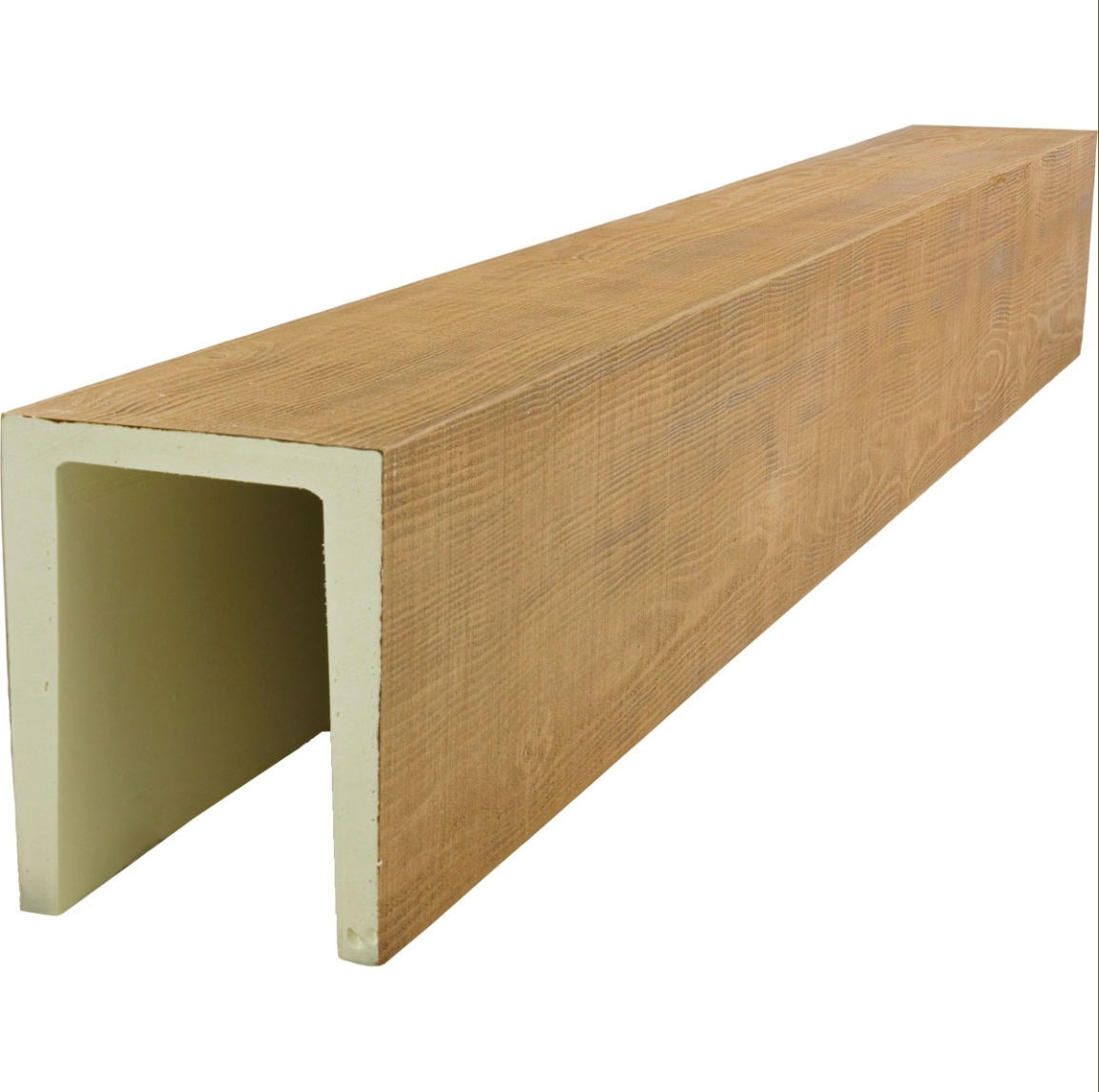
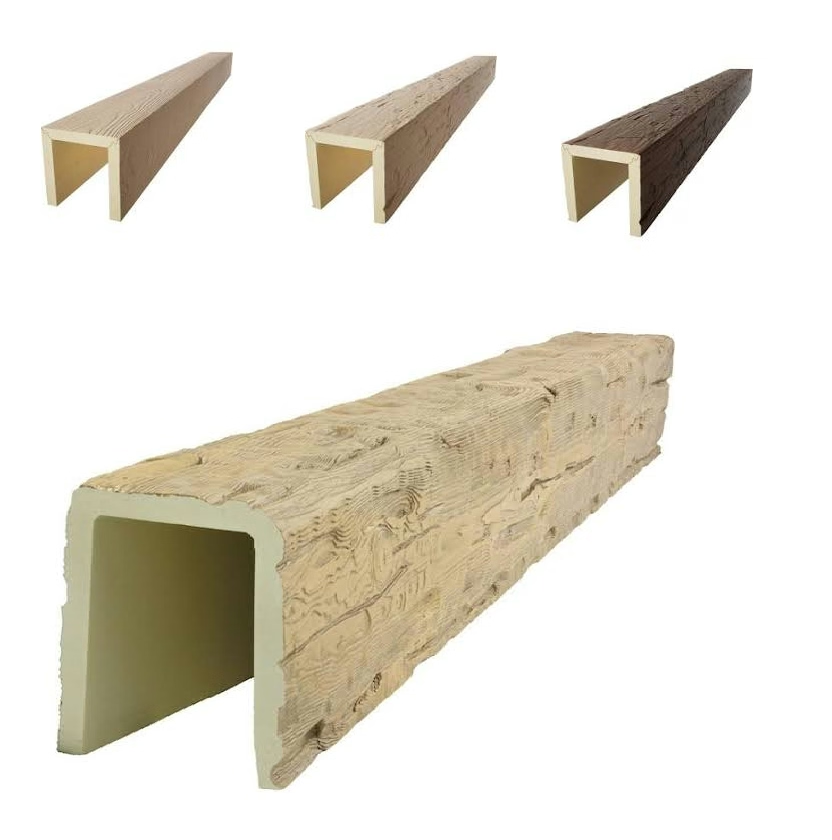
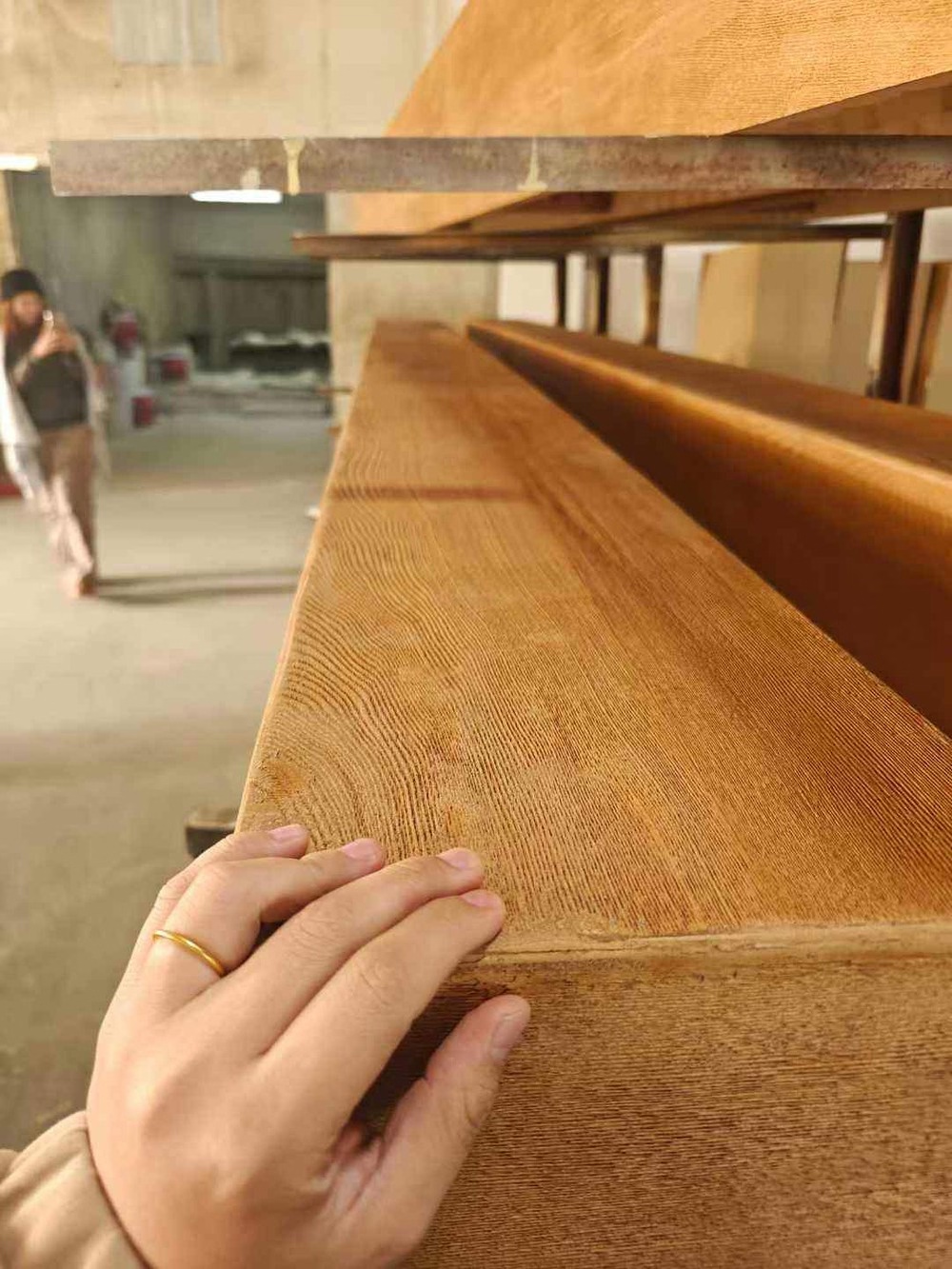
Architectural impact depends on appropriate scale. Delicate millwork that charms in intimate spaces disappears in grand environments. Achieving visual presence in expansive interiors requires elements sized to match spatial ambition—beams substantial enough to command attention and create the architectural weight that memorable spaces demand. Thick heavy-duty polyurethane faux beams provide this presence without the structural limitations and installation challenges that genuine timber of equivalent dimensions would impose.
Understanding Heavy-Duty Specifications
Dimensional Standards
Heavy-duty classification encompasses beams with widths exceeding twelve inches and depths proportioned to match. Standard residential products typically range from four to eight inches wide, while heavy-duty specifications begin around ten inches and extend to twenty-four inches or beyond for dramatic applications.
Depth dimensions should maintain proportional relationships with width—beams appearing too shallow for their width read as dimensional errors rather than design choices. Ratios between one-to-one and three-to-two (width-to-depth) generally satisfy proportional expectations, though stylistic requirements may justify deviation.
Length availability for heavy-duty products varies by manufacturer. Standard production typically accommodates spans to twenty feet. Longer spans may require intermediate support, custom production, or engineered solutions that incorporate structural steel within beam hollows.
Weight Considerations
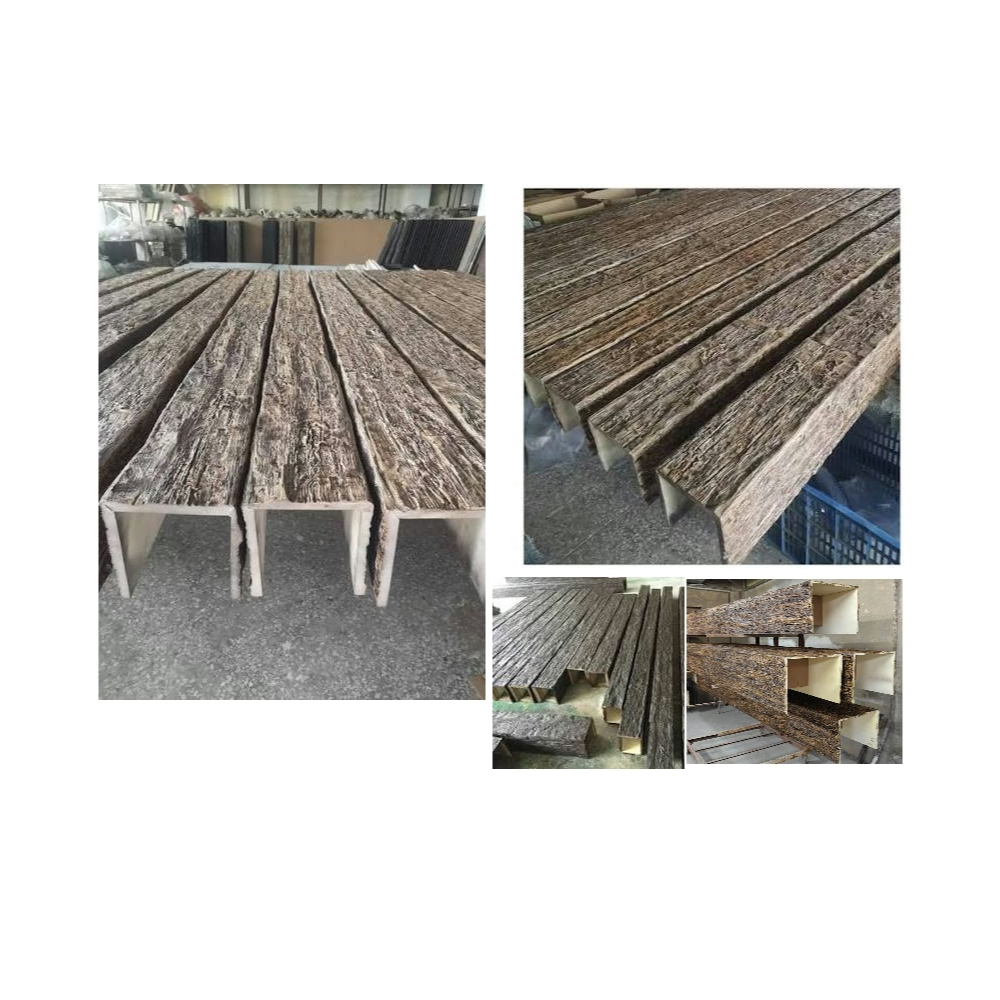
Despite their substantial appearance, polyurethane heavy-duty beams remain significantly lighter than solid timber equivalents. A twelve-inch by twelve-inch by sixteen-foot polyurethane beam might weigh forty to sixty pounds, while a timber equivalent could exceed three hundred pounds. This weight reduction simplifies handling, reduces structural requirements, and enables installation methods impractical for genuine timber.
Manufacturing density affects final weight within polyurethane options. Standard-density formulations provide adequate structural capability with moderate weight. High-density formulations increase weight slightly while improving fastener retention and impact resistance.
Structural Engineering for Heavy-Duty Applications
Load-Bearing Capability
Heavy-duty applications often require genuine structural contribution beyond pure aesthetics. Beams spanning openings, supporting platform edges, or providing attachment points for suspended elements must transfer loads safely to supporting structure.
Hybrid construction combines aesthetic polyurethane exteriors with structural steel cores. Steel tube or wide-flange profiles inside beam hollows carry loads while polyurethane shells provide finished appearance. This approach enables spans and load capacities that pure polyurethane cannot provide reliably.
Mounting System Requirements
Heavy-duty beams impose significant loads on mounting systems that must remain secure throughout service life. Standard bracket systems designed for lighter beams may prove inadequate. Heavy-duty mounting employs larger brackets, additional attachment points, and engineered connections that distribute loads appropriately.
Structural ceiling elements—joists, trusses, beams—must possess adequate capacity for accumulated loads from multiple heavy-duty beam installations. Engineering verification ensures that mounting locations provide sufficient holding power.
Design Applications for Bold Impact
Grand Entrance Statements
Foyers, entry halls, and arrival spaces benefit from ceiling treatments that announce architectural ambition immediately. Heavy-duty beams in these locations create visual weight that anchors spatial composition and establishes design character for adjacent rooms.
Scale relationships matter critically in entrance applications. Beams undersized for generous ceiling heights appear trivial rather than impressive. Beams sized to dominate ceiling planes create the dramatic statements that grand entrances warrant.
Commercial Venue Applications
Hospitality venues, retail environments, and entertainment spaces frequently employ heavy-duty beams to establish brand identity through architectural presence. These commercial applications also demand durability sufficient for continuous public exposure and maintenance schedules that residential installations avoid.
Restaurant dining rooms, hotel lobbies, and retail storefronts benefit from the visual weight that heavy-duty beams provide. The substantial appearance suggests permanence and quality that supports premium positioning.
Residential Great Room Treatment
Contemporary homes increasingly feature open floor plans with vaulted or cathedral ceilings that traditional residential scale cannot address. Heavy-duty beams provide appropriate visual weight for these expansive interiors, preventing the underwhelming ceiling presence that standard products create.
Living rooms, great rooms, and primary bedroom suites with cathedral ceilings accommodate heavy-duty beams that create architectural interest without overwhelming furniture scales and occupant expectations.
Surface Treatment for Heavy-Duty Appearance
Texture Scaling Considerations
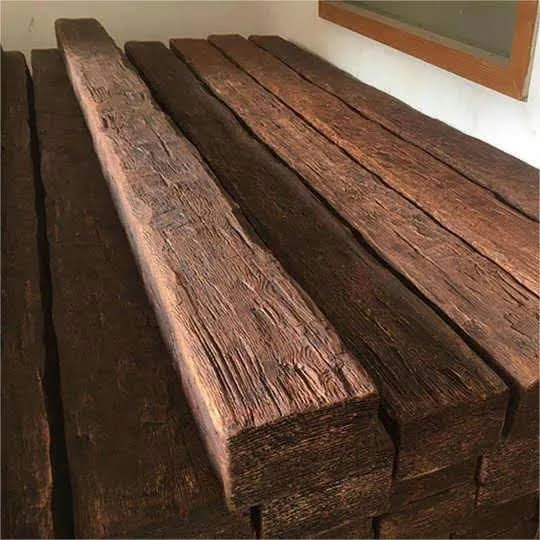
Surface textures designed for standard-sized beams may appear inadequate when applied to heavy-duty products. Grain patterns and relief heights should scale proportionally with beam dimensions to maintain visual coherence. Aggressively textured surfaces that overwhelm small beams create appropriately dramatic appearances on large formats.
Detail elements—corner treatments, end grain finishes, joint details—require similar scaling attention. Hardware scaled to standard beams appears trivial on heavy-duty installations. Proportionally larger details maintain visual balance.
Finish Application Strategies
Heavy-duty beam finishes must cover expanded surface areas without variation or lap marks that lighter products might conceal. Factory finishing typically provides more consistent results than site application for large-format products. Spray application achieves better coverage than brush or roller methods.
Color selection for heavy-duty beams should account for the dramatic impact these elements create. Dark finishes absorb attention, creating recessive ceiling treatments that recede behind wall elements. Light finishes reflect attention, establishing beams as primary focal points. Mid-tone finishes balance these extremes.
Installation Challenges and Solutions
Handling and Positioning
The weight of heavy-duty beams—even substantially reduced from timber equivalents—requires handling equipment and multiple installers for safe positioning. Site access constraints may limit beam lengths that can reach installation locations. Pre-installation planning should address handling logistics explicitly.
Lift equipment—forklifts, glass-handling vacuums, or crane service—may be required for beams exceeding safe manual handling capacity. Equipment rental costs should factor into project budgets alongside beam purchase expenses.
Alignment and Leveling
Heavy-duty beams appearing crooked or unaligned create obvious visual problems that lighter products might conceal through strategic positioning. Precise alignment becomes critical for large-format installations where errors are more apparent.
Laser leveling systems provide accuracy that manual methods cannot match for heavy-duty installations. Multiple reference points should verify alignment throughout beam lengths, not merely at endpoints where installation begins.
Maintenance Advantages of Polyurethane Construction
Impact Resistance
Heavy-duty applications often subject beams to inadvertent contact—furniture moving, ladder positioning, equipment servicing—that lighter-duty products might not survive. Polyurethane construction tolerates impact without the denting, cracking, or splitting that timber alternatives risk.
Repairability for impact damage differs from timber alternatives. Polyurethane damage typically fills with patching compounds designed for synthetic materials, then touched up with matching finish. Timber repairs may require wood filler, color matching, and refinishing that proves more visible.
Long-Term Stability
Timber heavy-duty beams face dimensional instability challenges that polyurethane avoids. Moisture cycling causes expansion and contraction that may stress surrounding construction. Temperature changes affect timber differently than surrounding materials, potentially creating gaps or interference at joints.
Polyurethane thermal expansion rates fall within ranges that standard installation practices accommodate. Joint detailing should consider potential movement, but this movement typically remains within concealment margins.

Cost Analysis for Heavy-Duty Specifications
Heavy-duty beam costs exceed standard products due to increased material volumes and more complex manufacturing requirements. Comparison should account for total installed costs including mounting hardware, handling equipment, and installation labor that heavy-duty specifications may require.
Despite higher initial costs, heavy-duty polyurethane installations typically cost less than genuine timber equivalents of comparable dimensions. This comparison intensifies when accounting for structural steel requirements that timber heavy-duty beams would require for equivalent spans.
Quality heavy-duty faux beams enable architectural statements that standard products cannot achieve. The substantial presence, structural capability, and installation practicality of modern polyurethane options make bold ceiling styling accessible for projects where genuine timber would prove impractical or uneconomical.
Technical References
ASTM standards cited in every specification
Test Data
Lab results from internal testing program
Updated 2026
Reviewed against current product specs