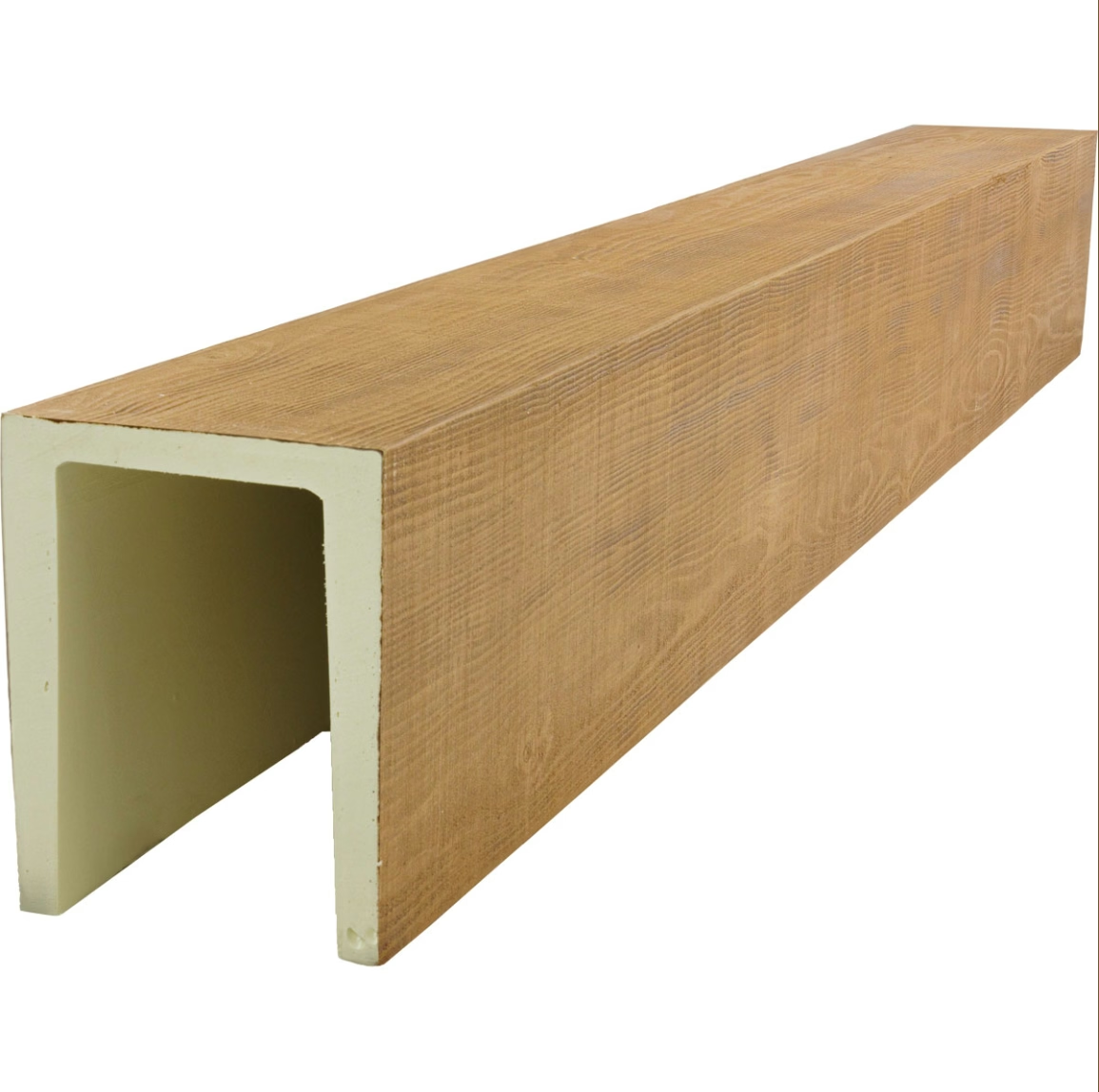
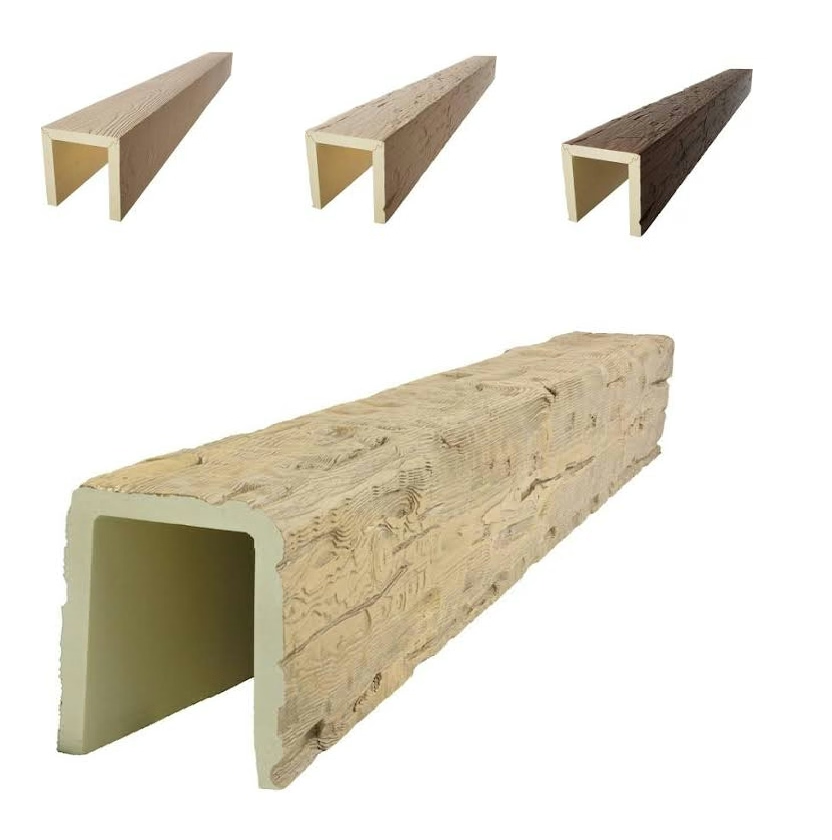
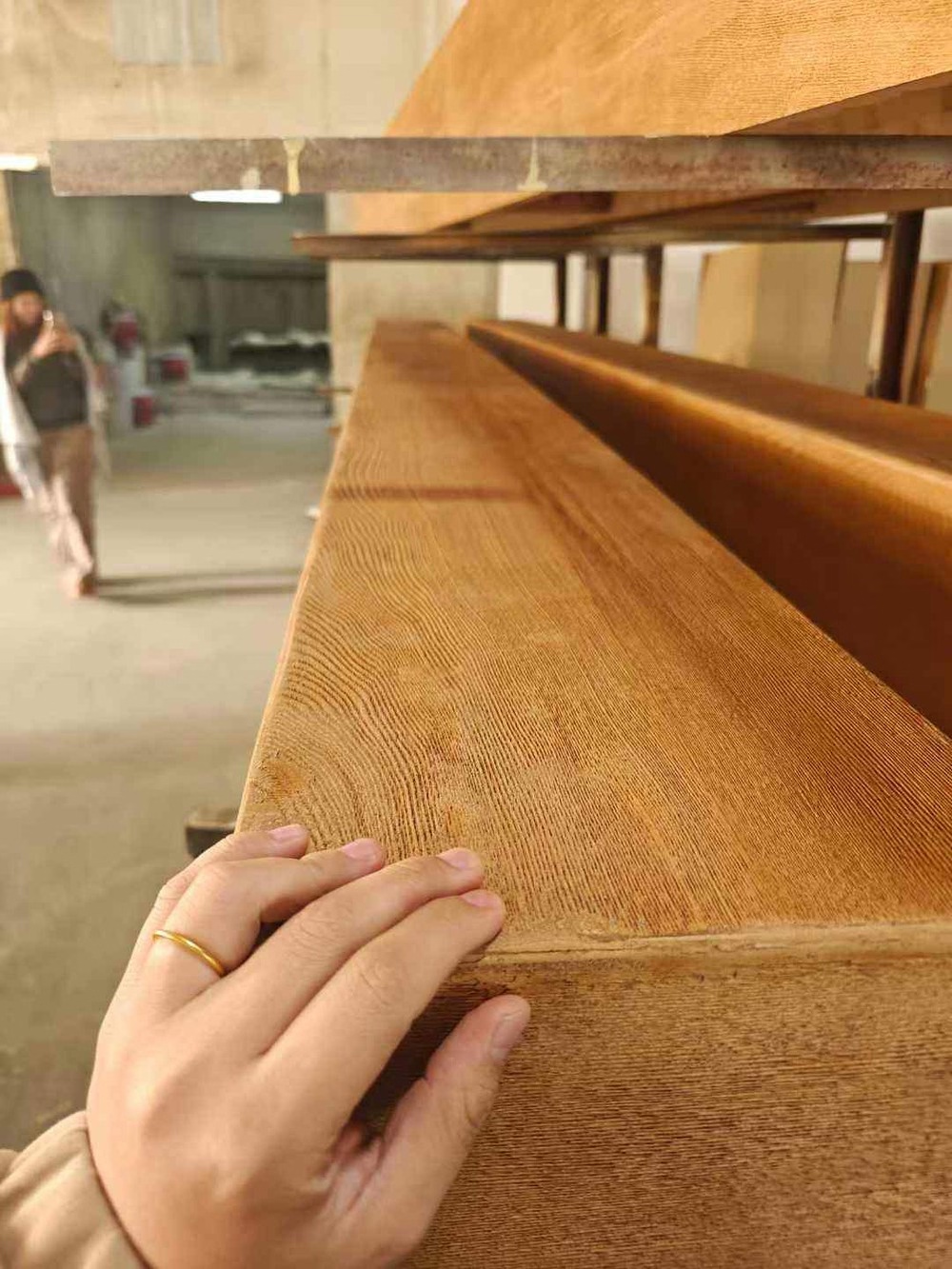
Public spaces face unique challenges that residential environments never encounter. Thousands of daily visitors, continuous cleaning protocols, furniture repositioning, luggage handling, and the general roughness of public use demand materials engineered beyond typical architectural specifications. Thick-walled high-durability polyurethane faux beams address these challenges specifically, providing the aesthetic qualities of authentic wood with performance characteristics that public spaces require.
Engineering for Commercial Durability
Wall Thickness Standards
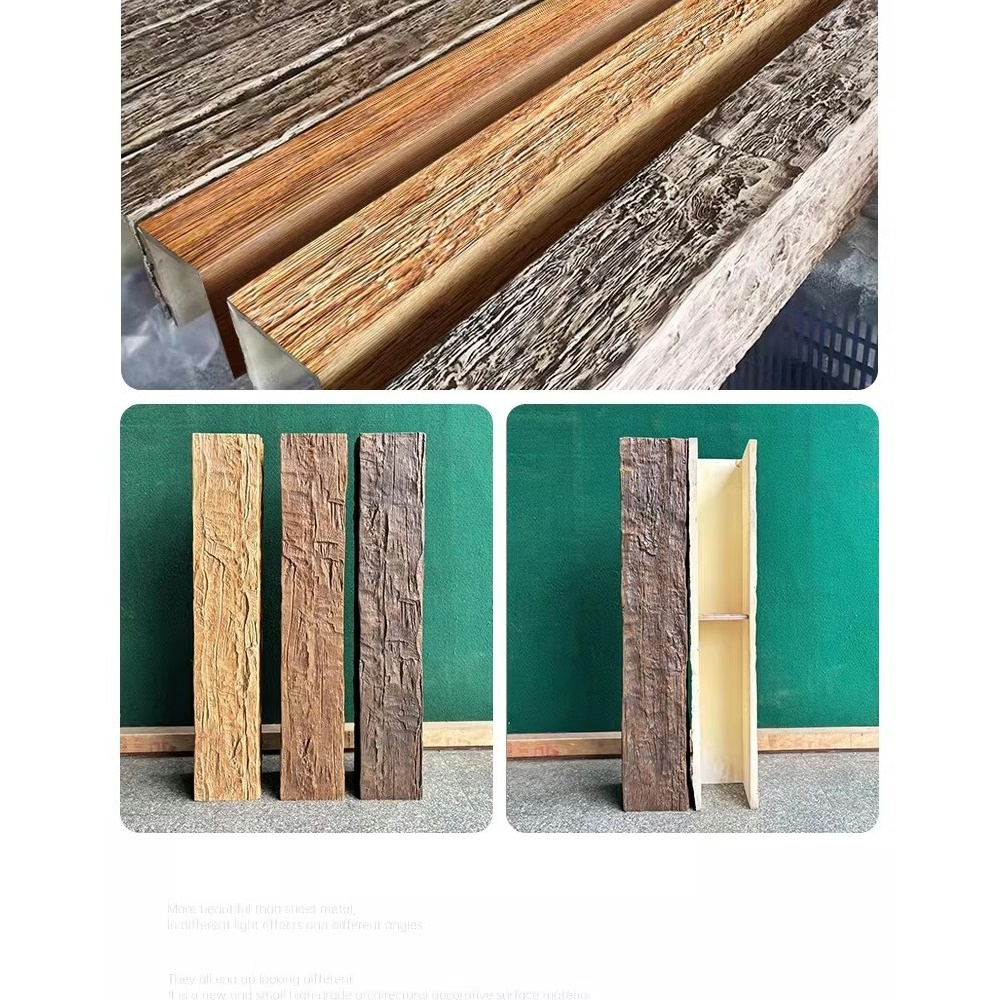
Thick-walled construction designates beam shells with walls exceeding three-quarter inch thickness. This substantial construction provides improved impact resistance, better fastener retention, and enhanced structural capability compared to standard residential wall thicknesses of one-half inch or less.
Wall thickness affects both performance and appearance. Thicker walls accommodate deeper surface texturing without compromising structural integrity. Mass addition from thicker walls remains acceptable given overall polyurethane weight advantages over timber.
Impact Resistance Formulation
Commercial durability begins with formulation choices that resist the impacts, abrasions, and surface stresses that public spaces impose. High-density polyurethane with impact-modifying additives tolerates contact that would dent, crack, or chip lesser materials.
Accelerated aging testing simulates years of service exposure, verifying that formulations maintain performance characteristics throughout intended service life. Independent laboratory certification provides documented evidence of durability claims.
UV and Environmental Stability
Interior applications near windows or glass curtain walls face UV exposure that degrades susceptible materials. Commercial-grade formulations include UV stabilizers that prevent chalking, discoloration, and surface degradation under long-term exposure.
Temperature cycling tolerance addresses HVAC system operation and solar heating variations that interior environments experience. Flexible polymer networks accommodate thermal movement without cracking or delamination.
Public Space Application Categories
Transportation Facilities
Airports, train stations, and bus terminals host millions of annual visitors in spaces designed for efficiency rather than comfort. Thick-walled faux beams soften these institutional environments while withstanding luggage contact, crowd pressure, and continuous cleaning.
Wayfinding integration in transportation facilities benefits from beam installations that create memorable landmarks within otherwise forgettable spaces. Beams positioned above information counters, security checkpoints, and gate areas provide orientation cues that assist passenger navigation.
Convention and Exhibition Centers
Large exhibition halls present particular challenges—vast ceiling heights, minimal architectural detail, and acoustic challenges that beam installations address while providing visual interest. Thick-walled durability accommodates maintenance access with ladders, lifts, and equipment that lighter products might not survive.
Modular beam configurations support exhibit installation needs that permanent architectural elements must not compromise. Attachment points for signage, banners, and lighting rigs integrate without visible hardware.
Healthcare Facilities
Healthcare environments present cleaning requirements that exceed other commercial applications. Disinfecting protocols employ chemical agents that degrade many finish materials. Thick-walled beam construction with chemical-resistant finishes tolerates these exposures while maintaining appearance.
Healthcare design increasingly emphasizes warm, healing environments rather than institutional sterility. Wood-tone beam installations contribute to this objective while satisfying stringent hygiene requirements.
Educational Institutions
Schools, universities, and libraries require ceiling treatments that accommodate diverse user populations—from young children to elderly visitors—with varying awareness of architectural preservation. Thick-walled durability tolerates the contact that occurs inevitably in these active environments.
Acoustic management in educational spaces benefits from beam texturing that provides sound diffusion. Libraries, study halls, and lecture spaces all gain from acoustic treatment that beam installations provide.
Surface Treatment for Extended Service
Factory-Applied Protective Finishes
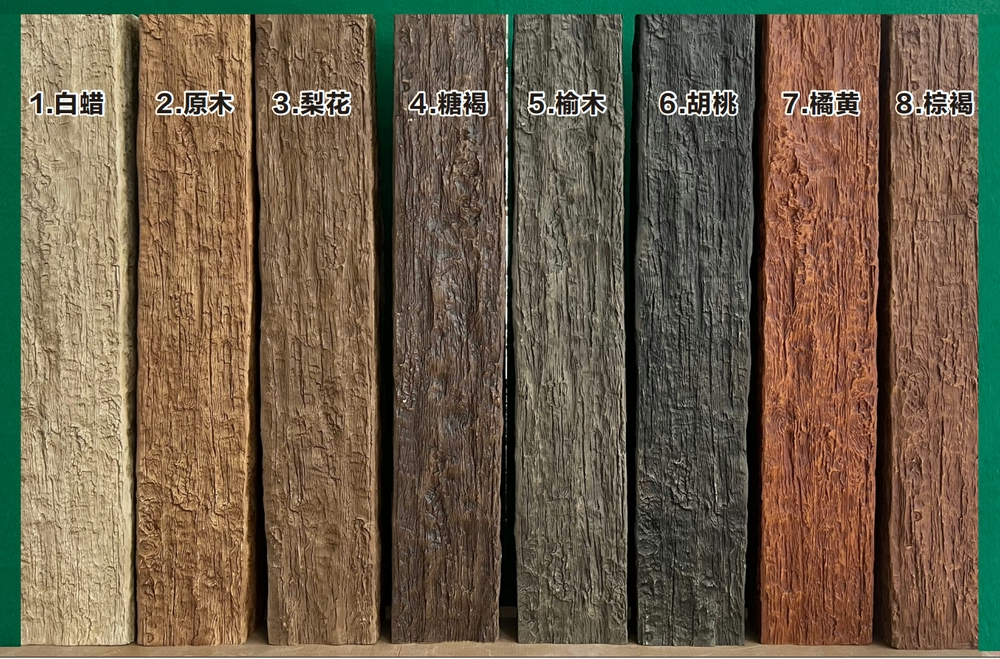
Commercial-grade finishes exceed residential formulations in durability, chemical resistance, and abrasion tolerance. These factory-applied systems cure to hard films that protect underlying surfaces while maintaining authentic wood appearance.
Finish hardness must balance against texture preservation. Excessive hardness may fill fine texture details; insufficient hardness may scratch or mar under contact. Quality commercial finishes achieve appropriate balance for intended service conditions.
Maintenance-Friendly Surfaces
Smooth, sealed surfaces facilitate cleaning in commercial applications. While heavily textured surfaces add visual character, they also collect dust and debris that proves difficult to remove efficiently. Balance between aesthetic objectives and maintenance practicality guides surface treatment decisions.
Self-leveling finishes that repair minor scratches through spontaneous flow provide ongoing protection without maintenance intervention. These advanced systems extend service intervals between professional refinishing.
Fire Safety for Public Occupancies
Code Compliance Requirements
Public assembly occupancies face stringent fire code requirements that affect finish material selection throughout. Polyurethane faux beams intended for these applications should carry documented fire ratings from accredited testing laboratories.
Flame spread index and smoke development index measurements under ASTM E84 or equivalent standards provide the documentation that code officials require for compliance verification. Products lacking current testing documentation may face rejection regardless of other merits.
Material Formulation Considerations
Fire-retardant polyurethane formulations incorporate additives that suppress flame propagation and reduce smoke generation. These formulations may differ in cost and physical characteristics from standard products, requiring specification clarity to ensure appropriate material delivery.
Halogen-free fire retardant options address environmental and health concerns associated with certain additive chemistries while still providing adequate fire performance.
Installation Systems for Commercial Applications
Accessible Mounting Configurations
Commercial installations benefit from mounting systems that permit inspection, adjustment, and component replacement without demolition. Concealed clip systems that engage beam hollows provide secure attachment while enabling non-destructive removal.
Service loops and access provisions accommodate future modifications—additional fixtures, revised layouts, or system upgrades—without compromising beam installations.
Seismic and Safety Restraint
Regions with seismic requirements mandate restraint systems that limit beam movement during earthquake events. Restraint hardware should remain concealed while providing adequate force limits to prevent beam displacement that might injure building occupants.
Engineering documentation supports code compliance verification and provides building officials with evidence of appropriate seismic design.
Lifecycle Cost Analysis
Initial Versus Lifetime Costs
Commercial-grade products typically cost more initially than standard alternatives. This premium reflects formulation improvements, enhanced testing, and quality standards appropriate for demanding applications. Lifetime cost analysis often favors commercial products despite higher initial investment.
Maintenance requirements differ significantly between product grades. Standard products may require refinishing or replacement after five to ten years of commercial service. Commercial-grade products may perform adequately for twenty years or longer without major intervention.
Total Cost of Ownership
Total cost of ownership includes initial purchase, installation labor, ongoing maintenance, eventual replacement, and disposal costs. Commercial-grade thick-walled beams often demonstrate favorable total cost profiles despite higher initial prices.
Downtime costs in commercial environments may exceed material and labor expenses dramatically. Products that maintain appearance without frequent intervention reduce operational disruption that affects revenue generation.
Thick-walled high-durability polyurethane faux beams provide the resilience that public spaces demand while maintaining the authentic wood aesthetics that design objectives require. Careful specification and quality installation create ceiling treatments that serve communities reliably through years of continuous use.
Technical References
ASTM standards cited in every specification
Test Data
Lab results from internal testing program
Updated 2026
Reviewed against current product specs