The art of traditional woodworking involved skilled craftspeople who developed techniques for creating architectural elements with consistent quality across extended projects. These techniques—carving, turning, carving, and joining—required years to master and produced results that varied subtly with each maker's hand. Molded polyurethane faux wood beams honor this craftsmanship tradition while updating its methods, using modern manufacturing to achieve consistency that traditional builders could only approximate.
Molding technology captures handcrafted details with precision that individual artisans could not maintain across extended production. The same profile, the same ornament placement, the same surface texture appears in every beam produced from a given mold, ensuring consistency across projects of any scale. This reproducibility serves modern building requirements while honoring the traditional commitment to quality that molding technology enables at larger scales.
The Molding Process and Detail Capture
Creating molds for traditional beam production begins with master patterns—often actual wooden beams or carved models created by skilled woodworkers. These masters capture not just the obvious profile curves but the subtle variations that distinguish crafted work from mechanical production. The negative impressions taken from these masters inherit all this detail, producing molds that create parts with equivalent authenticity.
Multiple-piece molds accommodate complex beam geometries, with careful alignment mechanisms ensuring consistent registration between mold sections. The engineering that goes into these molds determines what details can be captured and how consistently they appear across production runs. Premium molds represent significant investment, with costs sometimes exceeding the price of equivalent handcrafted elements. This investment pays for itself across production volumes while achieving quality that handcrafting cannot match consistently.
Release agents applied to molds before casting enable clean part removal without damage to either mold or casting. Modern release agents are formulated specifically for polyurethane, providing clean release without affecting surface quality or interfering with subsequent finishing. The sophistication of release agent selection and application contributes to finished beam quality in ways that only experienced manufacturers understand fully.
Traditional Details Captured Through Molding
End treatment details—how beams terminate at walls or other beams—receive particular attention in traditional architecture. These terminations might include returning moldings, shaped profiles, or decorative details that frame the beam's ending. Molding technology reproduces these details consistently, creating terminations that appear handcrafted rather than obviously manufactured. The consistency matters because it prevents the irregularity that would suggest cheap production.
Joinery details at beam intersections traditionally demonstrated a carpenter's skill. Mortise and tenon joints, scarf joints, and complicated scarf arrangements appeared where beams met, with quality of execution reflecting overall craftsmanship levels. Modern molded beams can reproduce these details convincingly, creating the appearance of traditional joinery without its complexity or its potential for movement over time. The effect satisfies traditional sensibilities while providing modern performance.
Ornament application in traditional architecture often involved carved motifs applied to beam surfaces. Acanthus leaves, egg and dart patterns, and other classical ornaments decorated significant beams, with ornament placement and quality indicating overall building significance. Molded polyurethane beams can incorporate these ornaments as integral features, reproducing the effect of applied carving without the expense or complexity of traditional ornament installation.
Quality Consistency Across Production
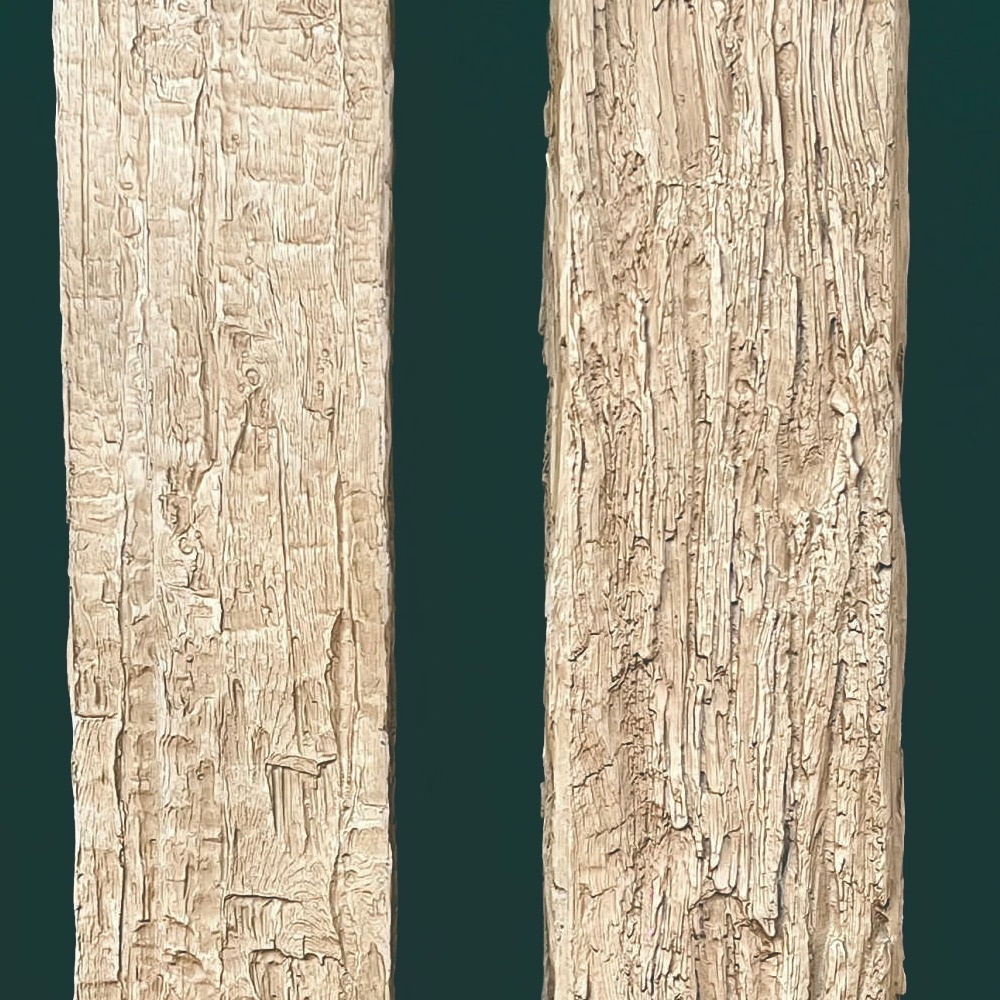
Molded production achieves consistency impossible for individual handcrafting. Every beam from a given mold shares the same profile, the same texture depth, the same detail placement. This consistency matters in large installations where multiple beams appear together; inconsistency in appearance would create visual discord that undermines traditional design intentions. The precision of molded production ensures that beams work together harmoniously.
Dimensional consistency similarly results from precision molding and CNC machining of molded parts. Traditional timber construction required skilled workers to accommodate variations between pieces; modern faux beams arrive at installation sites with dimensions precise enough for clean joints and predictable alignment. This precision simplifies installation while ensuring results that traditional craftsmanship could not guarantee consistently.
Color consistency across production runs enables accurate specification and replacement ordering. A beam ordered years after initial installation will match original material if specifications are recorded properly. This reproducibility serves commercial applications particularly well, where maintaining consistent appearance across multiple installations or phases matters as much as initial quality.
Traditional Beam Profiles and Their Origins
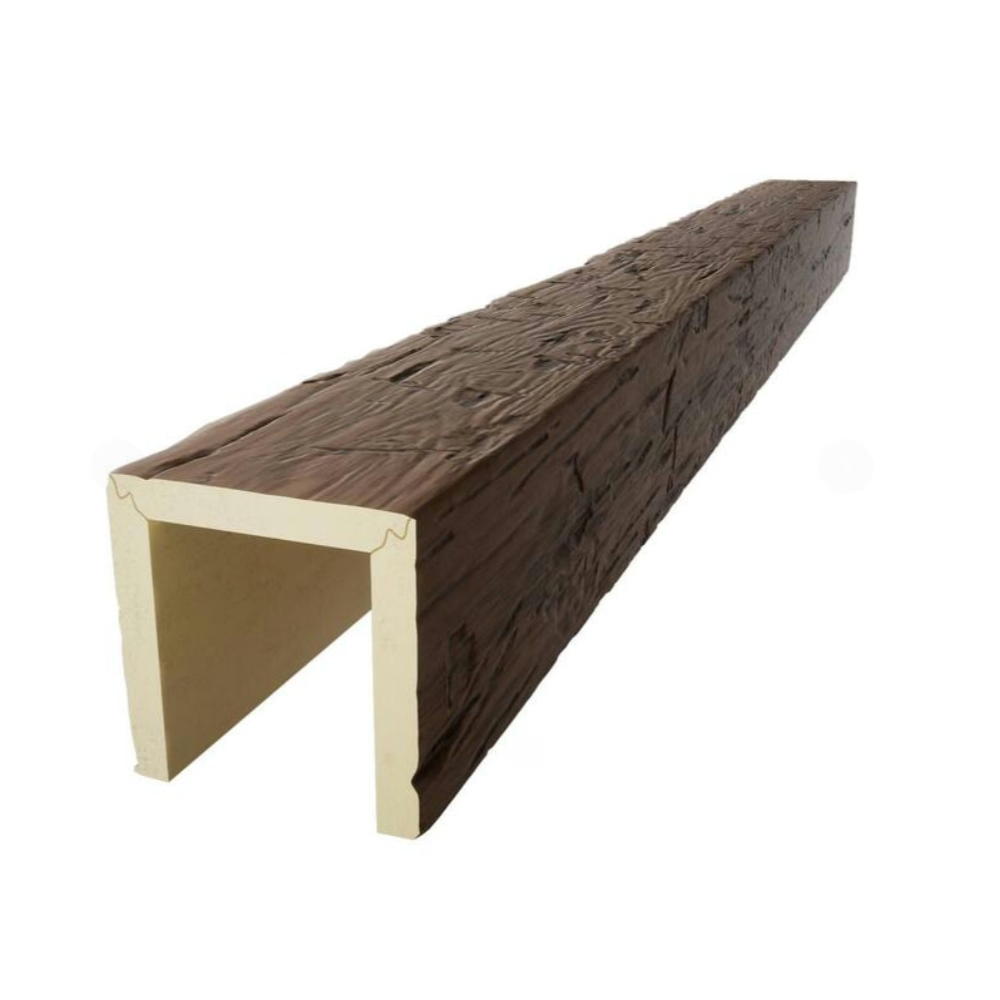
Box beam profiles—rectangular cross-sections with flat faces—derive from traditional plaster-faced construction where visible timber was covered with ornamental plasterwork. When ceilings were later opened to expose structure, box beams provided the appropriate profile for this aesthetic at lighter weight than solid timber. Modern faux box beams capture this traditional profile while providing installation advantages.
Cambered beams feature subtle upward curvature that traditional builders introduced to counteract visual settling. A perfectly straight beam appears to sag slightly as viewing angle changes; camber counteracts this effect, creating the impression of straight alignment from all viewing positions. Modern molded beams can incorporate this subtle curve, achieving visual results that flat beams cannot match.
Stepped and profiled beams reference classical architecture where multi-stage profiles created complex shadow lines and visual depth. These profiles involve multiple planes at different angles, creating shadow patterns that add visual richness to ceiling treatment. Molding technology captures these complex geometries consistently, enabling installation of traditionally styled beams without the custom fabrication that such profiles would otherwise require.
Selecting Appropriate Traditional Beam Profiles
Choosing among traditional beam profile options requires understanding the specific traditional style being referenced and how beam profiles contribute to that style's character. Georgian interiors typically feature simple box beams; Victorian applications might include more ornate profiles; Gothic Revival spaces often incorporate chamfered or heavily molded sections. Matching beam profiles to architectural style creates coherent results; mismatching creates confusion that observant viewers will notice.
Ceiling height and room volume influence appropriate profile selection beyond pure style considerations. Higher ceilings can support deeper, more elaborate profiles; lower ceilings may require simpler treatment to avoid compression. The relationship between beam size and surrounding architecture should feel balanced rather than extreme; visual weight that overwhelms or seems insufficient undermines traditional design intentions.
The complexity of beam intersections affects profile selection. Complex profiles create more interesting intersections but require more sophisticated treatment at corners and terminations. Simple profiles accept basic joint details more readily. Planning installation details alongside profile selection prevents discovering during construction that selected profiles cannot be executed as intended.
Technical References
ASTM standards cited in every specification
Test Data
Lab results from internal testing program
Updated 2026
Reviewed against current product specs


