The indoor environment presents a unique combination of challenges and opportunities for ceiling beam materials. Controlled temperature, consistent humidity, and protection from direct weather exposure create conditions where materials can perform optimally, enabling durability that exterior applications cannot achieve. Indoor-grade polyurethane beams leverage these favorable conditions to deliver service lives measured in decades rather than years.
The Henderson Science Museum renovation demonstrates how indoor-grade beams perform in demanding institutional environments. Their exhibit hall features exposed beam ceilings that receive daily visitor traffic, periodic exhibit installation activity, and the occasional contact from transported displays. Three years of service have produced no visible wear, validating the specification that balanced initial cost against lifetime value.
Understanding Indoor Performance Requirements
Indoor environments generally present benign conditions compared to exterior applications, with stable temperatures and humidity levels that materials find hospitable. This environmental stability eliminates many degradation mechanisms that affect materials in more challenging contexts. The UV exposure, precipitation, and thermal cycling that challenge exterior materials simply do not occur in properly designed interior spaces.
Dust accumulation represents the primary aesthetic concern in most indoor ceiling applications. Unlike exterior surfaces that face biological growth, staining, and weather-related degradation, interior beams primarily require dust management that simple cleaning addresses. The non-porous surface of quality polyurethane rejects dust attachment, enabling routine maintenance that preserves appearance indefinitely.
Mechanical damage risk differs between residential and commercial indoor applications. Residential spaces typically present minimal impact exposure, with ceiling beams safe from the contact that floor and wall surfaces experience. Commercial applications may face elevated risk from activities like furniture moving, merchandise handling, and high-reaching visitors, justifying enhanced durability specifications.
Moisture exposure in indoor applications typically comes from humidity variation rather than direct water contact. Kitchens, bathrooms, and swimming pool enclosures present elevated humidity that might affect some materials. Polyurethane's moisture resistance handles these variations without the dimensional changes that authentic timber would experience.
Formulation for Indoor Excellence
Indoor-grade formulations optimize for characteristics that benefit interior applications rather than the extreme conditions that exterior products must withstand. UV stabilization, while still valuable, receives lower priority than surface hardness and aesthetic longevity. This optimization enables cost-effective products appropriate for their intended applications.
Density specifications for indoor products typically target ranges that balance workability, fastener holding, and cost. Products intended for straightforward surface mounting may use lighter formulations that reduce material cost, while applications requiring enhanced durability might specify higher-density options. Understanding these formulation variations enables appropriate specification.
Surface hardness affects both durability and aesthetic longevity in indoor applications. Harder surfaces resist scratching and impact damage better than softer alternatives, maintaining appearance through years of service. However, extremely hard surfaces may be more brittle and prone to cracking under impact, requiring balance between hardness and resilience.
Color stability in indoor lighting requires different formulation approaches than exterior UV resistance. Interior light sources including daylight, incandescent, and LED all affect color differently, requiring pigments stable across the lighting spectrum that installations will experience. Quality manufacturers formulate for indoor lighting conditions specifically.
Installation for Permanent Performance
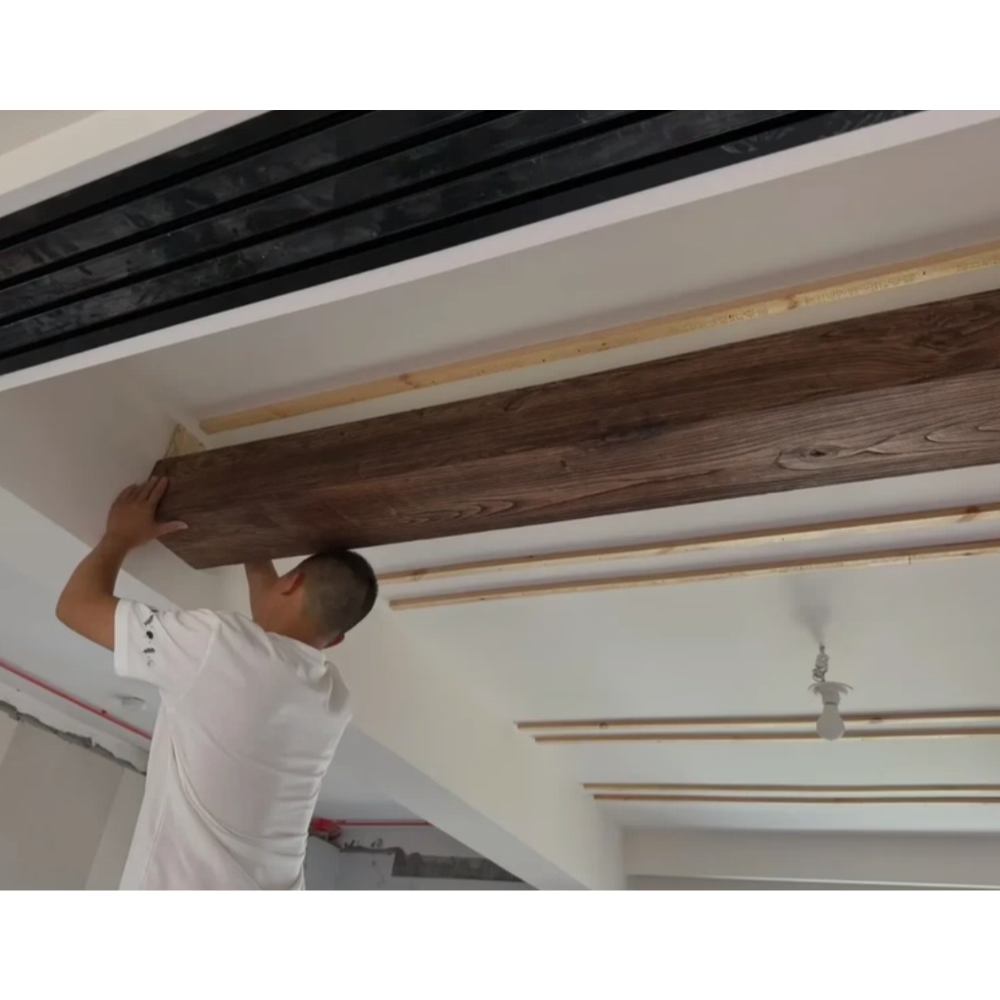
Structural attachment in permanent installations should exceed minimum requirements to ensure decades of reliable service. The marginal cost of additional fasteners or adhesive coverage is minimal compared to the disruption that remedial work would cause. Professional installers specify attachment redundancy that ensures permanent performance.
Joint preparation receives particular attention in permanent installations, where access for future repair may be limited. Mitered joints, scarf joints, and other connections should receive reinforcement that prevents future separation. Adhesive application, mechanical fastening, and clamping during cure all contribute to permanent joint integrity.
Transition details where beams meet walls, ceilings, or other materials require sealing that prevents moisture intrusion and air leakage. These details may be invisible once complete but provide critical protection for both beams and surrounding construction. Quality installers treat transition details with the same care as visible surfaces.
Inspection and adjustment before completing installations identifies and resolves issues that might affect long-term performance. fastener tension verification, adhesive coverage confirmation, and alignment checking all occur before installations are deemed complete. This quality assurance ensures that permanent installations will perform reliably throughout their service lives.

Commercial Indoor Applications
Office building lobbies and common areas subject ceiling beams to the elevated activity levels that commercial occupancy creates. Visitors, service personnel, and building operations all create conditions more demanding than typical residential environments. Durability specifications for these applications should account for the elevated abuse potential.
Retail environments present variable conditions depending on merchandise types and customer behavior. High-end boutiques with controlled visitor access may present minimal risk, while warehouse retail with active merchandise handling may require commercial-grade durability. Specification should match expected conditions rather than worst-case scenarios.
Healthcare facilities require materials compatible with cleaning protocols that commercial applications might not face. The disinfectants and cleaning agents used in healthcare environments may affect some materials, making compatibility verification important. Polyurethane's chemical resistance generally supports healthcare cleaning requirements.
Educational facilities face elevated abuse potential from student activity that may include intentional or accidental ceiling contact. Classrooms, gymnasiums, and common areas all present conditions that might challenge less durable materials. Specification for educational applications should account for the unpredictable behavior of young people.
Residential Indoor Applications
Living areas typically present the most benign indoor conditions for ceiling beam installations. The controlled environment of primary living spaces, combined with minimal impact exposure, enables specification of products optimized for aesthetics over extreme durability. Standard indoor-grade products serve these applications well.
Kitchens present elevated humidity and potential for cooking residue exposure. While not as demanding as bathroom environments, kitchen installations benefit from moisture-resistant formulations and cleanable surfaces. The aesthetic focus of kitchen applications makes appearance maintenance particularly important.
Bathrooms require the highest durability specifications among residential applications due to elevated humidity and temperature variation. Steam exposure, splashing, and regular cleaning all challenge ceiling materials. Quality polyurethane handles these conditions well, but specification should confirm moisture resistance appropriate for bathroom applications.
Basements and conditioned crawl spaces may present humidity challenges that standard living areas do not. While not as severe as exterior exposure, these spaces can experience humidity levels that affect some materials. Basement applications should verify moisture resistance appropriate for expected conditions.
Maintenance for Long-Term Appearance
Routine cleaning preserves appearance with minimal effort, typically requiring only dusting and occasional damp wiping. The frequency and method should match the accumulation rate that specific installations experience, with high-traffic commercial spaces requiring more frequent attention than residential applications.
Spot cleaning addresses isolated contamination that routine maintenance might not handle effectively. Food spills, beverage stains, and other localized contamination may require targeted treatment. Manufacturer guidance on appropriate spot cleaning products prevents damage from incompatible cleaners.
Inspection protocols identify developing issues before they become serious problems. Periodic examination of attachment points, joints, and surfaces identifies concerns requiring attention. This proactive approach enables simple remediation before complex repair becomes necessary.
Professional restoration addresses damage or deterioration that exceeds routine maintenance capability. The specialized techniques and materials that professionals employ can restore appearance that homeowner efforts cannot achieve. Understanding when professional intervention is appropriate prevents failed repair attempts.
Lifecycle Cost Analysis
Initial specification costs include materials, hardware, adhesive, and installation labor. Indoor-grade products typically offer cost advantages compared to exterior-grade alternatives, reflecting the reduced performance requirements that interior applications present. This cost efficiency enables quality installations within constrained budgets.
Maintenance costs over the service life add to initial investment when calculating true lifecycle cost. Indoor applications typically require minimal maintenance compared to exterior products, with cleaning being the primary ongoing expense. This reduced maintenance contributes to favorable lifecycle cost comparisons.
Replacement interval projections inform lifecycle analysis by identifying when products might require renewal. Quality indoor-grade products typically provide service lives exceeding twenty years, with many installations lasting thirty years or more. The extended service life reduces annualized cost compared to alternatives requiring more frequent replacement.
Residual value considerations affect the total economic picture for owned properties. The continued contribution to property value that attractive, well-maintained beams provide represents ongoing return on initial investment. This value retention affects the effective cost of beam installation when viewed as property improvement rather than expense.
Specification Guidance for Indoor Applications
Application requirements should drive specification decisions, with appropriate product selection matching performance to conditions. Over-specification wastes budget on unnecessary performance, while under-specification risks premature failure. The range of available products enables precise matching of specification to requirement.
Budget allocation should account for complete project costs including materials, hardware, and installation. Economy products may reduce material costs but increase installation complexity or reduce longevity. Comprehensive budgeting enables specification decisions based on true cost rather than unit price alone.
Vendor selection affects specification execution, with experienced suppliers providing guidance that supports appropriate choices. Technical consultation, sample evaluation, and installation support all contribute to successful outcomes. The vendor relationship extends beyond initial purchase to include ongoing support and future replacement.
Documentation retention preserves specification information for future reference. Product specifications, finish formulas, and installation records all support long-term maintenance and future work. This documentation investment pays dividends throughout the building's service life.

Technical References
ASTM standards cited in every specification
Test Data
Lab results from internal testing program
Updated 2026
Reviewed against current product specs


