The concept of high definition has transformed industries from electronics to photography, and now it has arrived in construction materials with equal transformative impact. Just as high definition displays reveal details that standard resolution could not show, high definition faux timber manufacturing captures wood characteristics at resolutions that previous production methods could not achieve. The resulting products present authenticity that satisfies observers across every examination context.
The Whitmore Museum of Natural History renovation illustrates what high definition authenticity enables in institutional applications. Their restored Great Hall required ceiling beams that would complement nineteenth-century architectural details while meeting modern code requirements. The selected high definition faux products satisfied both the preservation architect's authenticity standards and the building official's safety requirements. The completed installation has received consistent praise from visitors who assume the beams are original Victorian-era timber.
The Resolution Revolution in Wood Replication
Traditional wood replication operated at resolutions determined by mold-making technology developed decades ago. The detail capture limitations of conventional rubber molding restricted replication fidelity, with fine surface characteristics lost in the translation from reference sample to production mold. High definition scanning and precision molding have overcome these limitations, enabling detail preservation at multiple resolution scales simultaneously.
Optical scanning technology now captures wood surface data at resolutions exceeding human visual perception, preserving detail that observers would never consciously notice but that subconscious processing detects. The resulting point clouds encode surface characteristics across the complete resolution range from gross texture through fine detail to microscopic variation. This comprehensive data capture enables manufacturing that rivals authentic timber complexity.
Precision mold-making techniques preserve scanned detail through the tooling process that production replication requires. Advanced materials and processes prevent the detail loss that conventional mold-making experienced. The resulting molds capture not just the wood surface characteristics that observers see but also the tactile qualities that fingers detect.
Post-molding refinement processes address any detail loss that manufacturing might introduce, ensuring that finished products match the scanned reference completely. Surface activation, primer application, and color treatment all preserve rather than degrade the captured detail. These finishing processes require careful control to maintain the high definition authenticity that upstream operations create.
Multi-Scale Authentication Factors
Gross-scale characteristics establish the overall impression that observers form within seconds of visual contact. The proportional relationships, dimensional accuracy, and general surface character all contribute to this immediate assessment. High definition products achieve excellence at this scale through precision manufacturing that eliminates the dimensional variation that authentic timber presents.
Medium-scale detail including visible grain patterns, growth ring structure, and character marks defines the species-specific authenticity that informed observers evaluate. This scale requires accurate capture and reproduction of the distinctive characteristics that enable species identification. High definition scanning preserves this medium-scale detail completely.
Fine-scale texture affects both visual and tactile authenticity, contributing to the complex appearance that authentic wood presents. The cellular structure, fiber orientation, and surface variation at this scale influence how light interacts with surfaces and how materials feel under touch. High definition products address this scale through formulation and finishing optimization.
Microscopic characteristics influence surface behavior at scales that observation cannot detect but that affect performance. Moisture interaction, finish adhesion, and cleaning response all depend on microscopic surface characteristics that high definition manufacturing addresses. These invisible details affect long-term performance that casual observation would never reveal.

Species-Specific High Definition Challenges
Oak high definition replication must capture the species' combination of prominent grain, visible rays, and significant porosity with complete accuracy. The large-pore structure visible to casual observation requires molds that preserve pore geometry accurately while capturing the variation in pore distribution that authentic oak presents. Any imperfection in this replication becomes immediately apparent.
Maple presents different challenges, with the species' subtle character making every imperfection visible. The tight, uniform grain provides little visual complexity to distract from manufacturing inadequacies. High definition maple replication demands manufacturing excellence that eliminates the surface defects that less demanding species would camouflage.
Walnut's dramatic figure patterns and rich color depth create visual complexity that hides some manufacturing limitations while challenging replication of the features that make walnut distinctive. The color gradients, figure intensity, and surface luster all require attention that matches the attention authentic walnut receives.
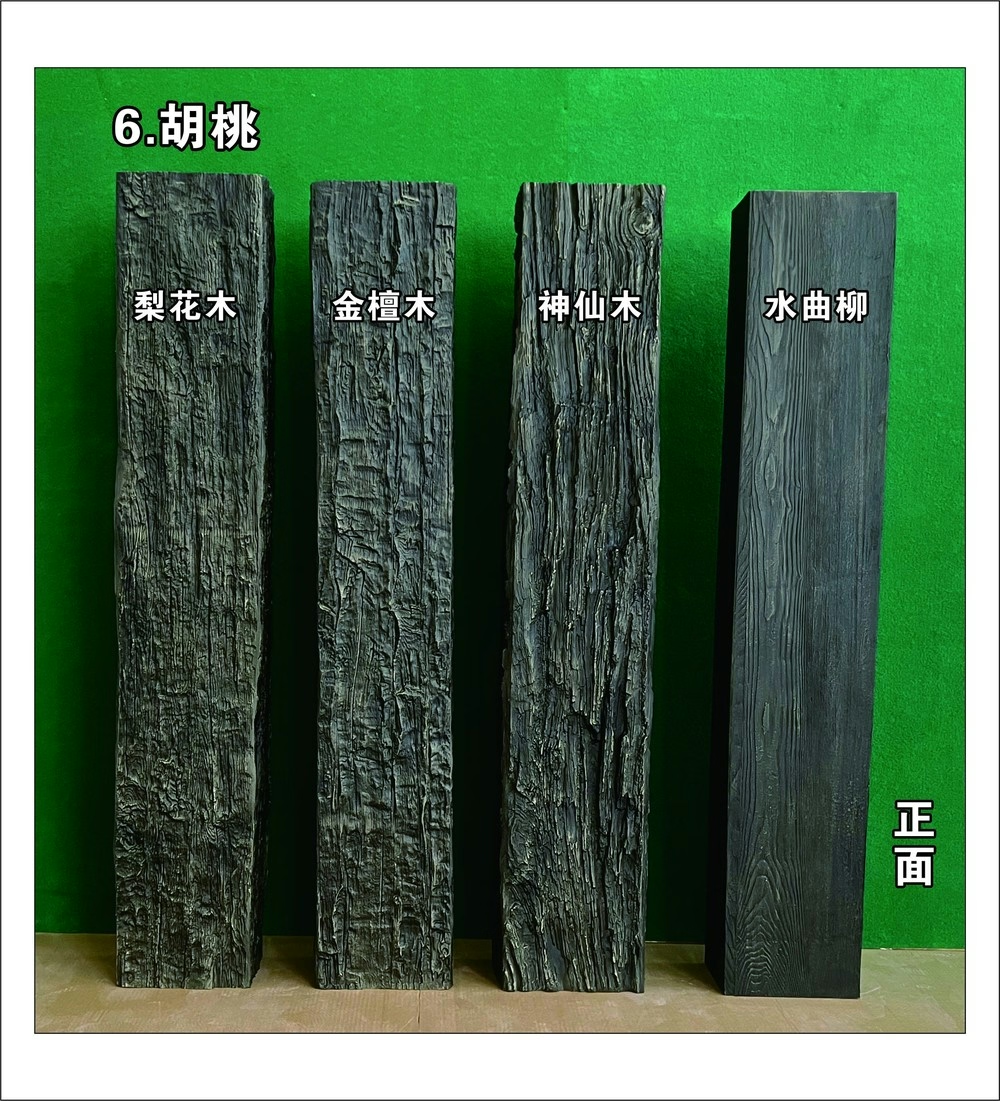
Reclaimed wood replication combines new-wood characteristics with weathering effects that aging creates. The challenge involves capturing both the original timber qualities and the accumulated effects of decades or centuries of service. High definition reference sampling from quality reclaimed examples enables this comprehensive character capture.
Lighting Conditions and Authentication
Daylight authentication presents the most demanding conditions for faux timber assessment, with natural light revealing characteristics that artificial lighting might conceal. The color temperature, directionality, and intensity variation of daylight create examination conditions that challenge even authentic materials. High definition products must perform convincingly under this most critical evaluation.
Artificial lighting conditions vary significantly between common light source types, with incandescent, fluorescent, and LED sources each affecting appearance differently. High definition products incorporate formulation features that maintain authentic appearance across this lighting variety, ensuring satisfactory performance regardless of installed light sources.
Mixed lighting environments, where daylight and artificial sources combine, create particularly challenging authentication conditions. The transition between light source types can reveal characteristics that single-source evaluation would not detect. High definition products address these mixed conditions through comprehensive formulation testing.
Accent lighting including spotlights, track fixtures, and decorative elements creates local illumination that emphasizes surface characteristics differently than general lighting. The grazing angles and focused intensity of accent lighting reveal texture details that ambient illumination might conceal. High definition products perform appropriately under this demanding accent lighting evaluation.
Professional Assessment and Specification
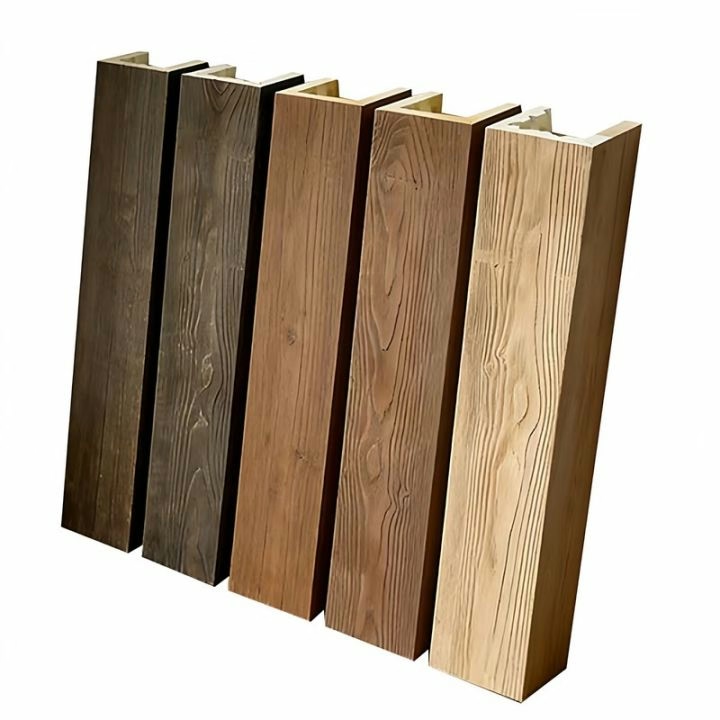
Architectural professionals evaluate beam authenticity as part of their specification process, applying trained observation developed through years of exposure to authentic materials. High definition products satisfy these trained observers when specification correctly identifies appropriate products for application requirements. The professional specification process provides quality assurance that casual selection cannot match.
Preservation specialists apply particularly stringent authenticity criteria, often requiring materials that meet standards established by preservation organizations. These standards may specify replication techniques, reference sample requirements, and verification procedures that ensure authentic appearance. High definition products often qualify for preservation applications where less sophisticated alternatives would not.
Museum curators apply exhibition-quality standards that exceed even architectural requirements, with artifacts and reproductions subject to examination under controlled conditions. High definition faux timber enables museum installations that meet these stringent exhibition standards while providing practical advantages that authentic materials cannot offer.
Building inspectors and code officials evaluate authenticity indirectly through appearance assessment that affects code compliance decisions. The visual quality of installed materials influences the approval process in ways that affect project timelines and outcomes. High definition products facilitate smooth approval by satisfying appearance concerns that inspectors might raise.
Economic Considerations for Premium Products
Initial cost for high definition products exceeds standard alternatives, reflecting the advanced manufacturing technology that enables superior authenticity. The investment in precision scanning, advanced molding, and refined finishing processes all contribute to production cost. However, this cost premium often proves justified through the enhanced results that high definition authenticity provides.
Specification value assessment compares initial cost against the benefits that enhanced authenticity provides. Projects where authenticity is particularly important justify premium specification, while applications where authenticity matters less may not benefit from high definition investment. Matching specification level to project requirements optimizes value across the portfolio.
Lifecycle cost analysis often favors high definition products despite higher initial cost. The superior durability that quality manufacturing provides extends service life while reducing maintenance requirements. These lifecycle advantages may offset initial premium through reduced long-term cost.
Resale and reference value affects ongoing business considerations for commercial projects. Hospitality venues, retail environments, and other commercial applications benefit from appearance quality that high definition products provide. This appearance contribution to customer experience affects business outcomes that extend far beyond the material cost itself.
Quality Verification Before Purchase
Sample evaluation under installation conditions provides the most reliable quality verification method. Taking delivery of actual samples and evaluating them in the space where installation will occur identifies issues before commitment. Professional specifiers routinely require sample approval before ordering production quantities.
Reference installation visits demonstrate how products appear in completed applications, providing evidence that sample evaluation cannot fully convey. Quality manufacturers facilitate these visits, understanding that professional specifiers require this verification before commitment. The availability of reference installations indicates manufacturer confidence in product quality.
Technical documentation review verifies that products meet specified requirements for fire rating, structural performance, and environmental compliance. Any gaps in documentation should be resolved before specification commitment, as post-installation discovery of deficiencies proves costly to address. Quality manufacturers provide comprehensive documentation supporting their products.
Warranty review ensures that coverage terms match expectations and application requirements. The warranty duration, coverage scope, and claim procedures all affect the protection that warranty provides. Quality products typically carry warranties reflecting manufacturer confidence in performance.
Future Trajectory of High Definition Technology
Scanning resolution continues increasing, enabling capture of wood characteristics at scales previously inaccessible. The detail available from advanced scanning will enable future products that exceed current high definition capabilities. This continued advancement will further establish faux timber as the preferred choice for authenticity-critical applications.
Artificial intelligence and machine learning optimize manufacturing processes that previously relied on human expertise. These technologies identify process variations affecting quality and adjust parameters to maintain consistent excellence. The AI-enabled manufacturing will further reduce variation between production batches.
Sustainability integration will combine high definition authenticity with enhanced environmental performance. Bio-based materials, recycled content, and improved recyclability will address sustainability concerns while maintaining authenticity leadership. The combination of environmental and aesthetic excellence will define future premium products.
The continuing convergence of faux and authentic appearance will further establish faux timber as legitimate design option rather than compromise alternative. Professional recognition through specification by leading architects and designers validates the authenticity that high definition manufacturing achieves. The trajectory points toward complete acceptance as technology continues advancing.

Technical References
ASTM standards cited in every specification
Test Data
Lab results from internal testing program
Updated 2026
Reviewed against current product specs


