The concept of permanence in construction has evolved significantly over recent decades, with building owners and design professionals increasingly focused on total lifecycle performance rather than initial cost alone. Permanent installations require materials that not only perform acceptably but continue performing throughout the building's service life without requiring replacement or major maintenance. This permanence requirement has driven development of high-density polyurethane products that deliver the durability permanent applications demand.
The Blackwood Estate renovation demonstrates how permanence considerations affect beam specification in high-end residential applications. Their family estate features exposed beam ceilings throughout main living areas, library, and wine cellar, with the homeowners explicitly requiring materials that would outlast their ownership while adding value for future generations. The specified high-density polyurethane beams satisfied both the durability requirements and the aesthetic expectations that luxury homeowners maintain.
Permanence Requirements and Material Selection
Service life projection provides the foundation for permanent installation specification, with target service lives typically measured in decades rather than years. The selection of materials that can reliably achieve these service lives determines whether installations will fulfill permanence expectations. High-density polyurethane products offer documented service lives exceeding thirty years in typical applications.
Dimensional stability throughout service life ensures that permanent installations maintain alignment, appearance, and structural integrity despite environmental variations. Materials that expand, contract, warp, or otherwise change dimension create problems that permanent installations cannot accommodate. High-density polyurethane's dimensional stability addresses these concerns directly.
Surface durability ensures that appearance remains acceptable throughout extended service without the refinishing that less durable materials would require. The factory-applied finishes that quality products feature resist degradation from cleaning, light exposure, and normal aging. This surface durability maintains appearance that satisfies permanent installation requirements.
Structural integrity maintenance addresses the attachment, joints, and overall construction that enable beam installations to persist throughout service life. Materials that maintain their properties over time enable installations that structural degradation would eventually compromise. High-density products maintain structural characteristics throughout extended service.
High-Density Formulation for Permanence
Density targets for permanent installations should exceed standard commercial specifications, targeting the highest practical levels that ensure decades of reliable service. The relationship between density and longevity supports this premium specification, with higher density generally correlating with extended service life. The marginal cost of elevated density specification proves justified through improved permanence.
Closed-cell structure provides moisture resistance that permanent installations require, preventing the water absorption that would compromise performance over time. This closed-cell architecture also contributes to thermal stability, dimensional consistency, and resistance to biological degradation. Premium products feature optimized cellular structures designed for permanent service.
Additive packages including UV stabilizers, antioxidant systems, and fire retardants ensure that high-density products survive the environmental challenges that extended service presents. These additives extend service life by protecting against degradation mechanisms that might otherwise limit performance. Quality manufacturers optimize additive packages for specific application requirements.
Quality consistency ensures that every production unit meets the standards that permanent installations require. Variation between production batches creates risk that some units might not achieve expected service life. Premium manufacturers implement quality programs that maintain consistency across all production, ensuring reliable performance throughout supply.

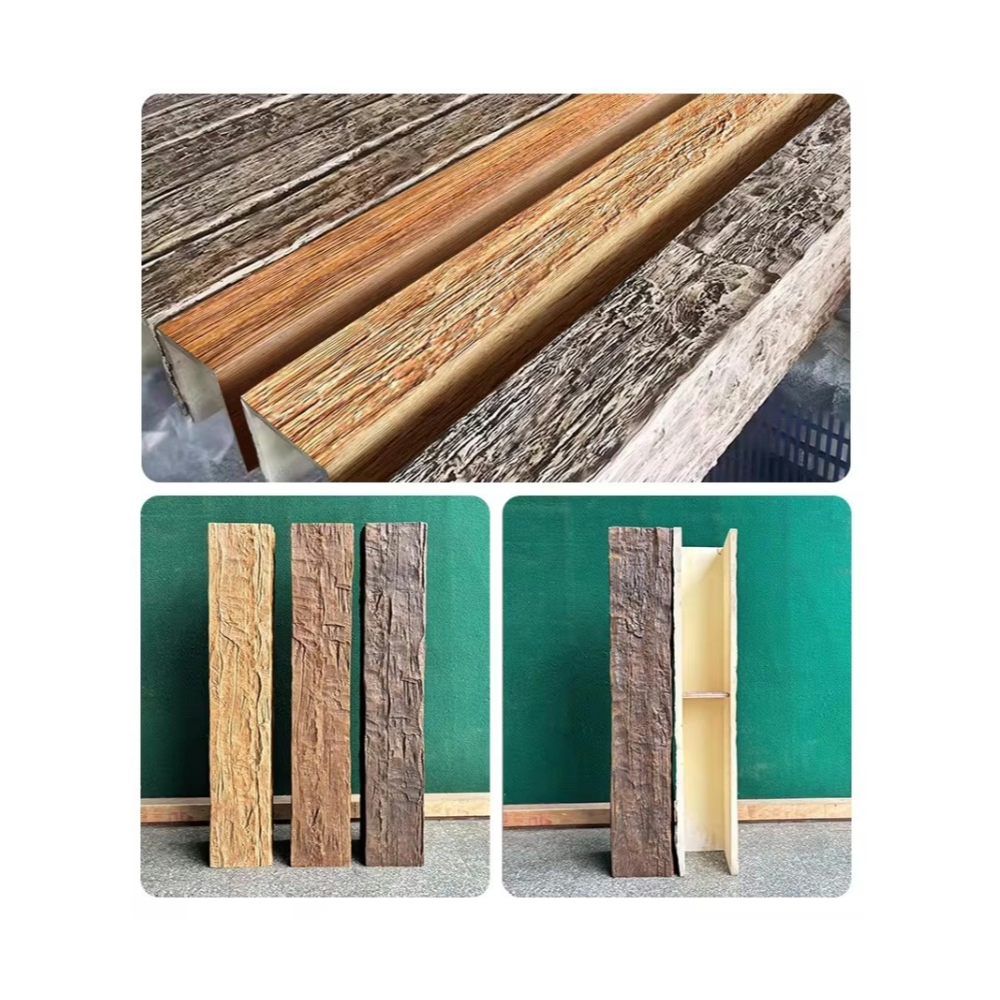
Design Applications for Permanent Installation
Primary residence applications often represent lifetime investments where beam installations should persist throughout ownership. The permanence requirement for these applications justifies premium specification that ensures decades of service without replacement concerns. High-density products provide the confidence that primary residence investments deserve.
Vacation property applications present different permanence challenges, with seasonal occupancy creating conditions that accelerate aging in some materials. The extended vacancy periods between occupied periods may allow degradation to progress without detection. High-density specification ensures that vacation properties maintain appearance despite challenging occupancy patterns.
Inheritance properties present permanence requirements that extend beyond original ownership, with beams expected to serve future generations. The specification decisions made today affect not just current satisfaction but the value and usability that future owners will experience. High-density specification demonstrates consideration for beneficiaries who will inherit these installations.
Commercial tenant improvements often face limited lease terms that might suggest less permanent specification. However, the high turnover costs and renovation disruptions that commercial spaces experience make permanent materials valuable even in transient applications. High-density specification ensures that commercial installations survive multiple tenant iterations.
Installation for Permanent Performance
Professional installation ensures that permanent applications receive the quality workmanship that decades of service require. The investment in professional installation proves economical when compared to remediation costs that amateur work might eventually require. Permanent installations deserve the attention that professional installers provide.
Structural attachment for permanent applications should exceed minimum code requirements, providing margin that ensures reliable performance despite the uncertainties that extended service involves. The additional fasteners, enhanced hardware, and extra adhesive that premium installation includes protect against problems that might develop over decades. This investment in attachment quality supports permanence goals.
Joint preparation receives particular attention in permanent installations, where future access for repair may be limited or impossible. The reinforcement, adhesive bonding, and mechanical fastening that quality joint preparation includes ensures that connections survive throughout service life. This preparation investment prevents problems that would otherwise require disruptive remediation.
Sealing and protection at all transitions prevents the moisture intrusion and air leakage that might compromise permanent installations over time. These details may be invisible in completed work but provide protection essential for longevity. Quality installers treat these protection details with the same attention they give to visible surfaces.
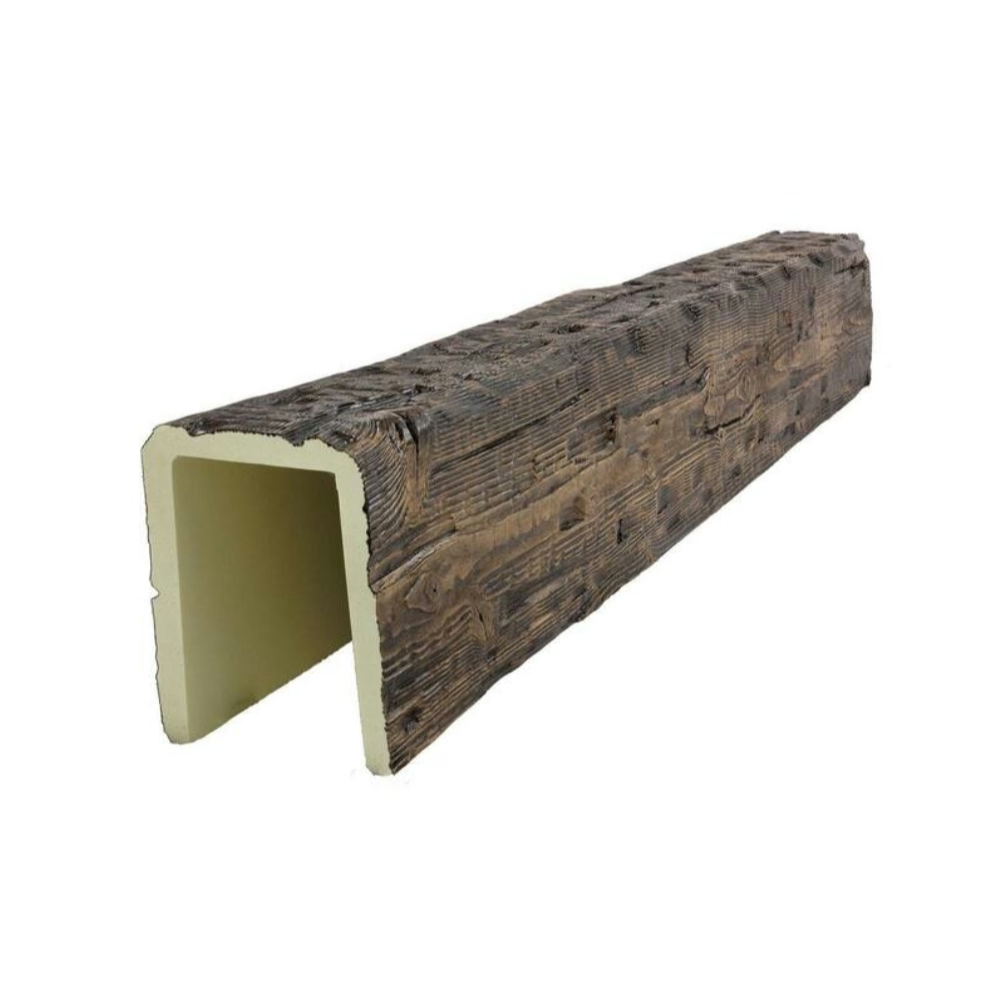
Lifecycle Planning for Permanent Installations
Documentation preservation ensures that specification details remain available for future maintenance and renovation work. Product specifications, finish formulas, installation photographs, and supplier information all support future work that不了解 original installation might struggle to accomplish. This documentation investment serves future building occupants.
Replacement planning acknowledges that even permanent installations eventually require renewal. The extended service life that high-density products provide delays this eventual replacement while still ultimately requiring it. Planning for eventual replacement enables budget allocation that prevents disruption when replacement becomes necessary.
Maintenance protocol development creates the guidance that ensures permanent installations receive appropriate care throughout service life. The cleaning schedules, inspection frequency, and repair procedures that protocols establish maintain appearance and performance that might otherwise degrade. This protocol investment protects the permanence value that high-density specification provides.
Warranty management ensures that coverage remains available if future issues develop despite quality specification and installation. The documentation, registration, and claim procedures that warranty management requires should be completed during original installation to preserve coverage rights. This warranty investment protects against problems that might otherwise require costly resolution.
Economic Considerations for Permanent Investment
Initial specification cost for permanent installations should target the highest reliable performance level that budget permits. The consequences of premature failure in permanent applications justify premium specification that ensures decades of service. The marginal cost of quality specification proves economical when lifecycle costs are properly considered.
Lifecycle cost analysis for permanent installations should span the extended service periods that these applications involve. The maintenance, repair, and eventual replacement that all materials require should factor into total cost calculations. High-density specification often demonstrates favorable lifecycle economics despite higher initial cost.
Property value impact from permanent beam installations extends beyond simple aesthetic enhancement to include the lasting character that quality materials provide. The contribution to property appeal that attractive, well-maintained beams provide affects resale value that represents return on initial investment. This value retention affects the effective economics of permanent installation specification.
Insurance and risk considerations affect specification decisions for permanent applications where failure might create significant consequences. The protection that premium specification provides against failure-related costs influences specification decisions beyond pure economics. This risk management perspective supports high-density permanent specification.
Specification Excellence for Permanent Projects
Application assessment identifies specific permanence requirements that permanent installations must address, enabling appropriate specification targeting. The service life expectations, occupancy patterns, and maintenance capabilities should inform specification decisions before product selection occurs. This assessment ensures that specification matches permanence requirements.
Product testing verification provides evidence that selected products meet permanence performance requirements. Independent testing, accelerated aging studies, and field performance data all support specification confidence. The availability of performance documentation indicates manufacturer commitment to quality that permanent installations require.
Reference installation evaluation demonstrates how products perform in permanent applications over extended periods. The identification of installations with significant service history enables assessment of real-world performance that accelerated testing cannot fully replicate. This reference evidence supports specification decisions for permanent projects.
Manufacturer partnership for permanent installations should extend beyond transaction to include ongoing relationship that supports long-term performance. Technical consultation, replacement availability, and warranty support all influence the success that permanent applications achieve. The vendor relationship matters throughout the service life that permanent installations involve.
Future Developments for Permanent Technology
Manufacturing advances continue improving the performance and consistency that permanent installations require. Process optimization, quality control enhancement, and formulation refinement all contribute to products with improved permanence characteristics. These developments will further extend the service life that permanent installations can expect.
Material science developments promise new polymer technologies with enhanced durability and stability. The molecular engineering that enables these advances remains active research area with significant commercial potential. Future products may offer permanence capabilities that current technology cannot achieve.
Sustainability integration will combine permanence with environmental responsibility, addressing both long-term performance and resource conservation. The extended service life that high-density products provide inherently reduces the replacement frequency that affects environmental impact. This sustainability alignment supports permanent specification.
Digital documentation technologies will improve the information preservation that permanent installations require. Building information modeling, digital records, and connected systems will maintain specification and installation details throughout building service life. These technologies will enhance the lifecycle support that permanent installations receive.

Technical References
ASTM standards cited in every specification
Test Data
Lab results from internal testing program
Updated 2026
Reviewed against current product specs


