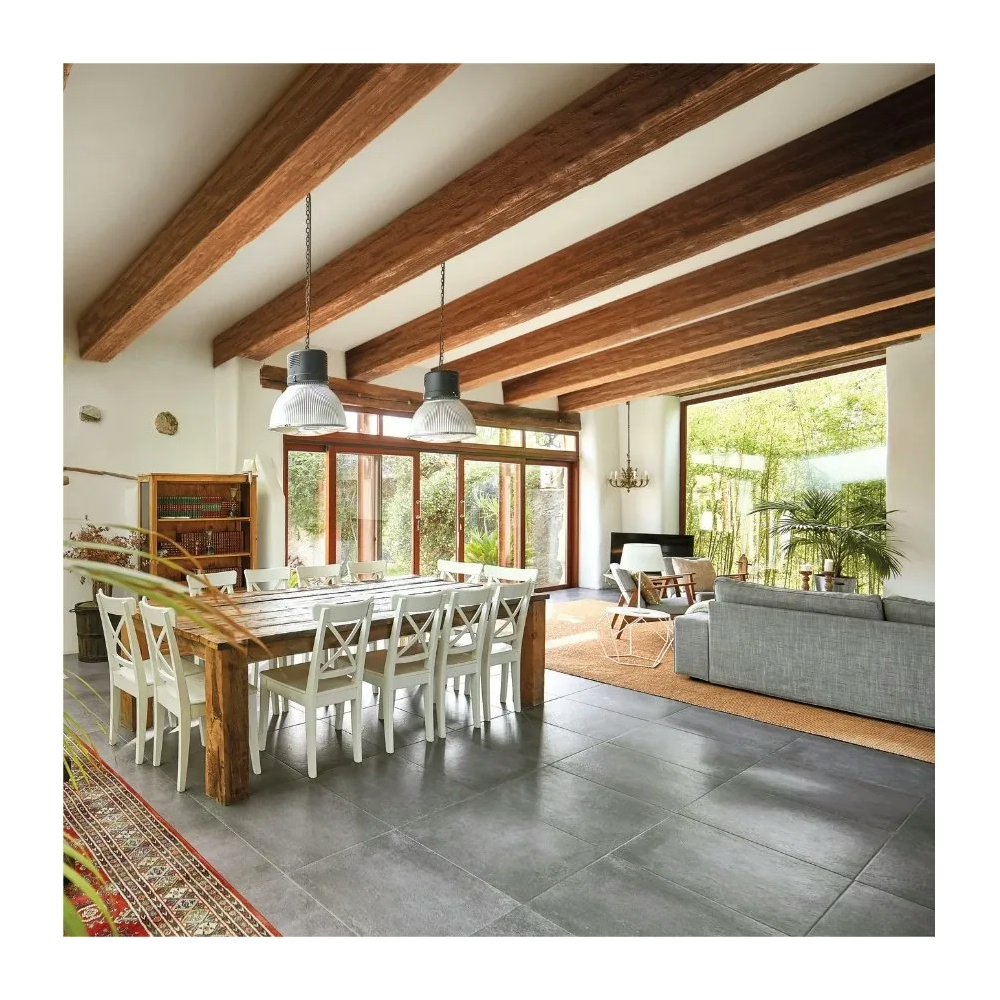
Walking into a space adorned with timber beams, the first thing most people notice is the warmth and character those architectural elements bring to a room. The rich textures, organic patterns, and natural variations in genuine wood have made it a prized material for centuries. However, real wood comes with significant drawbacks—weight complications, moisture sensitivity, pest vulnerabilities, and increasingly, prohibitive costs. This is where modern manufacturing has stepped in with a remarkably sophisticated solution: polyurethane faux wood beams that achieve visual authenticity so convincing that even trained eyes sometimes pause to verify.
The Science Behind Photorealistic Wood Simulation
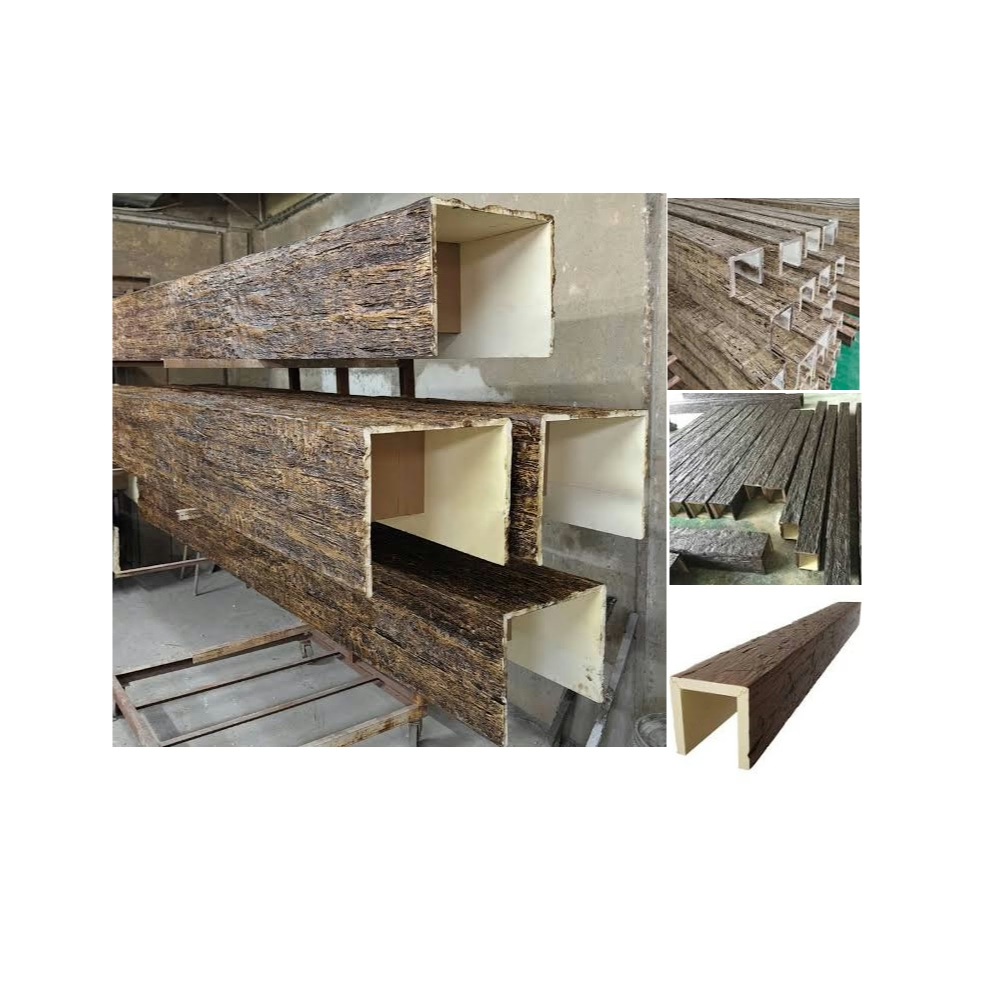
Modern polyurethane casting technology has evolved dramatically over the past two decades. Manufacturers now employ advanced mold-making processes that capture every microscopic detail from authentic wood samples. When creating these molds, technicians select aged oak, weathered barn wood, or century-old reclaimed timber—pieces that already carry the patina of time. The resulting polyurethane reproductions inherit not just the obvious grain patterns, but also the subtle knots, hairline cracks, and color variations that give natural wood its soul.
The polyurethane compound itself plays a crucial role in achieving realism. High-density formulations allow for incredibly fine detail reproduction, while carefully selected color pigments penetrate the material rather than sitting on the surface. This means the beams maintain their appearance even when cut, routed, or shaped on-site. The material accepts stains and finishes naturally, enabling contractors to match existing woodwork or create entirely custom appearances.
Surface texturing adds another layer of authenticity. Rather than smooth, plastic-like finishes, quality manufacturers apply subtle surface treatments that mimic the tactile quality of natural wood. Running your hand across a well-made polyurethane beam reveals the same slight roughness and depth that characterizes genuine timber. This attention to touch-as well as visual appearance-distinguishes premium faux wood products from cheaper alternatives that might look right in photographs but feel obviously synthetic upon inspection.

Weight Advantages Without Compromise
One of the most compelling arguments for polyurethane faux wood beams involves their remarkable weight reduction compared to solid timber. A standard eight-foot load-bearing beam in natural oak might weigh between 80 and 120 pounds, requiring structural support calculations and often professional installation crews with specialized equipment. The same dimensional appearance in polyurethane tips the scales at merely 15 to 25 pounds—roughly one-fifth the weight of authentic wood.
This weight differential opens possibilities that simply aren't practical with genuine timber. Upper floor installations become feasible without structural reinforcement. Cathedral ceilings can receive dramatic beam treatments without engineering concerns. Even ceiling fans and light fixtures can be mounted directly to the beams themselves in many cases, using standard hardware rather than specialized mounting systems designed for heavy loads.
The reduced weight also translates to shipping and handling advantages that benefit everyone in the supply chain. For international trade applications, container loads can accommodate significantly more units when comparing polyurethane to natural wood equivalents. Retailers appreciate the easier inventory management, and end customers benefit from lower transportation costs that eventually reach their final invoices.
Installation Simplicity Transforms Project Timelines
Traditional wood beam installation typically involves multiple stages: ordering the timber, allowing it to acclimate to local humidity levels, cutting and fitting on-site, applying any desired finishes, and then the actual installation process. This sequence can stretch across weeks, with weather considerations and material availability creating potential delays at every step.
Polyurethane faux wood beams arrive ready for installation. The units ship finished—no additional staining or sealing required unless specifically desired. Measurements can be precise because manufacturing happens under controlled factory conditions rather than施工现场 variables. Contractors report that a room that might require three to five days of work with natural timber can often be completed in a single day using quality polyurethane alternatives.
The joining methods also simplify considerably. While authentic timber beams might require metal brackets, through-bolts, and specialized carpentry skills for proper installation, many polyurethane beam systems utilize concealed mounting hardware. These brackets attach to existing structures, and the beams simply slide or click into place. The resulting installation appears as though the beams emerge naturally from the ceiling or rest against the walls, with no visible hardware disrupting the aesthetic continuity.
Long-Term Performance and Maintenance Considerations
Natural wood demands ongoing attention to maintain its appearance and structural integrity. Moisture causes expansion and contraction that leads to warping over time. Insects, particularly termites and carpenter ants, can compromise beam strength from within. UV exposure gradually fades and degrades unprotected surfaces. Homeowners who choose genuine timber accept these maintenance responsibilities as part of their decision.
Polyurethane eliminates most of these concerns entirely. The material resists moisture absorption, meaning humidity fluctuations cause no swelling, shrinking, or splitting. Insects have no interest in polyurethane—it provides no nutritional value and offers no hospitable environment for nesting. UV-resistant formulations available from quality manufacturers maintain color stability even in sun-drenched spaces with extensive natural lighting.
Cleaning requires nothing more than occasional dusting or wipe-down with mild soap and water. Unlike natural wood that might require periodic resealing or refinishing, polyurethane faux beams maintain their appearance year after year with minimal intervention. This characteristic makes them particularly attractive for commercial applications where ongoing maintenance budgets must be planned in advance.
Design Flexibility Unlocks Creative Possibilities
When working with genuine timber, designers must work within the constraints of what nature provides. Wood species availability, dimensional limitations, and natural defect patterns all constrain creative options. Polyurethane manufacturing removes these restrictions entirely, enabling designs that would be impossible or prohibitively expensive with authentic materials.
Beams can be produced in lengths that exceed what natural timber could practically provide, eliminating unsightly splices in long spans. Custom profiles and shapes can be manufactured to specification, whether that means authentic replica aesthetics or entirely original designs. Color matching becomes straightforward—manufacturers can produce beams that precisely coordinate with existing design elements, something difficult to guarantee with natural wood variations.
This flexibility extends to architectural styles as well. Whether the project calls for rough-hewn farmhouse aesthetics, sleek modern geometries, or ornate traditional details, polyurethane faux wood beams can be produced to match the vision. The ability to preview exact appearances through samples before committing to full project quantities reduces design risk significantly.
Environmental and Economic Considerations
The sustainability conversation around faux wood versus authentic timber has become increasingly nuanced. Natural wood does sequester carbon during the tree's growth period, and sustainably managed forests do regenerate over time. However, the environmental costs of harvesting, transporting heavy timber, and the shorter replacement cycles of natural products compared to durable alternatives complicate simple calculations.
Polyurethane faux wood beams, while derived from petroleum-based polymers, offer their own environmental advantages. Their manufacturing process generates minimal waste compared to traditional carpentry. Their exceptional durability means fewer replacements over time. The weight reduction during shipping results in lower fuel consumption per unit delivered. For projects where the authentic appearance of timber is the priority—and not necessarily the material itself—polyurethane provides a compelling alternative.
From an economic perspective, initial material costs for quality polyurethane beams may approach or occasionally exceed natural wood equivalents. However, when factoring in installation labor savings, eliminated finishing expenses, reduced maintenance requirements, and extended product lifespan, the total cost of ownership often favors the faux wood option. This calculation increasingly influences purchasing decisions in both residential and commercial contexts.
Choosing Quality in a Maturing Market
As with any product category, the polyurethane faux wood market encompasses a range of quality levels. The differences between premium and budget offerings become apparent over time—UV resistance that fails within a few years, surface finishes that chip or peel, or density issues that result in visible damage from routine handling. Reputable manufacturers typically back their products with meaningful warranties and provide detailed specifications regarding UV resistance, density ratings, and fire performance characteristics.
For international trade applications, establishing relationships with manufacturers who understand the demands of export packaging and documentation becomes essential. Quality suppliers will have experience with container loading optimization, proper bracing for ocean freight, and compliance documentation for destination countries. These capabilities significantly reduce the risk of receiving damaged goods or facing customs complications.
The market for polyurethane faux wood beams continues to mature as architects, designers, and homeowners discover what these products can accomplish. What began as a cost-effective alternative has evolved into a preferred choice for many applications, valued not merely for its practicality but for its ability to achieve design visions that would otherwise remain aspirational.
Technical References
ASTM standards cited in every specification
Test Data
Lab results from internal testing program
Updated 2026
Reviewed against current product specs


