The phrase "wood grain" encompasses far more complexity than most people appreciate until they examine authentic timber closely. Every sworl, check, and variation that they see represents the record of a tree's growth history, compressed into visible patterns that reveal species, age, growing conditions, and processing history. Replicating this complexity requires manufacturing approaches as sophisticated as the natural processes that created the original.
The importance of texture in wood perception becomes immediately apparent when examining convincing faux alternatives. Colors and forms can be matched relatively easily with modern materials, but texture involves subtleties that challenge even advanced manufacturing. The tactile dimension adds another layer of complexity, as human fingers process texture information that eyes might not consciously register. Polyurethane beam manufacturers have invested heavily in texture technology because they recognize that texture authenticity determines whether observers perceive products as genuine or artificial.
The Anatomy of Wood Texture
Wood texture begins at the cellular level, where wood fibers create surface characteristics invisible to casual observation. Earlywood zones, formed during rapid spring growth, present different fiber densities and orientations than latewood bands that develop during slower summer growth. This density variation creates the alternating bands that create visible grain patterns when viewing wood surfaces.
Annual growth rings record seasonal variations in wood formation, with wet years producing wider rings and drought years producing narrow bands. The contrast between earlywood and latewood within each ring determines grain prominence, with some species showing dramatic ring boundaries while others present subtle transitions. Mold-making for faux beam production must capture this ring detail accurately to achieve convincing replication.
Grain direction follows the tree's vertical axis, running parallel to the stem through most of the bole but swirling around knots and irregularities. This directional quality affects how surfaces reflect light, creating subtle variations that contribute to perceived authenticity. Polyurethane formulations can be adjusted to match the hardness variations that affect light interaction in authentic timber.
Natural wood surfaces accumulate character through use, exposure, and aging. Wear patterns, minor damage, and environmental effects create surface modifications that add visual interest. Weathered wood presents particularly complex textures that manufacturers have worked to replicate, as these aged surfaces often carry the character that designers most want to capture.
Manufacturing Approaches to Texture Replication
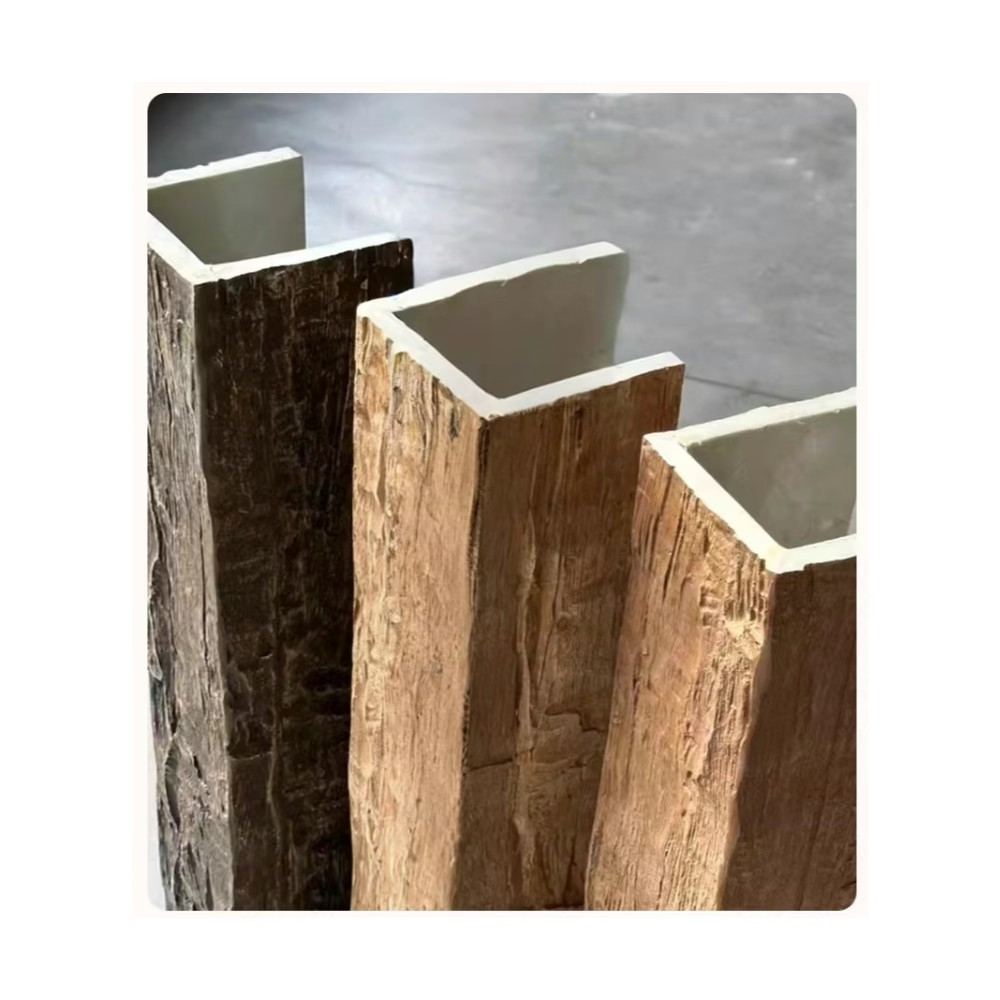
Hand-tool finishing creates texture patterns that distinguish traditional woodworking from modern machine production. The marks left by hand planes, adzes, and drawknives create organic variations that machine production cannot replicate naturally. Mold-makers working from hand-finished reference samples capture these variations with fidelity that approaches the original.
High-resolution scanning technology enables detailed texture capture that preserves detail across the entire measurement range. The resulting digital files inform both mold-making and quality control, ensuring that production products maintain consistency with reference samples. This technological approach provides documentation that traditional methods could not achieve.
Multi-stage molding processes capture texture at different scales simultaneously. Gross form, medium detail, and microscopic texture each require different mold-making approaches, and integrating these scales into unified products demands sophisticated manufacturing. The resulting surfaces present complexity that single-stage molding cannot approach.
Material formulation affects texture quality independent of mold detail. The polyurethane mixture determines surface hardness, flexibility, and response to finishing processes. Manufacturers develop formulations optimized for texture reproduction, balancing this goal against other performance requirements like durability and workability.

Surface Hardness and Tactile Authenticity
Tactile perception plays a significant role in how observers assess wood authenticity, often more than they realize consciously. Running fingers across a surface reveals texture details that visual inspection might miss, and surfaces that feel wrong create subconscious authenticity concerns. Quality faux beams must satisfy tactile assessment as well as visual evaluation.
Natural wood hardness varies significantly across growth ring structures, with latewood bands presenting greater resistance than earlywood zones. This differential hardness affects how finishes adhere and wear, creating the subtle patina that develops over time. Polyurethane formulations can be adjusted to replicate this varied hardness, producing surfaces that feel authentic under fingertip exploration.
Porosity differences between earlywood and latewood affect finish absorption in natural wood, contributing to visual depth that uniform absorption would not create. The closed-cell structure of polyurethane prevents this absorption variation, requiring alternative approaches to achieve similar depth effects. Color gradients and surface variations substitute for absorption-based depth in quality faux products.
Response to temperature differs between authentic wood and polyurethane, though this difference rarely becomes apparent in normal use. Natural wood adjusts to ambient temperature through thermal mass effects, while polyurethane responds more quickly. This difference affects tactile perception in edge-grain contact situations, though it rarely affects visual authenticity assessment.
Light Interaction and Shadow Effects
Directional lighting reveals wood texture through shadow casting that emphasizes surface relief. The dimensional accuracy of authentic grain patterns produces appropriate shadows under lighting design that designers specify to enhance beam appearance. Faux beams must create similar shadow effects to achieve equivalent visual impact under professional lighting.
The angle of incident light affects texture visibility significantly. Low-angle lighting that grazes surfaces emphasizes relief, while overhead lighting tends to flatten appearance. Quality faux beams perform appropriately across this lighting range, maintaining texture character under varied conditions. Budget products may look acceptable under some lighting but reveal texture inadequacy under others.
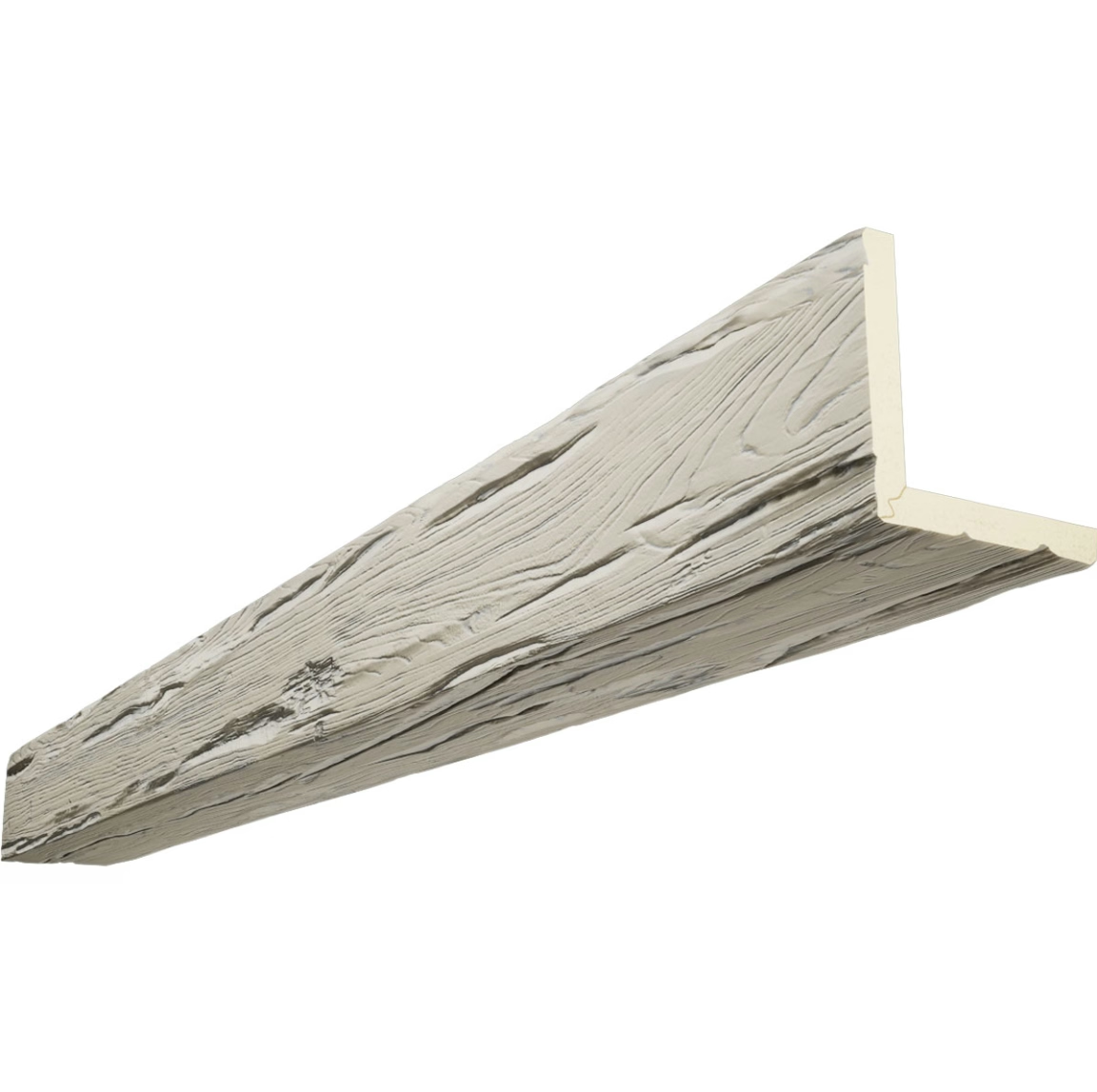
Reflectivity variations across grain directions create the visual complexity that distinguishes authentic wood from painted surfaces. The alternating hard and soft zones of natural wood reflect light differently based on orientation, producing subtle color shifts that contribute to perceived authenticity. Polyurethane formulations can incorporate these reflectivity variations through surface treatments that replicate natural wood behavior.
Specular highlights that appear on glossy finishes behave differently across authentic and faux wood surfaces. The cell structure of natural wood creates scattered highlights that appear soft and natural, while manufactured surfaces may present more uniform reflections. Quality faux products address this challenge through formulation and finishing techniques that create appropriately scattered highlights.
Species-Specific Texture Considerations
Oak texture presents dramatic cathedral grain patterns in flatsawn boards, with pronounced rays visible on quartersawn surfaces. The combination of bold grain and distinctive ray fleck creates unmistakable oak character that manufacturers must replicate accurately. Oak's hardness also affects tactile qualities that contribute to its distinctive feel.
Maple texture presents relatively tight, uniform grain that challenges texture replication. The subtle character that defines maple requires precision manufacturing to achieve convincing results, as there is less visual drama to distract from imperfections. Premium maple reproductions demand manufacturing quality that separates elite producers from budget competitors.
Walnut texture combines dramatic figure patterns with rich color that together create its distinctive character. The swirling grain of walnut burls and crotches presents particular replication challenges that require specialized molding approaches. These figured walnut sections often command premium prices in authentic timber, making quality faux alternatives particularly valuable.
Rustic species like pine and cedar present weathered character that differs fundamentally from the refined surfaces of premium hardwoods. Knots, checks, and weathering effects create rustic character that manufacturers must incorporate thoughtfully. The balance between authentic rustic appearance and obvious artificiality challenges manufacturers working in this style category.
Finish Systems and Texture Preservation
Factory finishing protects texture while maintaining surface character throughout the finishing process. The heat and pressure of spray application can flatten fine texture details if not carefully controlled, requiring finishing expertise that understands texture preservation requirements. Professional manufacturers develop finishing processes that enhance rather than diminish texture quality.
Film-forming finishes coat texture in protective layers that preserve surface detail while providing durability. These finishes must be applied thin enough to avoid filling texture valleys while building sufficient thickness for protection. The balance requires expertise that comes from extensive experience with faux wood products specifically.
Penetrating finishes soak into wood grain to provide protection while maintaining natural texture character. This approach works differently on authentic and faux wood, with natural absorption absent from polyurethane substrates. Quality faux products employ alternative approaches that achieve similar visual results without relying on absorption mechanisms that polyurethane cannot provide.
Matte versus satin finish affects texture visibility, with lower-gloss finishes generally preserving texture appearance better than high-gloss alternatives. The design intent and expected viewing conditions guide finish selection, with trade-offs between authenticity and durability influencing these decisions. Most faux beam applications favor matte finishes that maximize texture visibility.
Quality Assessment for Texture Authenticity
Visual inspection under varied lighting reveals texture quality that single-light assessment might miss. Quality assessment should include examination under natural daylight, incandescent lighting, and fluorescent sources, noting how appearance changes across these conditions. Premium products maintain texture character appropriately across this lighting range.
Tactile evaluation supplements visual assessment, running fingers across surfaces to detect texture characteristics that eyes might miss. Fine grain patterns should feel different from coarse patterns, with appropriate hardness variation creating authentic tactile experience. Surfaces that feel uniformly hard or smooth fail tactile authenticity assessment.
Photography under controlled conditions documents texture quality for specification and quality control purposes. The camera captures details that casual observation might miss, revealing texture inconsistencies that become apparent only through photographic examination. Professional manufacturers use photography extensively in quality verification processes.
Comparative assessment against reference samples ensures consistency across production batches. Quality programs maintain reference samples representing acceptable appearance, with new production compared against these standards before release. Any significant deviation triggers investigation and potential process adjustment.
The Role of Texture in Perceived Value
Texture complexity contributes significantly to the premium that observers perceive in wood surfaces. Surfaces with elaborate, authentic texture appear more valuable than simple alternatives, whether those surfaces are authentic or faux. This perceived value extends to entire installations, with richly textured beams contributing more perceived value than simpler alternatives.
The aging response of texture affects long-term perceived value significantly. Natural wood texture develops character through use and exposure, while poor faux products may appear as-new indefinitely in ways that seem artificial. Quality faux products occupy a middle ground, maintaining authentic texture character without the obvious artificiality of unchanged plastic appearance.
Texture coordination with surrounding materials affects perceived authenticity throughout designed spaces. Beams that feature authentic texture contrast appropriately with adjacent materials, contributing to overall design coherence. Isolated texture that does not coordinate with surroundings undermines perceived authenticity even when individual elements seem convincing.
The relationship between texture and lighting design deserves attention during specification. Professional lighting designers specify beam texture requirements that will achieve intended effects under planned lighting. This collaboration between material specification and lighting design produces more successful results than either discipline alone could achieve.

Technical References
ASTM standards cited in every specification
Test Data
Lab results from internal testing program
Updated 2026
Reviewed against current product specs


