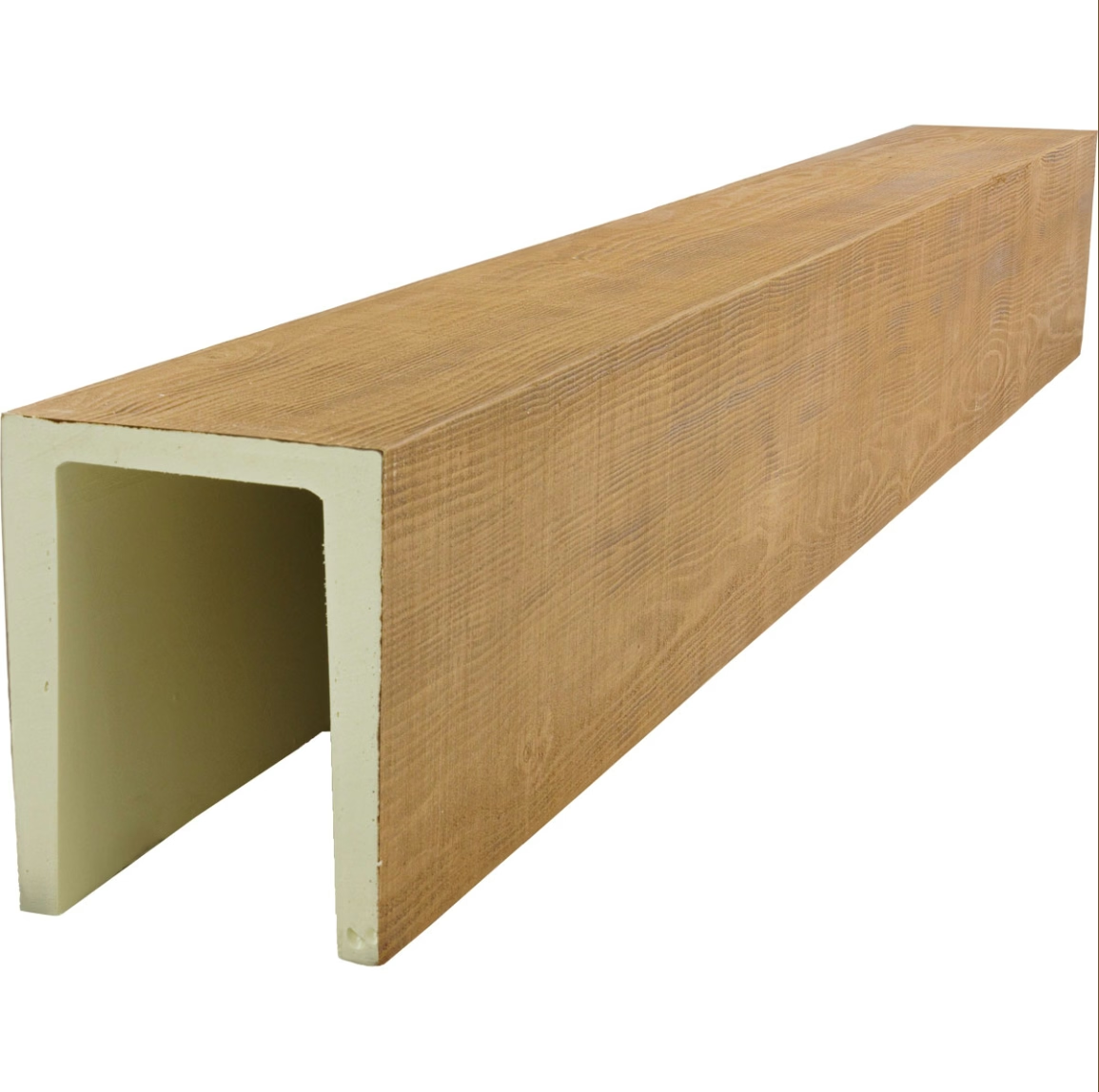
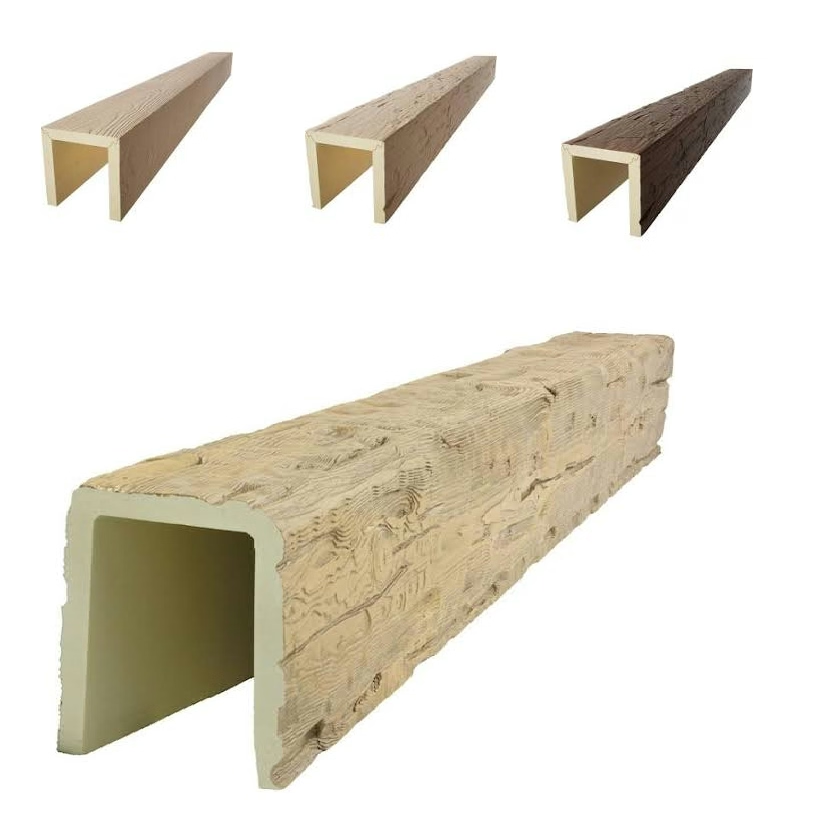
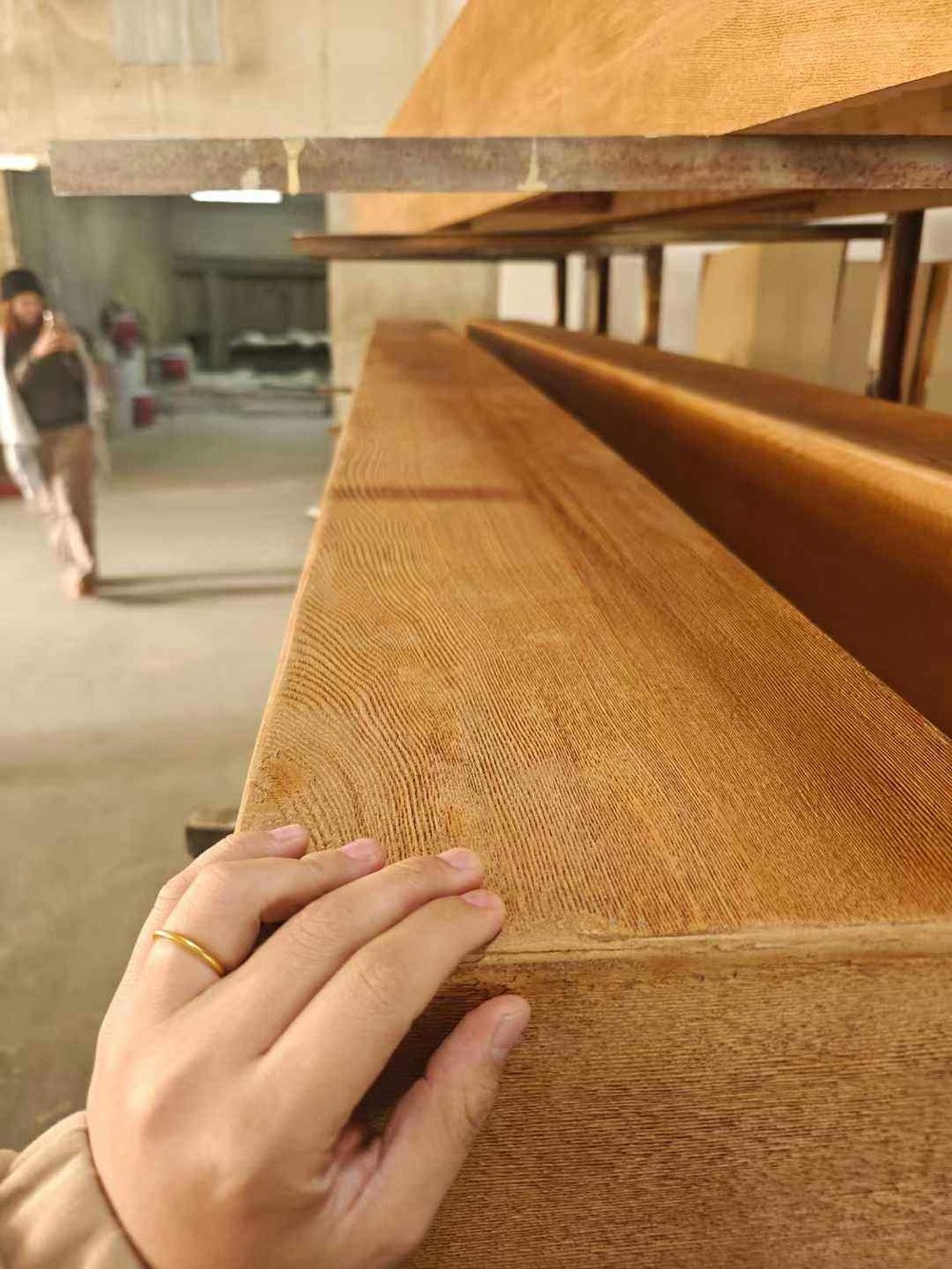
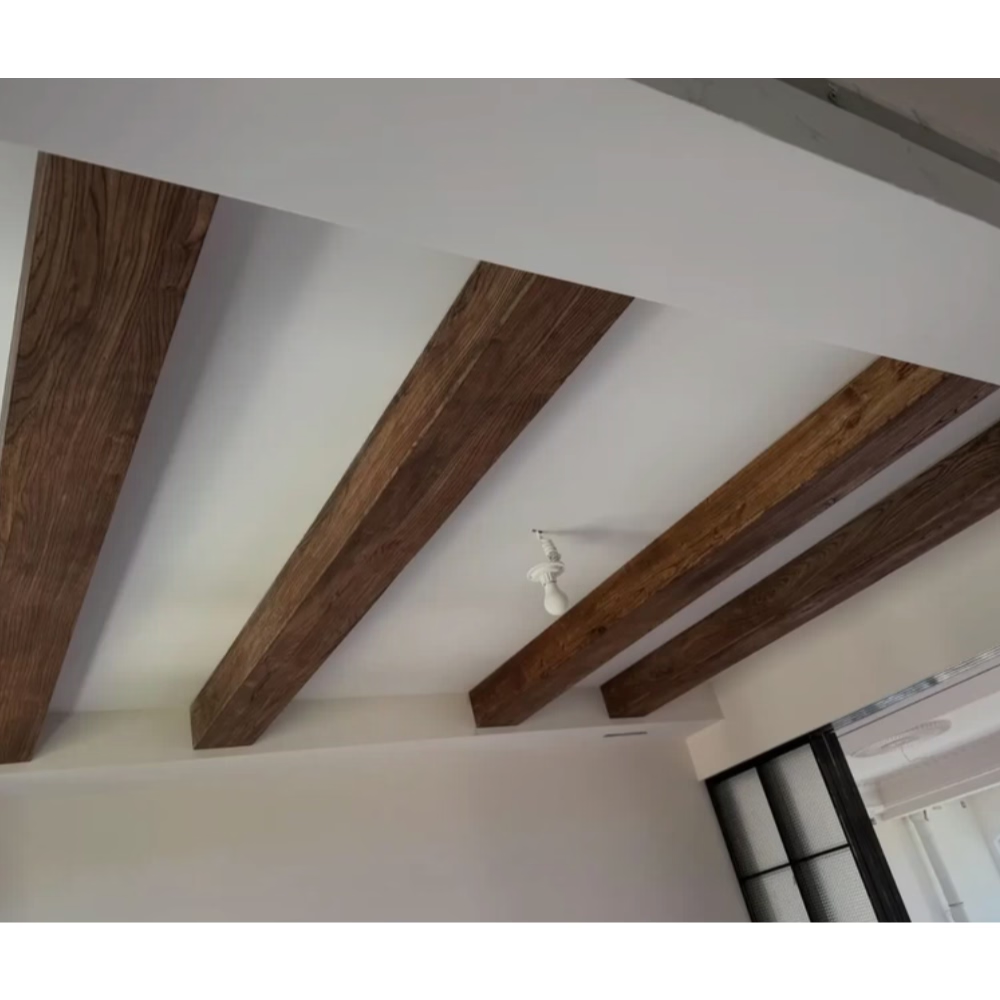
When the architecture community began seriously exploring alternatives to natural timber for decorative beam applications, early products often disappointed. Surfaces that glistened unconvincingly under light, textures that revealed their synthetic origins upon closer inspection, and physical properties that seemed obviously incompatible with authentic wood construction—these early attempts gave wood imitation products a credibility problem that took years to overcome. Modern PU resin formulations and advanced manufacturing processes have completely transformed this landscape, producing faux wood beams that even experienced professionals sometimes struggle to distinguish from genuine timber at a glance.
The Evolution of Wood Imitation Technology
The journey from obviously fake to convincingly authentic required advances across multiple technological domains simultaneously. Material science contributed improved polymer formulations that could accept more sophisticated texturing while maintaining the lightweight characteristics that represent one of the primary advantages over natural materials. Mold-making technology advanced to capture increasingly fine surface details that communicate authenticity at every scale of observation. Coloring and finishing techniques evolved to create depth and variation that mimics the complex appearances of aged natural wood.
These parallel developments converged in production capabilities that now define the premium segment of the market. Manufacturers capable of leveraging all three advancement streams produce products that satisfy not only casual observation but also close professional scrutiny. The distinction between authentic timber and quality PU resin wood imitation has genuinely narrowed to the point where other factors—project requirements, budget considerations, and practical constraints—increasingly drive material selection rather than aesthetic limitations.
The competitive dynamic has benefited consumers considerably. As quality improvements across manufacturers raised baseline expectations, even budget-friendly options improved substantially from early industry offerings. While meaningful quality differentials persist between premium and economy products, even entry-level options now achieve levels of realism that would have represented significant achievements just a decade or two ago.
Physical Properties and Performance Advantages
The engineering characteristics of PU resin faux beams deserve attention beyond their surface appearance because these properties determine appropriate applications and installation approaches. Density ratings for quality products typically fall in the range of 30 to 50 pounds per cubic foot, substantially lighter than natural wood species commonly used for structural or decorative beams. This weight reduction simplifies handling, reduces structural requirements, and enables installation methods impossible with genuine timber.
Compression strength and impact resistance characteristics determine how well beams withstand the rigors of shipping, handling, and installation as well as whatever challenges arise during their service life. Quality PU resin products demonstrate adequate strength for their intended applications without the brittleness that plagued earlier synthetic alternatives. They absorb reasonable impacts without cracking or denting in ways that would compromise appearance, while still maintaining the dimensional stability that prevents warping or twisting over time.
Thermal expansion behavior differs from natural wood but proves manageable within normal environmental ranges. Quality manufacturers design their products and installation methods to accommodate expected dimensional variations without distress. Understanding these characteristics helps installers avoid problems that might arise from inappropriate fastening methods or insufficient expansion accommodation.
Design Flexibility and Customization Opportunities
The manufacturing processes used for PU resin faux beams enable design possibilities that natural timber simply cannot offer. Dimensional flexibility represents perhaps the most immediately apparent advantage—beams can be produced in lengths, widths, and depths that exceed practical limits for natural wood, eliminating unsightly splices that often compromise authentic timber installations in long-span applications.
Profile customization opens additional creative territory. While natural timber availability constrains what profiles designers can specify, PU resin production can generate virtually any cross-sectional geometry. Traditional beam profiles, contemporary geometric designs, and entirely original shapes can all be produced economically in reasonable quantities. This capability enables truly custom design solutions rather than selection from available natural wood options.
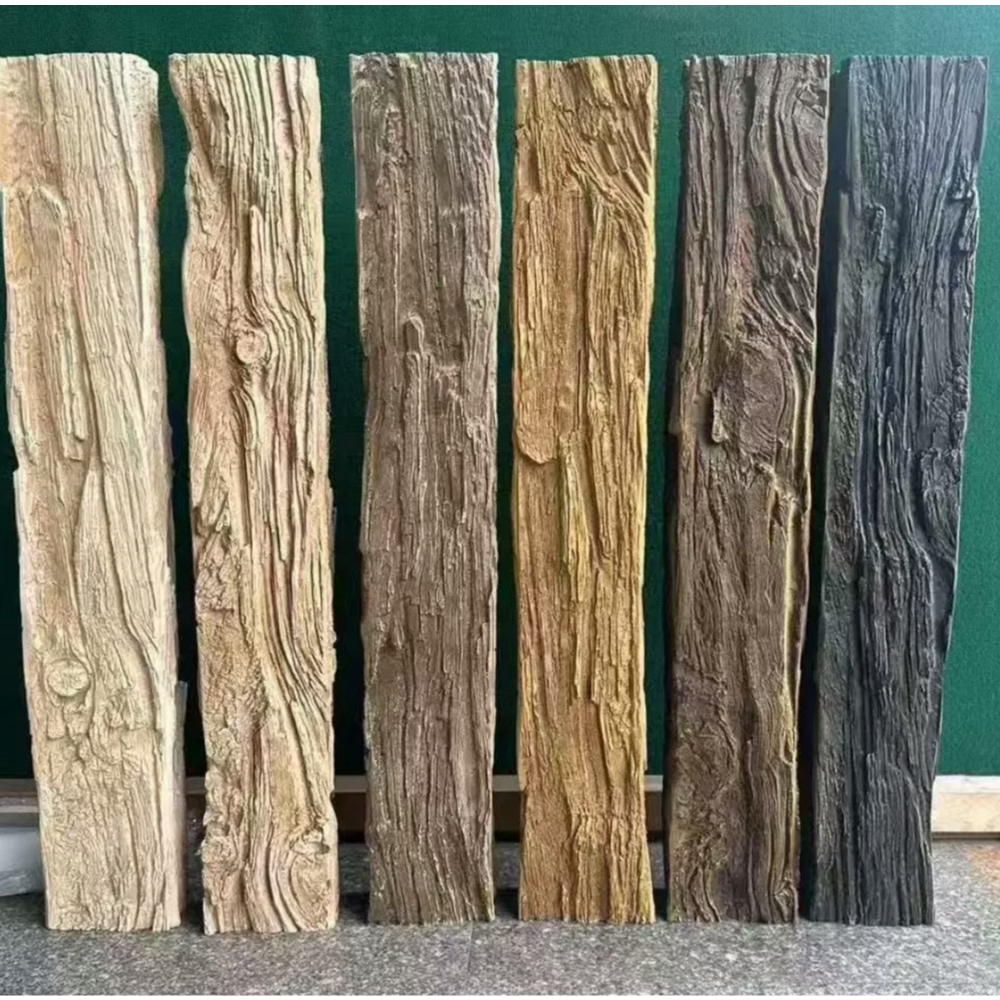
Color matching and finishing customization similarly expand design possibilities. Manufacturers can produce beams in standard colorways, but also accommodate custom color requests for projects requiring specific matches. The ability to apply additional finishes on-site—stains, paints, glazes—further extends customization options while maintaining the base of convincing wood-imitation texture beneath.

Installation Systems and Techniques
Modern PU resin faux beam products typically ship with compatible installation systems designed to simplify attachment while concealing mounting hardware. These systems vary between manufacturers but generally share common principles regarding load transfer, thermal expansion accommodation, and aesthetic concealment. Understanding the specific system provided with purchased products ensures proper utilization.
The structural elements receiving beam attachments require evaluation to ensure adequate support for the loads involved. While PU resin beams weigh substantially less than natural timber equivalents, they still represent meaningful loads that ceiling structures must accommodate. In some cases, existing construction provides adequate support without modification; in others, supplementary framing or blocking may be required.
The actual process of setting beams into final positions benefits from careful attention to alignment and spacing. Even minor deviations from planned positioning become obvious when viewed from normal observation angles, particularly in rooms with strong natural lighting that creates shadows emphasizing dimensional elements. Taking time to verify positioning before final fastening prevents frustrating corrections after the fact.
Maintenance and Long-Term Care
One of the most attractive characteristics of PU resin faux beams from a ownership perspective involves their minimal maintenance requirements. Unlike natural wood that demands periodic attention to maintain appearance and structural integrity, quality PU resin products essentially care for themselves throughout normal service conditions. This characteristic proves particularly valuable in hard-to-access ceiling installations where maintenance access requires scaffolding or specialized equipment.
Routine cleaning typically involves nothing more than periodic dusting or wipe-down with mild cleaning solutions. The non-porous surface of quality PU resin resists stain penetration and cleans without risk of finish damage. Even locations where accumulated cooking grease or similar substances might affect natural wood require only standard cleaning approaches without special treatments or protective coatings.
Periodic inspection of installed beams provides opportunity to identify any developing issues before they become serious. While quality products rarely experience problems, checking for secure attachment, inspecting for any signs of damage from impacts or unusual stresses, and verifying that no moisture has accumulated in adjacent areas all contribute to long-term satisfaction with installations.
Market Applications and Industry Adoption
The expanding acceptance of PU resin faux beams across various market segments reflects accumulated positive experiences with product performance. Architectural specifications increasingly include these products as viable options rather than treating them as compromises. Design professionals who once avoided synthetic wood alternatives have reconsidered as quality improvements became apparent through projects and peer recommendations.
Residential applications continue expanding as homeowners discover the practical benefits alongside aesthetic possibilities. New construction projects incorporate beams from the design phase rather than treating them as retrofit additions. Renovation projects utilize beams to transform existing spaces without requiring the structural modifications that genuine timber would demand. The combination of design flexibility and practical advantages resonates strongly with homeowner priorities.
Commercial and hospitality applications demonstrate the products' ability to perform under demanding conditions. High-traffic venues that would quickly degrade natural wood finishes experience extended service life from synthetic alternatives. The consistency of appearance over time also supports commercial users who need spaces to maintain designed aesthetics without ongoing refinishing interruptions. These characteristics have driven substantial adoption across hotel, restaurant, and retail sectors globally.
Technical References
ASTM standards cited in every specification
Test Data
Lab results from internal testing program
Updated 2026
Reviewed against current product specs