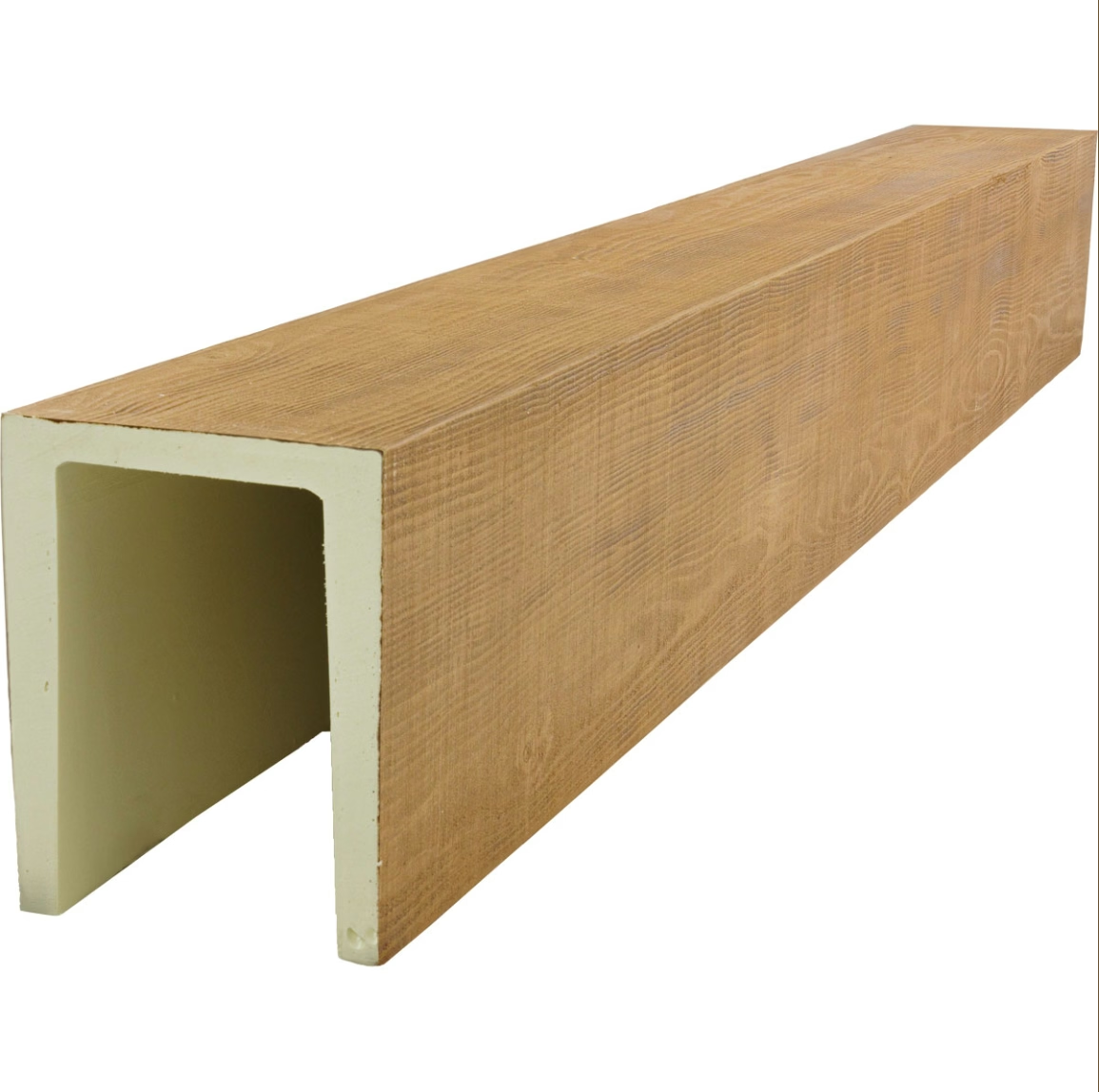
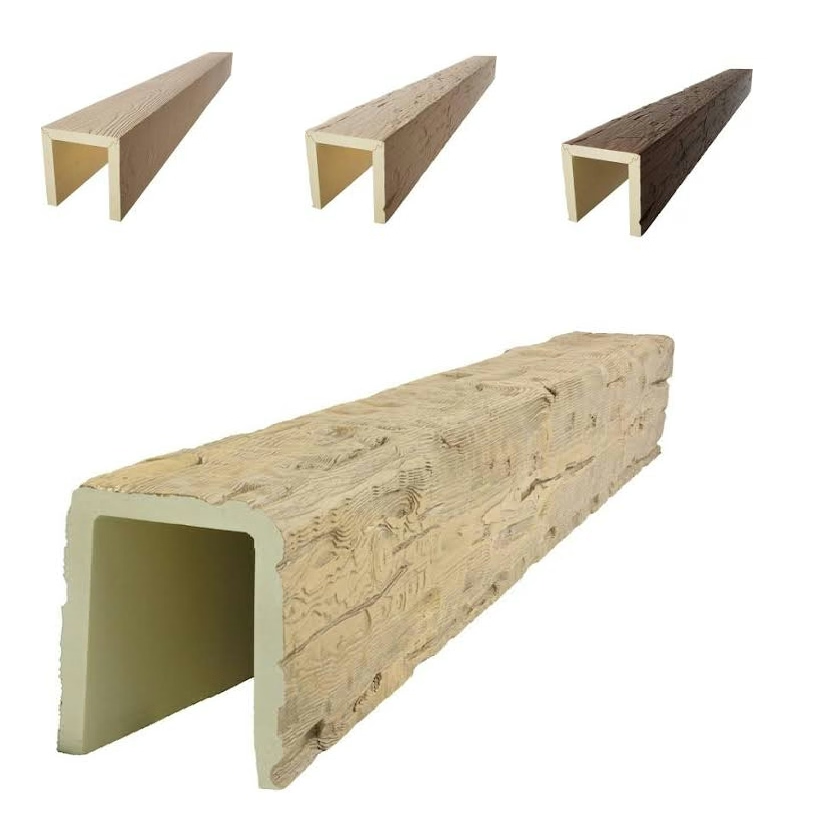
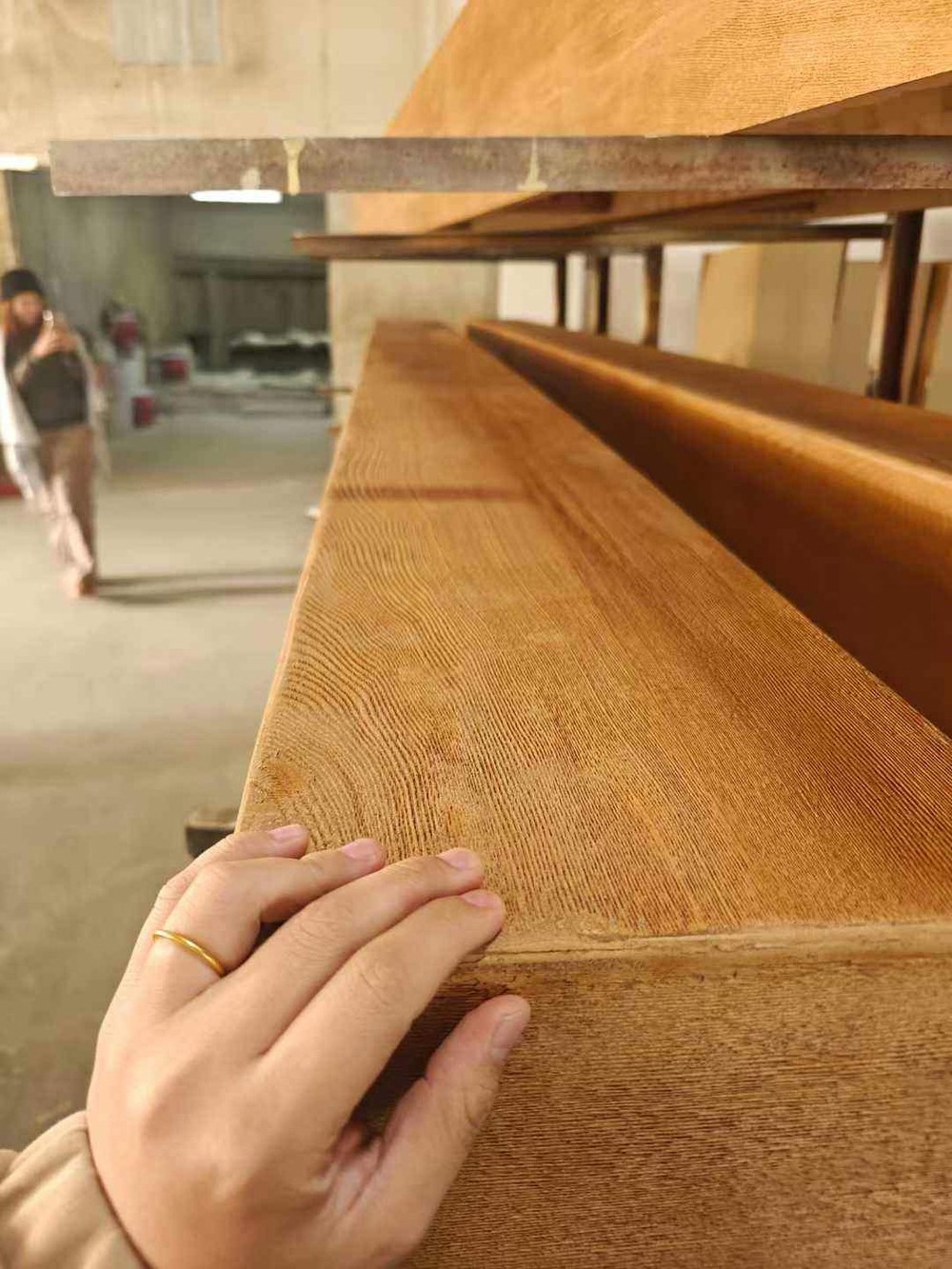
Reclaimed timber has emerged as one of the most sought-after materials in contemporary design, valued for its environmental benefits, inherent character, and the authenticity that only age can provide. However, genuine reclaimed wood presents genuine limitations: availability constraints, dimensional inconsistencies, moisture sensitivity, and the structural uncertainties of materials whose history is not always fully known. These limitations become particularly constraining when design calls for curved forms, where reclaimed timber suitable for bending or shaped construction becomes extremely rare and expensive.
Curved polyurethane faux beams engineered with reclaimed aesthetics resolve these constraints elegantly. These innovative products capture the essential character of reclaimed timber—its weathered surfaces, varied coloring, and authentic aging patterns—while enabling curved forms that genuine reclaimed materials cannot practically provide. The result expands design possibilities dramatically, allowing curved ceiling treatments that would otherwise be impossible or prohibitively expensive.
The Character of Reclaimed Timber
Understanding what makes timber worth reclaiming helps appreciate how faux alternatives capture this essential character. Reclaimed wood carries information that new materials cannot replicate, information that accumulates through years of use and exposure.
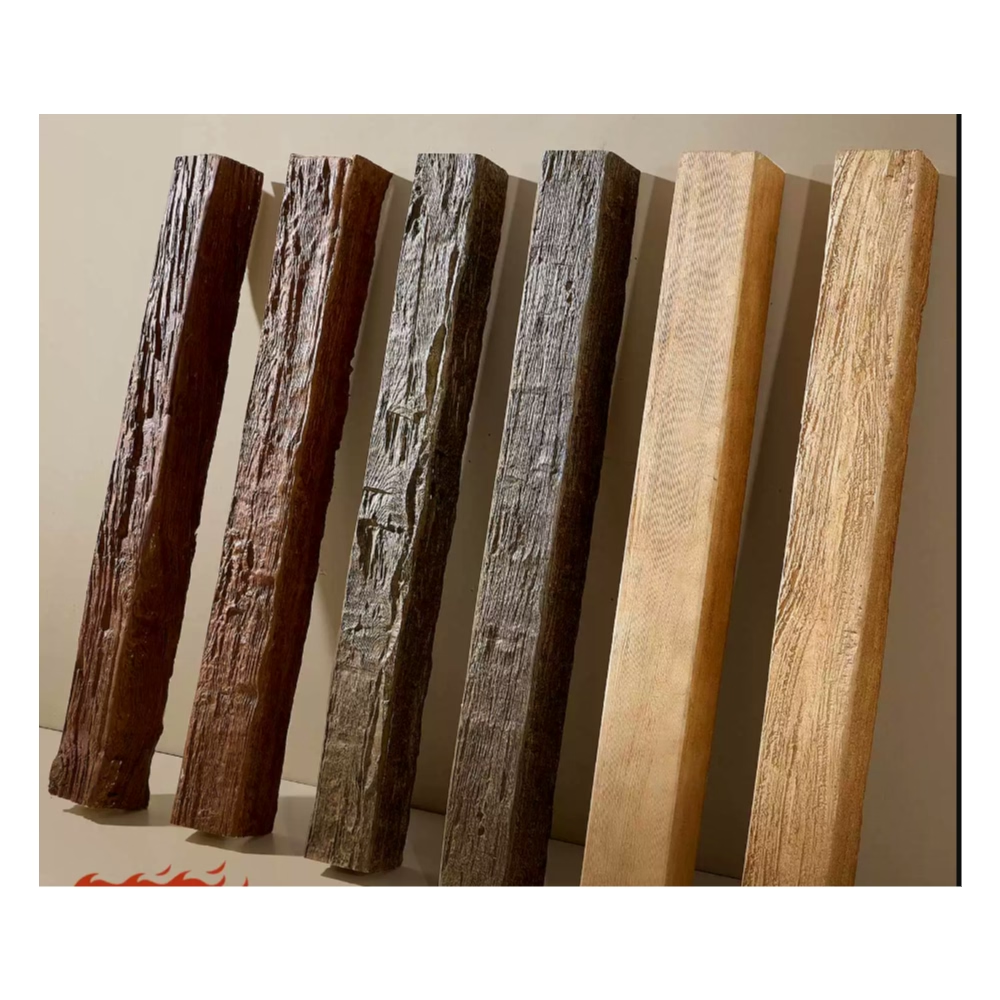
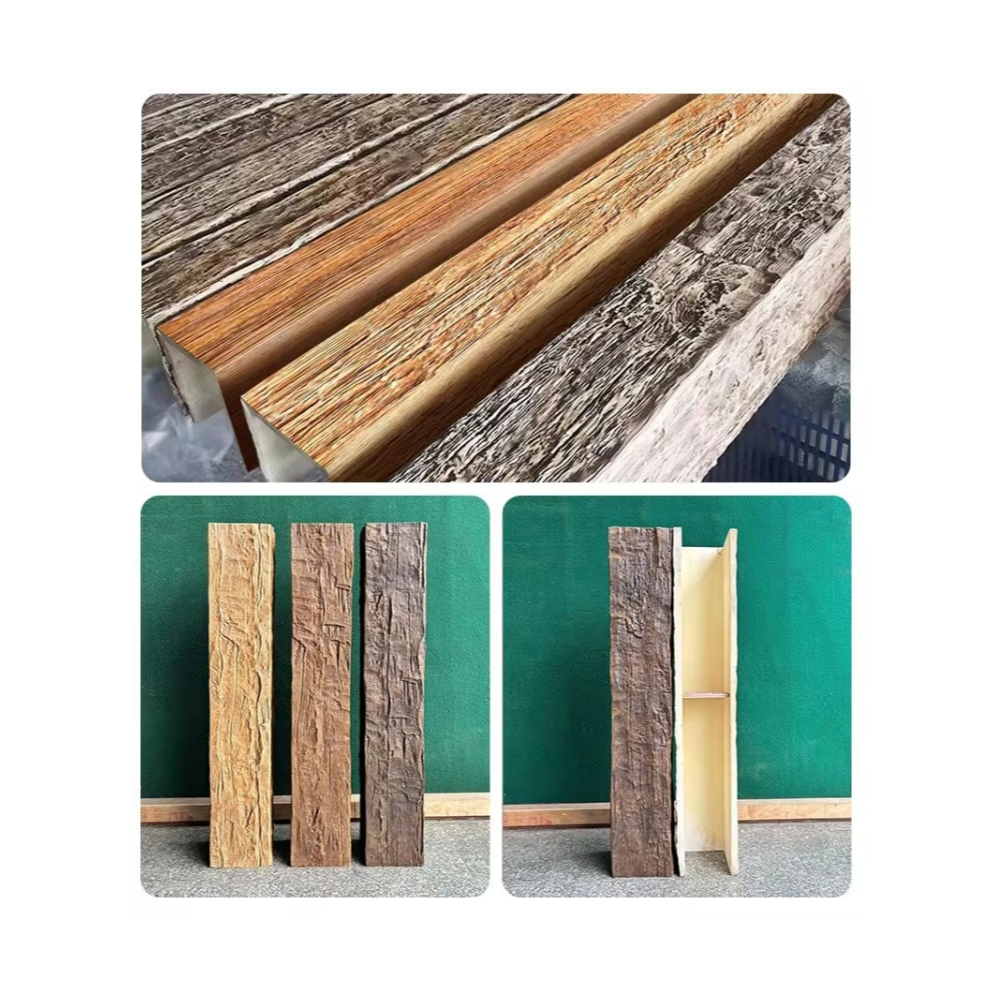
Surface weathering represents the most obvious characteristic of reclaimed timber. The silver-grey patina of long-exposed wood, the darker tones of protected surfaces, the checking and erosion that develop over decades—these effects speak of the passage of time in ways that manufactured distressing cannot fully replicate. Quality faux beam production begins by studying genuine reclaimed specimens, capturing the specific patterns that distinguish authentic aging from superficial simulation.
Color complexity in reclaimed timber results from varied exposure and use patterns. Different areas of the same beam might show dramatically different coloration based on light exposure, moisture contact, and handling. This natural variation creates visual richness that flat stains or single-tone finishes cannot achieve. Quality faux beam finishing builds color complexity through multiple layers, creating dimensional coloration that reads as authentic.
Structural evidence of previous use—nail holes, saw marks, mortise voids, and other signs of the timber's former life—adds character that speaks to the material's history. These details should be present in quality faux beams, positioned and colored to suggest genuine evidence of previous construction rather than random distressing.
Engineering Curves in Reclaimed Style
Creating convincing curved beams with reclaimed aesthetics requires balancing the technical requirements of curved production with the aesthetic requirements of authentic reclaimed character. This combination presents challenges that only carefully engineered products successfully address.
Mold design for curved reclaimed beams must capture surface characteristics at every point along the curve. The grain patterns, weathering effects, and textural variations that define reclaimed character need to flow naturally around curves without distortion or pattern repetition. Quality manufacturers achieve this through careful mold construction and finishing techniques that maintain pattern continuity through compound curves.
The flexibility of polyurethane during forming allows complex curved shapes that would be impossible with timber. Gentle barrel vault curves, dramatic Gothic pointed arches, and organic flowing forms can all be produced consistently. This flexibility enables architectural designs that would otherwise require expensive custom timber fabrication or compromise the design vision.
Structural performance of curved faux beams must satisfy installation requirements despite their curved geometry. Quality products maintain structural integrity through the curve, supporting any intended loads and resisting the deformation that might compromise appearance over time. The specific structural characteristics should be verified during specification.
Design Applications for Curved Beams
Curved ceiling treatments create spatial experiences that straight beams cannot match. The dynamic quality of curves transforms spaces, adding movement and interest that static straight lines cannot provide.
Barrel vault ceilings with curved beams following the vault's curvature create dramatic overhead experiences reminiscent of traditional European architecture. The continuous curve draws the eye along the space, emphasizing length and creating sense of journey. Beams spaced along the vault create rhythm that reinforces the architectural movement.
Gothic and Gothic Revival inspired designs feature pointed arch curves that rise to defined peaks. These dramatic forms create vertical emphasis that elevates the spatial experience, inspiring the contemplation that traditional Gothic architecture was designed to evoke. Curved faux beams enable these forms in contemporary applications without the structural complexity that genuine timber construction would require.
Organic curved forms that flow without geometric definition create spaces of exceptional visual interest. These free-form curves resist categorization, challenging viewers to understand the space while creating environments that feel sculptural and unique. Curved faux beams make these ambitious forms achievable at practical cost levels.

Integration with Architectural Elements
Curved beams rarely exist in isolation; they integrate with walls, other beams, windows, and architectural elements that must be coordinated for successful installation. This integration requires careful planning and precise execution.
Wall junctions for curved beams require decisions about how the curve meets the vertical surface. The beam might curve directly into the wall plane, creating continuous curved transition. Alternatively, the beam might terminate with a straight section that meets the wall at a defined angle. Each approach creates different visual effects appropriate to different architectural contexts.
Beam intersections—whether curved-to-curved or curved-to-straight—present similar challenges. The goal is creating transitions that appear natural and intentional rather than arbitrary or clumsy. Custom fabrication by skilled craftspeople achieves this result, as does careful coordination between manufacturers and installers for complex systems.
Window openings and other ceiling penetrations require consideration during curved beam design. Curved beams passing above windows or Skylights create dramatic compositional elements, but the geometry must be precisely coordinated to ensure proper clearances and visual relationships. These details should be resolved during design rather than discovered during installation.
Custom Curved Configurations
The flexibility of polyurethane enables custom curved configurations that would be impractical or impossible with genuine timber. This capability addresses unique architectural situations and enables ambitious design visions.
Non-standard curves that follow specific architectural geometries can be produced by creating appropriate forms or templates. The specific radius, the rate of curvature change, and the overall geometry can all be communicated to manufacturers through drawings, measurements, or physical templates. This flexibility allows curved beams to address unique situations rather than requiring architectural compromise.
Compound curves that bend in multiple directions simultaneously expand design possibilities further. These complex forms create sculptural ceiling treatments that become primary design elements rather than background architecture. The visual impact justifies the additional complexity when executed successfully.
Radius beam ends that curve gracefully rather than terminating abruptly add refinement that distinguishes custom work from standard installations. This detail requires additional manufacturing complexity but creates finished installations of exceptional quality.
Technical Considerations for Curved Installations
Curved beam installations involve technical considerations that differ from straight beam applications. Understanding these differences helps plan realistic projects and ensure successful outcomes.
Template development for custom curved beams ensures accurate production. The template can be physical, digital, or documented through detailed measurements and drawings. Complex curves benefit from physical templates that can be verified against actual site conditions before production begins.
Mounting methods for curved beams must accommodate the specific geometry of each installation. Curved surfaces create different force distributions than flat surfaces, potentially requiring additional attachment points or more substantial mounting hardware. The manufacturer's specifications for mounting should be followed carefully.
Finishing curved beams requires techniques appropriate to curved geometry. Joints between curved sections, transitions between curved and straight elements, and connections to walls all require careful attention to appear continuous and intentional. The curved surface itself may require different finishing technique than flat surfaces due to how light interacts with curved geometry.
Cost and Value Considerations
Custom curved beams typically cost more than standard straight options due to the additional manufacturing complexity and specialized installation requirements. Understanding the factors that affect cost helps budget appropriately.
The complexity of the required curve directly affects production costs. Simple radius curves following consistent curvature are relatively economical. Compound curves with varying radii, reverse curves, or three-dimensional curvature add substantial cost as complexity increases.
Scale affects unit costs for curved beams. Larger beams require more material and present handling challenges. Very large custom curved beams might require specialized production methods or equipment that add to base costs.
The value proposition depends on the specific application. In spaces where curved geometry provides meaningful architectural benefit, the additional cost may be justified. In situations where curves are added simply for visual interest without strong purpose, simpler solutions might provide similar benefits at lower cost.
Creating Dramatic Spaces with Curved Beams
Curved reclaimed look beams enable architectural ambitions that straight elements cannot achieve. The combination of authentic reclaimed character with dynamic curved forms creates spaces of exceptional visual impact and lasting appeal.
Consider how curved beams will serve the overall design intent. Dramatic vaulted entries benefit from the grandeur that curved beams provide. Intimate spaces might be overwhelmed by aggressive curves; more gentle curvature creates subtle interest without dominating.
The investment in quality curved beam installation pays dividends in architectural distinction that differentiates spaces from the ordinary. Curved forms that flow naturally create environments that reward attention and create lasting impressions.
Vintage curved reclaimed look polyurethane beams represent the intersection of authentic aesthetics and innovative engineering. By combining the essential character of reclaimed timber with the flexibility of curved forms, these beams enable architectural spaces of genuine distinction.
Technical References
ASTM standards cited in every specification
Test Data
Lab results from internal testing program
Updated 2026
Reviewed against current product specs