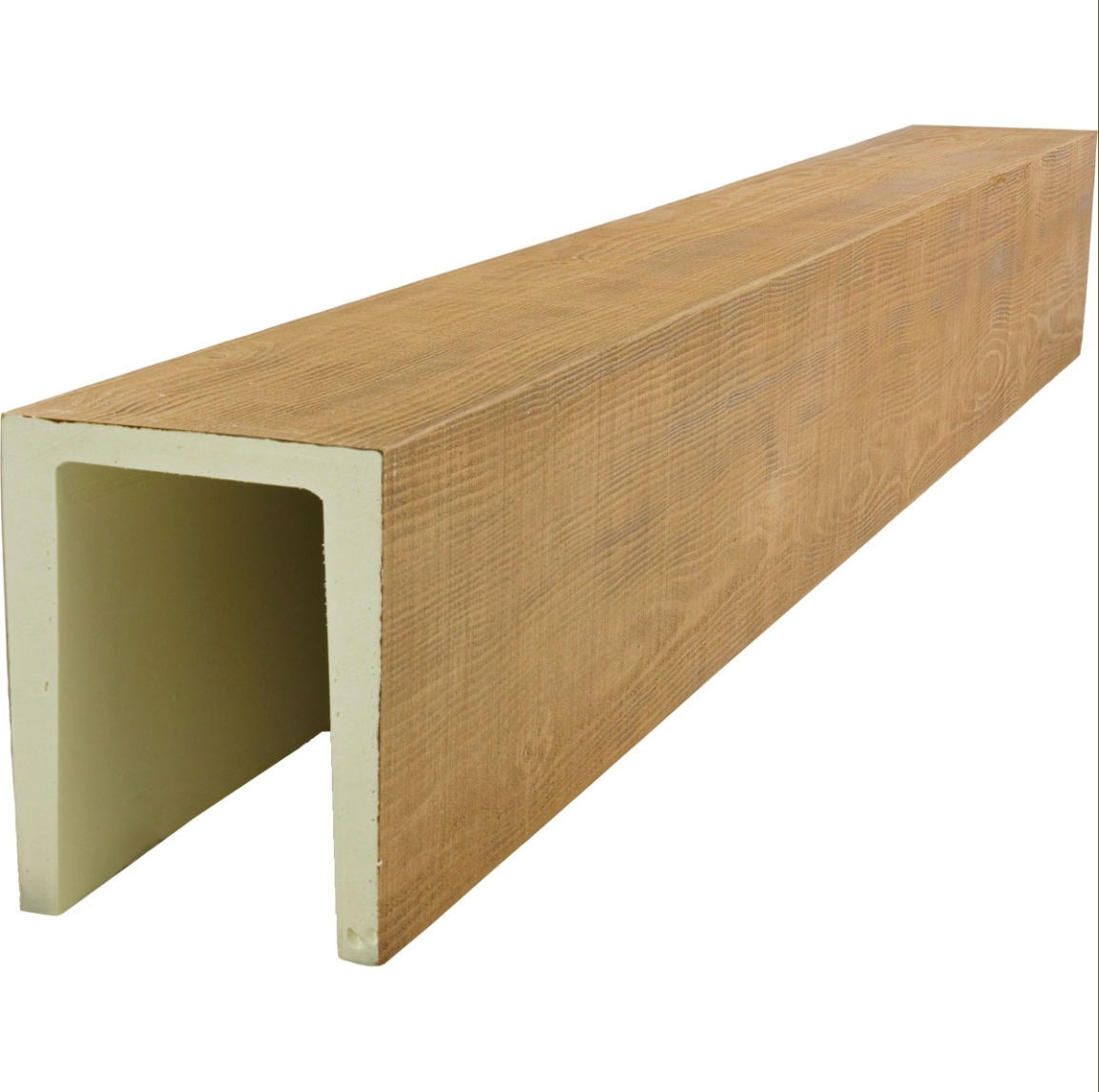
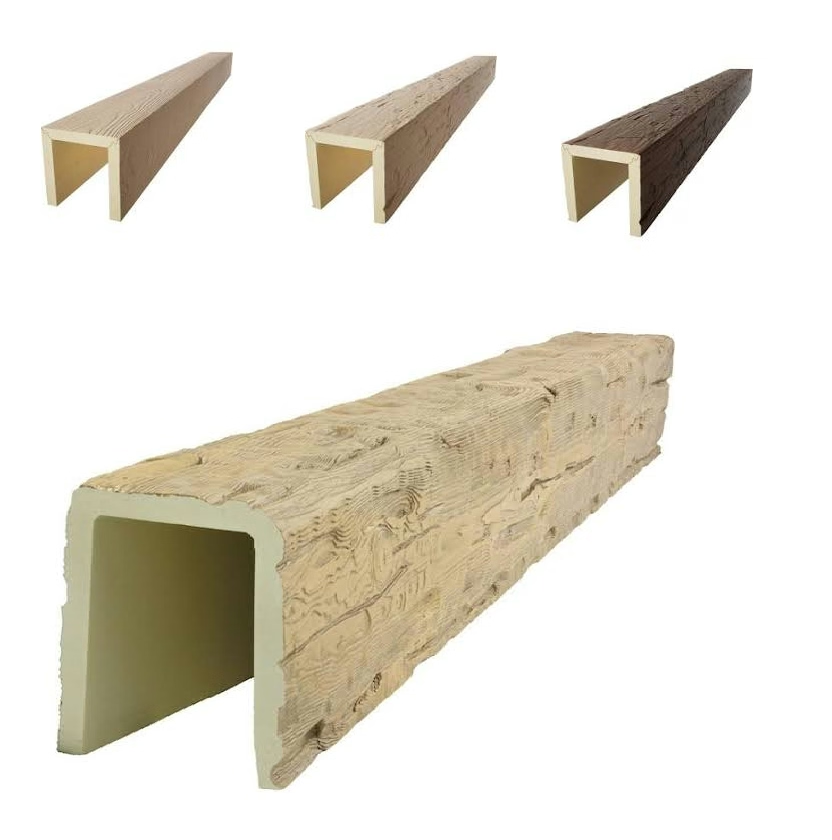
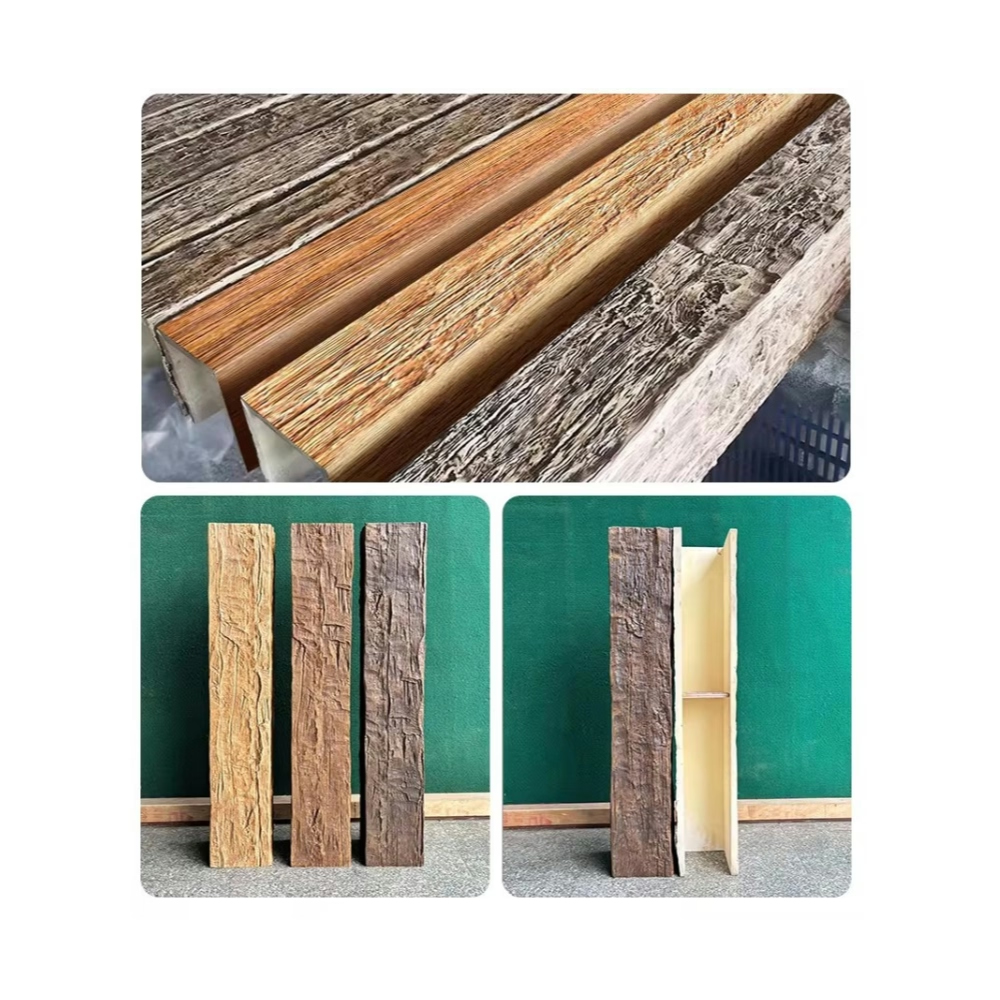
The question of authenticity comes up constantly in our conversations with customers: will faux beams actually look like real wood? It's a fair question, and one we take seriously because the answer determines whether our products serve their intended purpose. The short answer is yes—modern polyurethane technology has advanced to the point where convincing wood simulation is genuinely achievable. The longer answer involves understanding exactly how that authenticity is created.
Genuine wood possesses visual characteristics that developed over decades of natural growth. Grain patterns, color variations, surface texture, and end-grain appearance all contribute to the recognizable wood aesthetic. Reproducing these characteristics convincingly requires more than surface-level imitation; the details must be present at every scale, from across-the-room viewing to close-up inspection.
The Science of Wood Grain Reproduction
Wood grain patterns develop from the tree's growth structure, with rings representing annual growth separated by density variations between spring and summer wood. This natural pattern creates the characteristic lines that identify wood surfaces. Replicating these patterns in polyurethane requires understanding both their visual appearance and their physical origins.
Our production process begins with careful study of natural wood specimens, identifying the specific grain characteristics that define different species and age conditions. We document ring spacing, ray patterns, and the irregular variations that make real wood visually interesting. These observations inform the molds and textures that become the foundation of our beam surfaces.
Surface texture includes more than visible grain lines. The micro-roughness of weathered wood, the slight fuzziness of planed surfaces, and the burnished smoothness of high-touch areas all contribute to authentic wood feel. When beams reflect light differently across these varied textures, the resulting visual complexity creates the depth that distinguishes real wood from flat imitation.
Color and Finish Variation
Uniform coloration immediately reveals artificial materials because natural wood never presents consistent color throughout a piece. Tannin distribution, mineral deposits, growth rate variations, and aging patterns create subtle but visible color shifts across any real wood surface. Our finishing process replicates these variations deliberately.
The color application involves multiple layers that build complexity rather than single applications that flatten appearance. Base coats establish the fundamental wood tone; subsequent glazes settle into grain valleys and accentuate texture; highlight applications catch raised surfaces and edges. This layered approach creates the dimensional color that reads as naturally aged.
Environmental aging effects—silver-grey weathering on exposed surfaces, darker tones in protected areas, amber patina development—contribute to authentic appearance in ways that new-fresh finishes cannot match. Our weathered finishes incorporate these aged characteristics, creating beams that appear to have accumulated history rather than being manufactured yesterday.
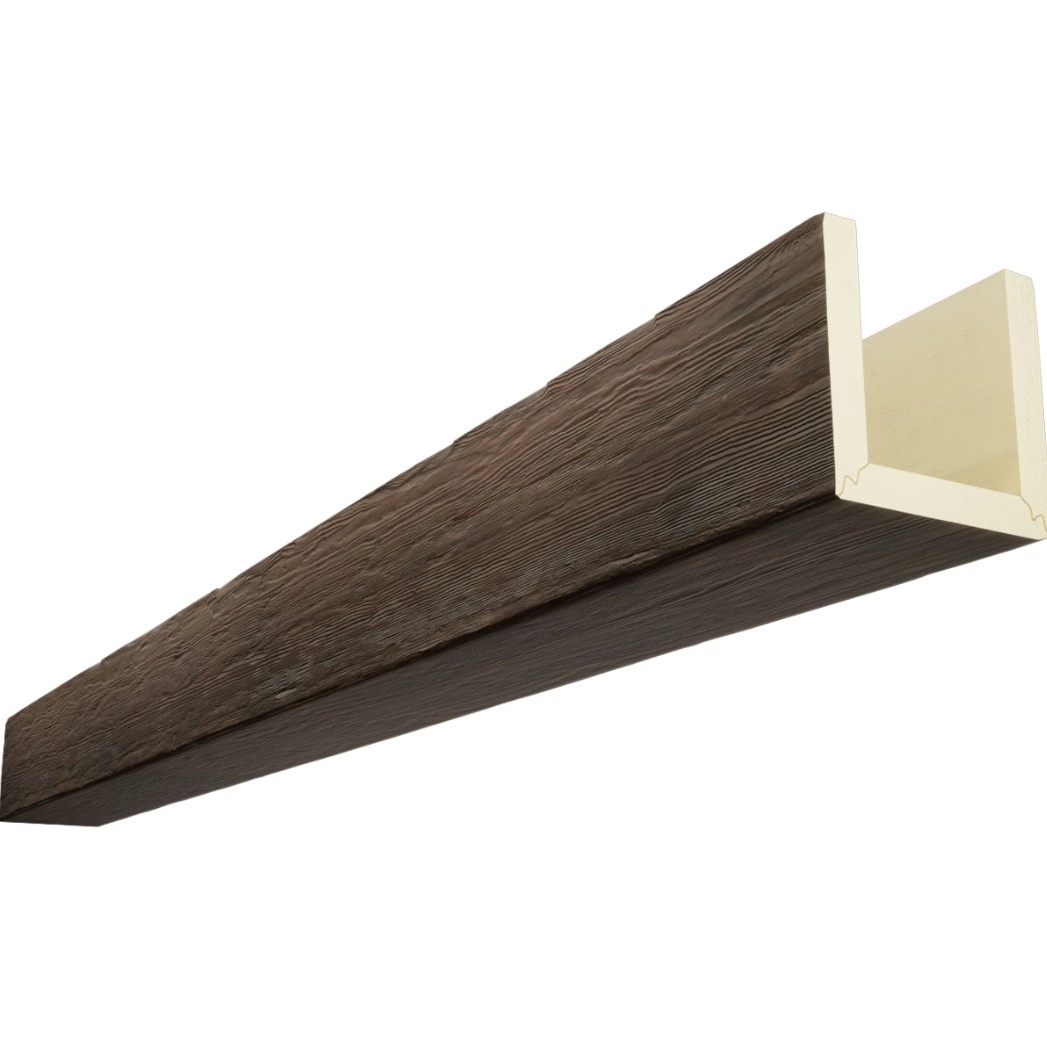
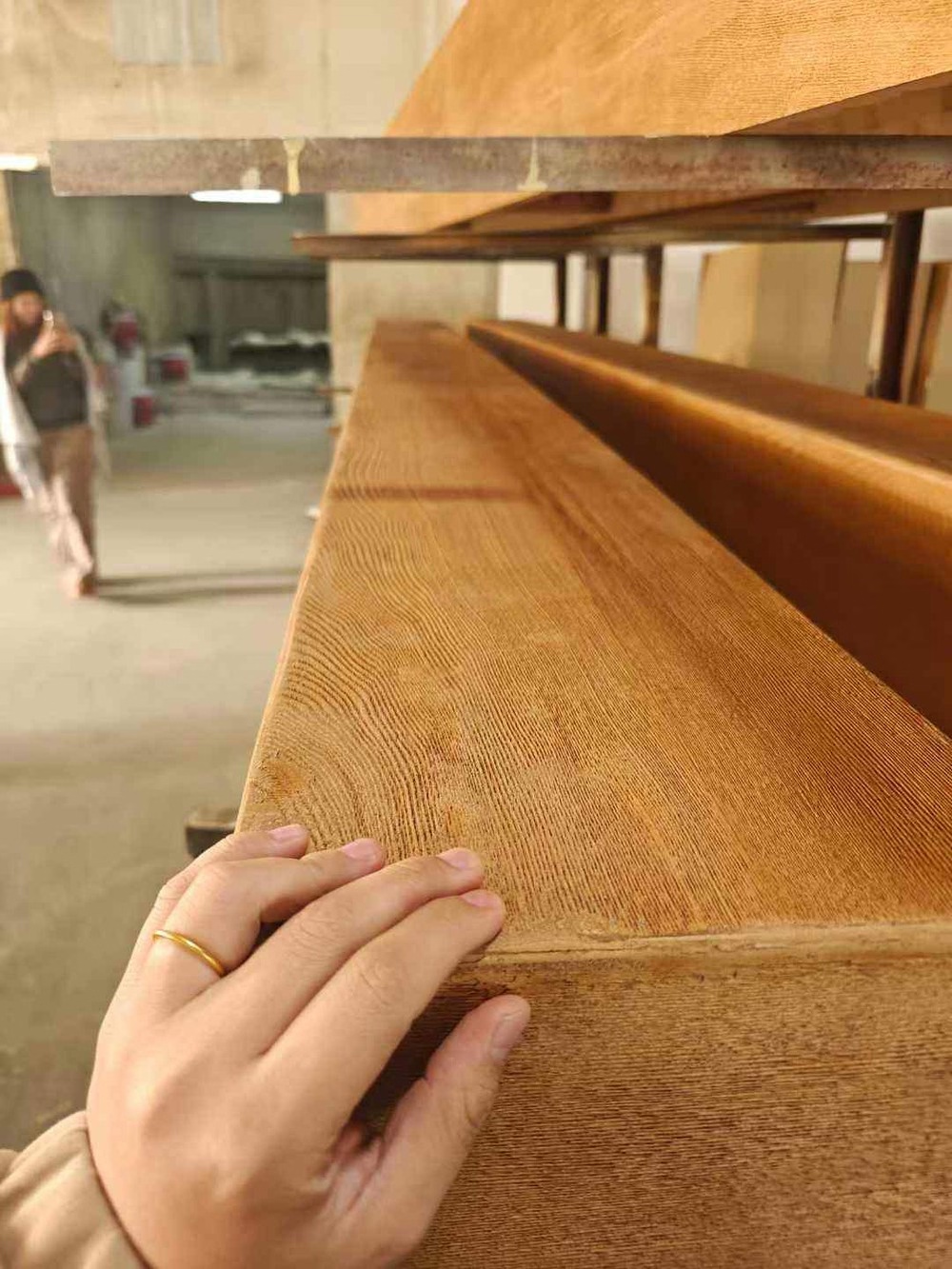
Surface Texture and Feel
Touch provides information that sight alone cannot fully capture. When people encounter wood, they run their hands across the surface, feeling the texture that confirms visual assessment. Beams that look like wood but feel wrong fail the authenticity test for anyone who investigates further.
Our texture development process creates surfaces with appropriate characteristics for each finish type. Weathered oak has the rough, checking surface of genuinely aged timber. Smooth finishes have the gentle texture of sanded and lightly sealed wood. Each texture serves both the visual requirements of the design and the tactile expectations of observers.
The combination of visual and tactile authenticity creates convincing results that satisfy scrutiny. We've had customers who specified real wood initially become converts when they examined our products closely enough to run their hands across the surface. That level of convincing authenticity represents our production standard.
Structural Details and End Grain
End grain reveals more about wood authenticity than face grain because its characteristic patterns are deeply familiar to anyone who's worked with lumber. The visible cell structure, the checking patterns from drying, and the ring patterns all contribute to wood identification and authenticity assessment.
Our beams feature end grain details on all exposed ends, with casting and finishing techniques that replicate the cellular appearance of real cut wood. These details show in corner joints, beam ends at walls, and anywhere else end surfaces are visible. The consistency between face grain and end grain creates coherent authenticity.
Joint details—whether beams meet at corners, intersect at angles, or terminate against other materials—receive attention proportional to their visibility. Hidden joints benefit from less detail because they'll never be seen. Exposed joints receive careful matching of grain patterns and color to create the impression of continuous wood through the joint.
Lighting Interaction
Authentic wood appearance depends partly on how surfaces interact with light. Real wood absorbs and reflects light based on grain orientation, with areas of longitudinal grain reflecting differently than areas of cross-grain. This interaction creates the characteristic shimmer that observers recognize subconsciously even when they cannot articulate what they're seeing.
Our textures are designed to interact with light appropriately for each wood species. Oak grain reflects with species-appropriate intensity and pattern. Maple presents the subtle, even reflection characteristic of its finer grain. This lighting interaction contributes significantly to authenticity, particularly in spaces with natural light that shifts throughout the day.
Sheen levels also affect authenticity. High-gloss finishes on wood look plasticky because natural wood never achieves such uniform reflection. Our finish formulations achieve appropriate sheen levels—typically satin to semi-gloss—based on the wood species being simulated and the finish conditions of genuine examples.
Comparing to Alternative Materials
Solid wood beams represent the authenticity standard against which all alternatives are measured. By that measure, our PU beams fall short only in one specific way: they don't have the slight flex that very long solid beams might display, and they lack any possibility of natural further aging. For practical purposes in interior applications, the visual and tactile authenticity is equivalent.
MDF and engineered wood products attempt wood simulation with less sophisticated texturing and finishing. These materials can achieve acceptable appearance from a distance but typically fail close inspection. The grain patterns repeat, the texture lacks depth, and the surfaces feel wrong to touch. PU technology outperforms these alternatives significantly.
Metal beams and other non-wood materials serve different aesthetic purposes and shouldn't be directly compared. Our discussion of authenticity focuses on wood-simulation performance, where PU represents the current state of the art in convincing reproduction.

Achieving Optimal Results in Your Space
Authenticity benefits from appropriate context. Beams surrounded by non-wood materials—drywall, plaster, tile—appear most convincingly wood because there's no competing wood reference that might reveal subtle differences. Beams adjacent to real wood furniture or flooring require more careful finish selection to ensure appropriate coordination.
Lighting conditions affect how convincing wood simulation reads. Bright, even lighting reveals texture and color variation most clearly, showing off authentic detail. Dim or dramatically directional lighting can obscure the details that create authenticity, making even mediocre imitation appear acceptable. Understanding your space's lighting helps calibrate authenticity requirements.
Installation quality affects perceived authenticity as much as the beams themselves. Gaps, misalignments, and sloppy joints reveal construction rather than genuine wood presence. Professional installation ensures that beam authenticity isn't undermined by installation artifacts that draw attention.
Long-Term Authenticity Maintenance
Unlike real wood, which continues to age and might develop new characteristics over time, our PU beams maintain their initial appearance indefinitely. This consistency provides predictable long-term results without the evolution that real wood undergoes. Your beams will look exactly as intended for their entire service life.
Finish durability exceeds that of real wood surfaces. Factory-applied polyurethane finishes resist chipping, scratching, and wear in ways that site-applied wood finishes cannot match. The authentic appearance persists through years of normal use without touch-up requirements.
Cleaning and maintenance cannot damage authentic appearance because the finish is integral to the beam surface rather than a surface coating that might wear away. Routine cleaning maintains appearance without the specialized care that real wood sometimes requires.
Making the Authentic Choice
For most applications, authentic wood simulation with PU beams represents the optimal choice between appearance and practicality. The visual and tactile authenticity satisfies all but the most stringent wood-only requirements, while the practical benefits—weight, stability, durability, cost—make the choice clear.
Our samples allow evaluation of authenticity in your specific context. Request material samples, examine them under your actual lighting conditions, touch the surfaces to assess texture, and compare against any real wood elements in your space. This evaluation provides confidence that your installed beams will achieve the authenticity you're seeking.
Technical References
ASTM standards cited in every specification
Test Data
Lab results from internal testing program
Updated 2026
Reviewed against current product specs