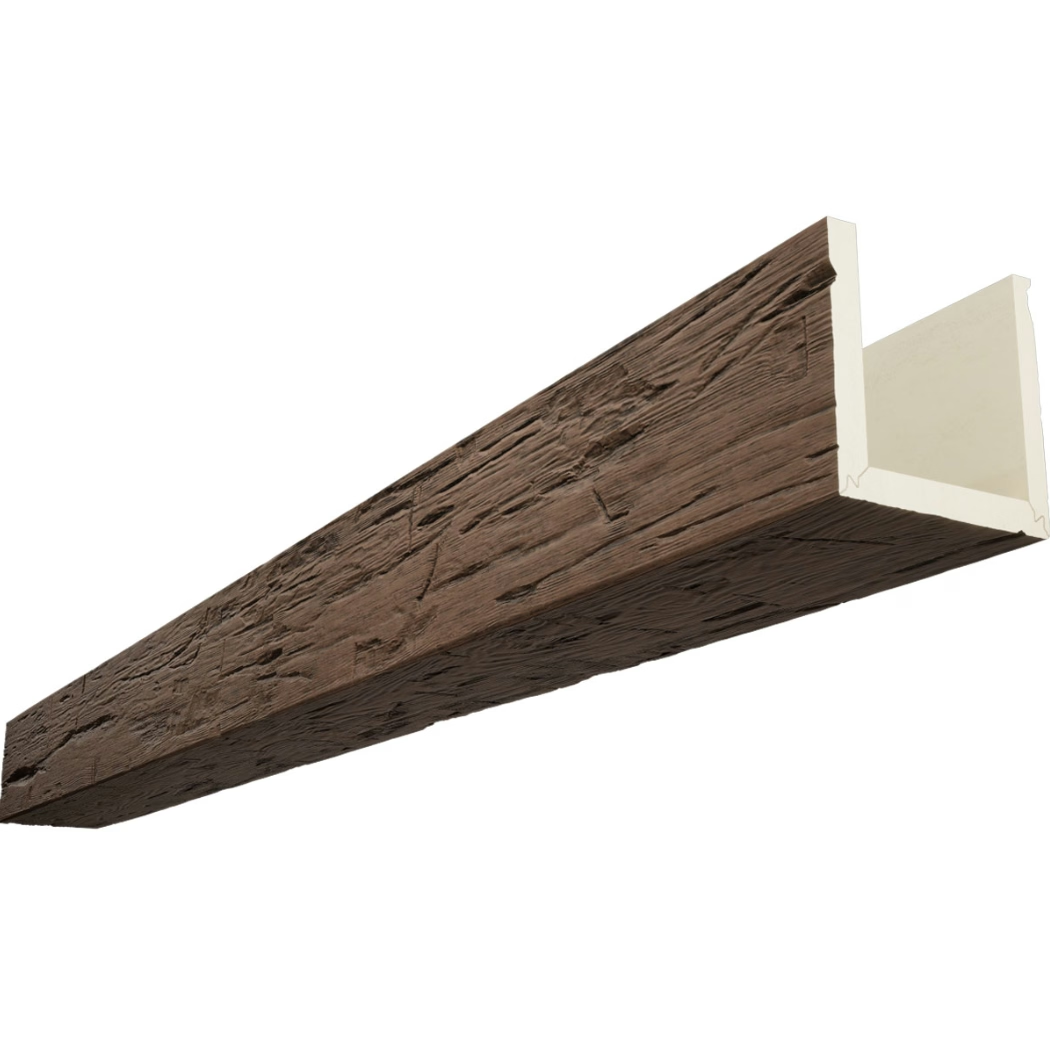
Wholesale procurement relationships thrive on mutual benefit, and our volume rebate program formalizes the economic advantages that sustained purchasing relationships create. Unlike one-time discounts that reward individual transactions, rebate programs compound value over time, making each purchase incrementally more valuable as cumulative volume increases. For businesses with ongoing beam requirements, this cumulative approach creates substantial savings that single-transaction pricing cannot match.
The program's structure acknowledges that wholesale buyers invest in relationships that benefit both parties. Your commitment to sourcing from us consistently allows us to plan production, maintain inventory, and serve your needs efficiently. The rebate program ensures that investment returns appropriately through pricing that improves with demonstrated commitment.
How Volume Rebates Work
Rebate qualification begins with purchase threshold achievement during a defined period, typically a calendar year. Initial tier entry at fifty thousand dollars in cumulative purchases earns a three percent rebate on all qualifying purchases during the qualification period. Higher cumulative thresholds earn progressively higher rebate percentages.
The rebate percentage applies to all purchases during the qualification period once threshold is achieved. A buyer crossing the fifty thousand threshold in March earns three percent rebates on all purchases from that point through year-end, plus retroactive rebate on purchases made earlier in the year. This structure rewards both reaching and maintaining qualification levels.
Rebates credit against future purchases rather than generating refunds. This mechanism keeps capital working within the relationship, reducing invoice amounts on subsequent orders while maintaining cash flow for ongoing operations. The practical effect is progressively improving pricing that compounds with continued relationship.
Tier Structure and Qualification
Tier one requires fifty thousand dollars in annual purchases, earning three percent rebates on all transactions during the qualification year. This threshold serves smaller wholesale operations with regular but not extensive beam requirements. The three percent rebate improves margins on every sale without requiring transformative purchase volumes.
Tier two activates at one hundred thousand dollars in annual purchases, increasing rebate percentage to five percent. This tier serves established wholesale distributors and significant commercial project contractors. The jump from three to five percent represents meaningful margin improvement that affects competitive positioning.
Tier three at two hundred fifty thousand dollars annual purchases achieves seven percent rebates. This level serves major distributors and large-scale commercial operations. At these volumes, rebate credits accumulate rapidly, providing substantial funding for expansion, marketing, or simply improved profitability.
Platinum tier at five hundred thousand dollars annual purchases earns eight percent rebates plus additional benefits including priority production scheduling and dedicated account management. This tier recognizes the most significant relationship investments and ensures those relationships receive corresponding service priority.

Qualifying Purchases and Exclusions
All standard beam purchases qualify for rebate calculation, including catalog items, custom specifications, and volume-discounted orders. The rebate applies to product costs; shipping, handling, and other ancillary charges don't earn rebates. This structure keeps rebate calculation straightforward and predictable.
Returns and credits reduce qualifying purchase totals in the periods they occur. A return processed in October reduces that year's cumulative total, potentially affecting tier qualification if the reduction pushes totals below threshold. Understanding this calculation prevents surprises when processing returns near qualification boundaries.
Custom tooling, mold creation, and non-recurring engineering charges don't qualify for rebate calculation. These one-time costs don't represent ongoing purchasing relationship value in the same way that standard product purchases do. Separating these charges from rebate calculation ensures rebate percentages reflect true product volume.
Tracking and Reporting
Your online account portal provides real-time visibility into rebate qualification status. Current year purchases, tier progress, earned rebates, and available credit balances update continuously as orders ship. This transparency allows confident planning without guessing about qualification status.
Monthly statements summarize rebate activity in detail, providing documentation for financial records and budget reconciliation. These statements detail individual purchases contributing to qualification, rebate calculations, and credit application—complete audit trails that simplify accounting processes.
Annual summaries provide year-end documentation for business planning and tax purposes. Rebate credits earned represent value received; proper documentation ensures appropriate treatment whether classified as discount, rebate, or other appropriate category.
Rebate Credit Application
Available rebate credits apply automatically against new orders up to the credit balance amount. Invoice totals reflect credit application before payment calculation, simplifying the payment process. No special requests or procedures are required—credits function as automatic payment applied.
Credit balances roll forward indefinitely until utilized. If annual purchase volumes don't generate new credits, existing credit balances persist and remain available. This permanence rewards relationship continuity; pausing purchases for a year doesn't forfeit accumulated credit.
Credit cannot exceed invoice subtotal; any excess credit carries forward to future invoices. This limitation prevents awkward payment scenarios while ensuring all earned credit eventually applies. The practical effect is that large credit balances apply over multiple invoices.
Strategic Benefits for Wholesale Operations
Rebate programs improve competitive positioning by lowering effective acquisition costs. Wholesale buyers serving price-sensitive markets benefit directly from pricing that improves with volume. The five percent rebate at tier two might represent the difference between marginal and healthy margins.
Cumulative rebate credits provide funding flexibility that immediate discounts don't. A significant credit balance reduces invoice amounts for months, improving cash flow during busy periods or providing resources for unexpected opportunities. This flexibility has strategic value beyond the nominal discount equivalent.
The rebate program creates alignment between buyer and supplier incentives. Both parties benefit from strong relationships that volume represents. This alignment fosters collaboration, communication, and problem-solving that benefit all transactions, not just those earning rebates.
Application for Different Business Types
Distributors reselling to contractors and end customers benefit significantly from rebate programs. Each tier percentage improvement affects every resale transaction, compounding through the distribution chain. The rebate improvement at tier two might justify restructuring purchasing to qualify rather than spreading volume across suppliers.
Contractors with ongoing project pipelines capture rebate benefits directly. Projects across a year combine into qualification thresholds that reward consistent sourcing. The rebate credit against future project orders reduces material costs for subsequent work, improving margins or competitive positioning.
Interior designers and architects specifying for multiple clients aggregate purchases across projects naturally. A design firm completing several projects annually easily accumulates qualification volume, earning rebates that improve project economics without additional effort.
Building Toward Higher Tiers
Strategic timing of major purchases accelerates tier qualification. If a project will push annual purchases over a threshold, timing additional anticipated purchases to the same period maximizes rebate on those purchases while accelerating tier achievement for future earning potential.
Coordinating with suppliers' production planning creates opportunities for commitment-based qualification improvements. Discussing upcoming project pipelines allows suppliers to offer pricing or terms that support qualification achievement. These conversations strengthen relationships while improving economic outcomes.
Purchasing consistency matters as much as total volume for rebate achievement. A buyer purchasing two hundred fifty thousand dollars consistently each year qualifies for tier three; the same buyer alternating between zero and five hundred thousand dollars might not achieve consistent tier three qualification. Stable purchasing patterns support better service and rebate qualification.

Joining the Rebate Program
Enrollment in the rebate program requires wholesale account establishment. Our sales team guides new wholesale applicants through account setup, including business verification and credit review. Account terms establish payment parameters that support efficient ongoing relationship.
Existing wholesale customers automatically qualify for rebate program participation based on established account terms. Historical purchase volumes count toward current year qualification if account establishment occurred earlier in the year; retroactive application doesn't extend beyond current qualification year.
Program terms and tier thresholds update periodically as market conditions change. Annual communication outlines any program modifications for the coming year, allowing planning based on current rather than potentially outdated terms. Our commitment is transparency about program changes with adequate notice for adjustment.
Maximizing Your Rebate Benefits
Request regular qualification status updates if the account portal isn't checked frequently. Proactive awareness of qualification progress allows strategic timing of purchases that might otherwise be unremarkable. This awareness transforms passive purchasing into strategic procurement.
Coordinate purchasing across multiple project sites or business units if applicable. Consolidated purchasing volume counts toward single-account qualification; separate accounts for related businesses fragment volume and delay qualification. One account for your organization captures all organizational purchasing toward thresholds.
Communicate upcoming large projects to your account representative. Advance notice allows us to plan production capacity and potentially offer terms that support your project economics while contributing to our own qualification. These conversations benefit both parties and strengthen the relationship foundation.
Technical References
ASTM standards cited in every specification
Test Data
Lab results from internal testing program
Updated 2026
Reviewed against current product specs