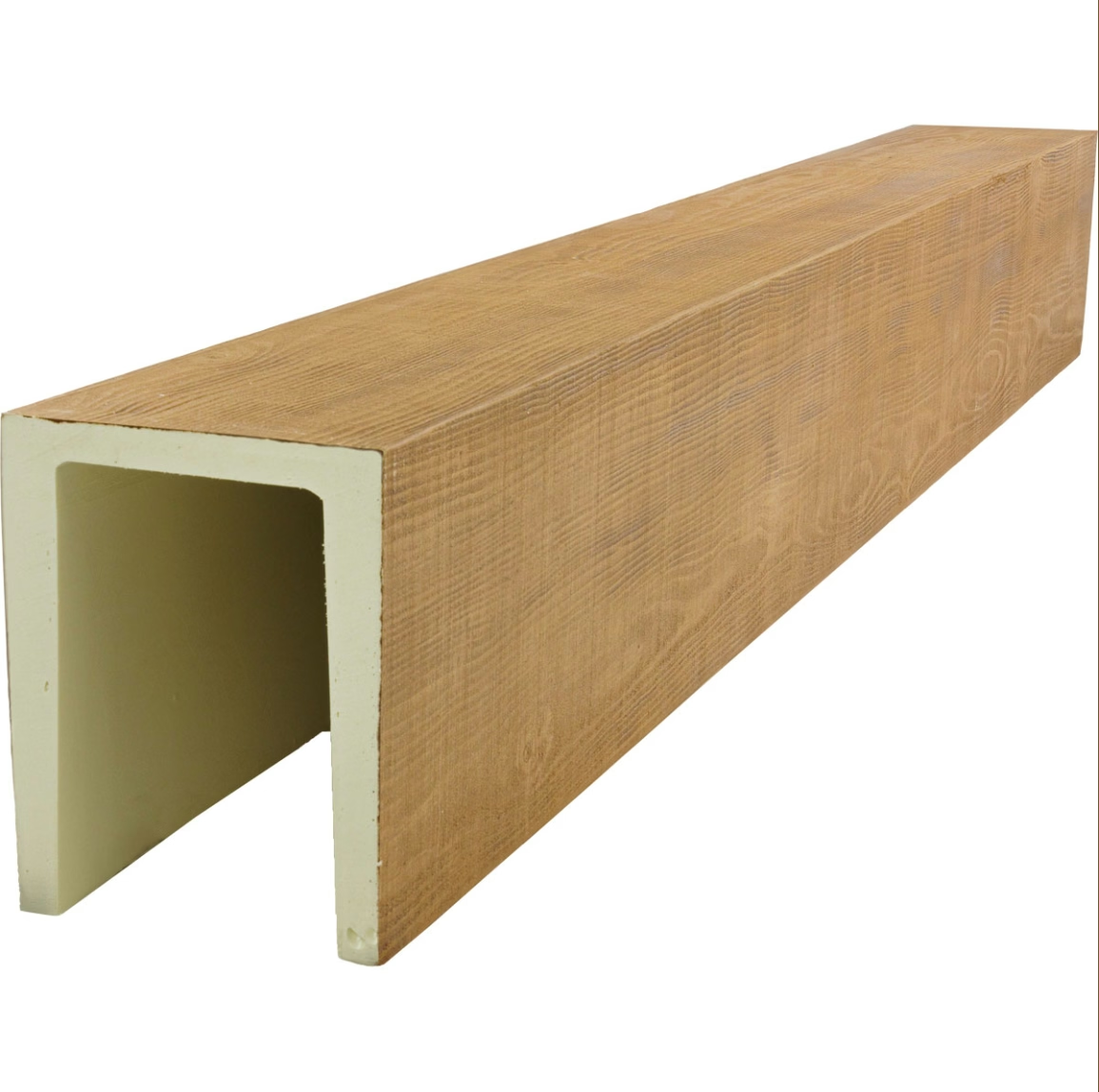
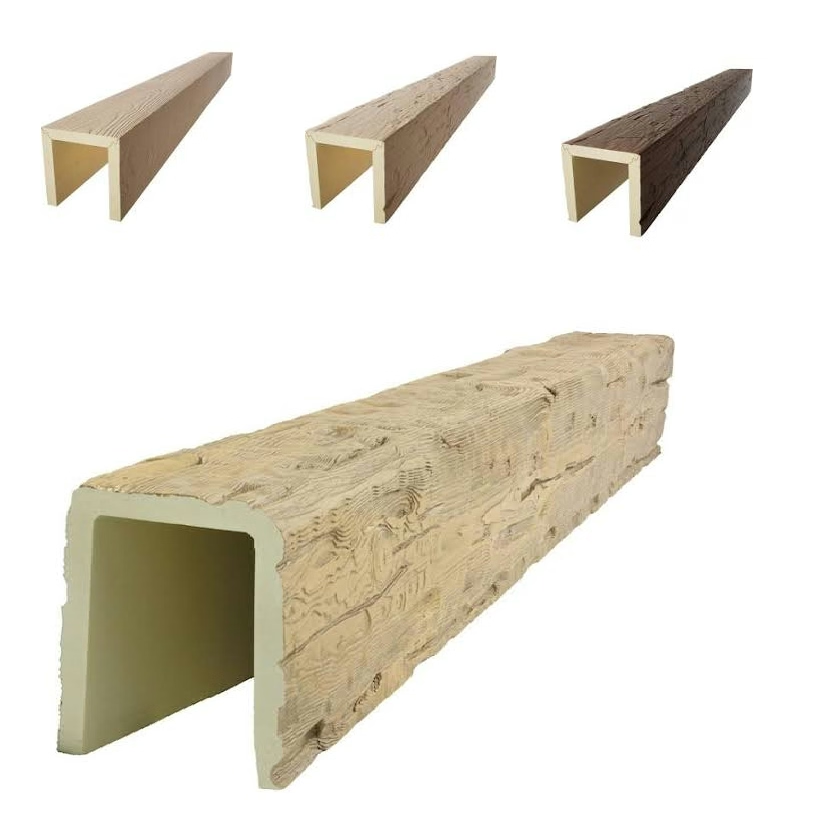
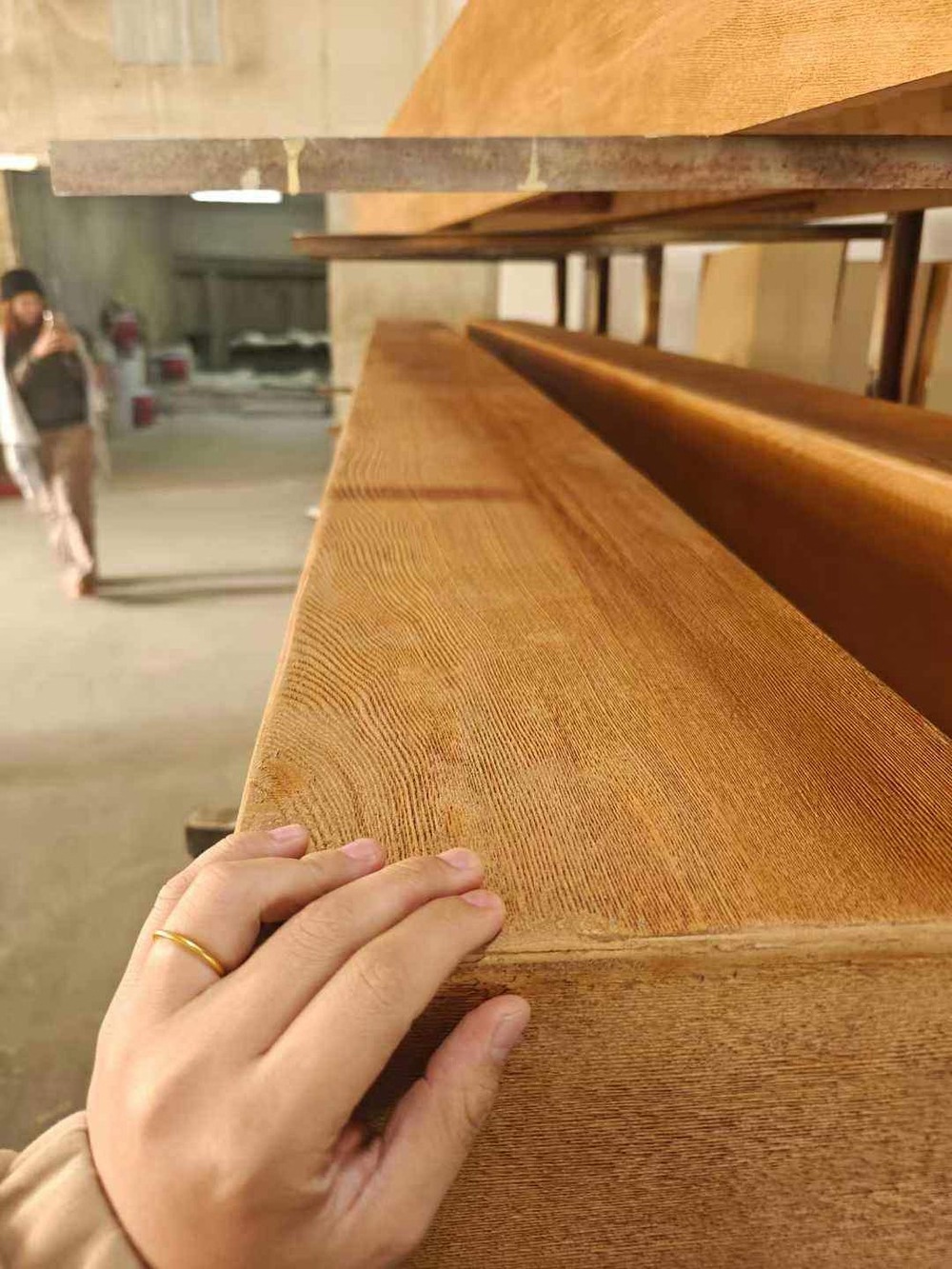
The battle between human ambition and material imperfection plays out repeatedly in construction and interior design. Natural wood, despite its celebrated beauty and traditional association with fine craftsmanship, brings inherent vulnerabilities that have challenged builders for centuries. Moisture absorption causes swelling; drying produces shrinking; temperature gradients create internal stresses that manifest as warping, checking, and cracking. These behaviors require constant attention, expensive maintenance, and eventual replacement that frustrate both professionals and property owners. Polyurethane faux timber beams represent a fundamental solution to these age-old problems, delivering the aesthetic qualities of wood with dimensional stability that natural material cannot match.
Understanding why wood warps and cracks requires familiarity with wood's cellular structure and moisture dynamics. Wood cells absorb and release moisture constantly, changing dimensions with each fluctuation. Tangential movement—across annual rings—produces the most dramatic size changes, while radial movement and longitudinal movement prove less severe. When wood dries unevenly, as it always does in real-world conditions, these differential movements generate internal stresses that eventually exceed the wood's structural capacity. The result: distortion, checking along grain lines, and crack formation that compromises both appearance and structural integrity.
These wood behaviors prove particularly problematic in ceiling applications where beams span open spaces and bear no load to mask their movement. A timber that bows slightly during installation may develop severe distortion within seasons as it equilibrates to interior humidity. Checking that begins as cosmetic blemish may propagate into structural concern as water penetrates and accelerates degradation. Homeowners who have invested substantially in authentic timber ceilings often find themselves confronting maintenance demands that consume both time and money while threatening the very appearance they sought to achieve.
Polyurethane's molecular structure sidesteps these concerns entirely. The material neither absorbs moisture nor responds significantly to humidity changes. Temperature fluctuations produce negligible dimensional movement—typically less than one percent across extreme ranges that would devastate natural timber. This stability means that a polyurethane beam installed perfectly straight remains perfectly straight regardless of season, weather, or climate conditions. No hidden movements create mysterious problems; no gradual degradation erodes the initial investment.
The practical implications of dimensional stability extend throughout a beam's service life. Installation measurements made under one set of conditions remain valid under all conditions, eliminating the frustration of beams that arrive fitting perfectly but develop gaps as they acclimate. Joints between beams and between beams and trim work remain tight indefinitely, without the re-caulking and repair that natural wood often requires. The ceiling maintains its intended appearance without ongoing intervention, freeing homeowners from the maintenance obligations that authentic timber demands.
Manufacturers achieve polyurethane's dimensional stability through careful control of production conditions and material formulations. High-density formulations resist impact and abrasion while maintaining the lightweight characteristics that distinguish faux beams from natural timber. Closed-cell structures prevent moisture penetration that might affect surface characteristics. UV stabilizers in exterior-grade products prevent the surface degradation that affects materials exposed to sunlight. These engineering choices translate into products that perform reliably across decades without the attention that natural materials require.
The performance advantages of polyurethane beams manifest clearly in challenging installation environments. Spaces with large temperature swings—sunrooms, enclosed porches, spaces above kitchens where cooking heat creates dramatic gradients—challenge natural wood severely. Polyurethane beams handle these conditions without complaint, maintaining form and appearance despite the stresses that would eventually damage authentic timber. This reliability simplifies specification for professionals who need assurance that their installations will perform consistently regardless of how clients use their spaces.
Long-term cost analysis consistently favors polyurethane beams when total ownership costs enter the calculation. While initial prices may exceed those of commodity natural wood, polyurethane's elimination of ongoing maintenance expenses frequently reverses this relationship over the beam's service life. Professional inspections, periodic refinishing, crack repair, and eventual replacement costs for natural timber accumulate substantially across decades. Polyurethane's minimal maintenance requirements avoid these expenses entirely. Property owners who view their purchases through a total-cost-of-ownership lens often conclude that polyurethane represents the more economical choice despite higher initial investment.

Climate zone considerations influence the relative advantages of polyurethane in ways worth understanding. In temperate climates with moderate humidity variation, natural wood performs adequately if properly installed and maintained. The advantages of polyurethane become progressively more significant as climate severity increases. Desert regions with dramatic daily temperature swings, coastal areas with persistent salt air, northern climates with extended heating seasons, and tropical environments with constant humidity—these conditions that challenge natural wood become non-issues for polyurethane. Understanding local climate challenges helps professionals and homeowners select materials that will perform reliably in their specific conditions.
Structural implications of dimensional stability affect building performance beyond aesthetics. Natural wood beams that warp or twist transfer unpredictable loads to surrounding construction, potentially stressing drywall, cracking plaster, or damaging trim work. These secondary failures create maintenance demands far exceeding the original beam issues. Polyurethane beams maintain their original dimensions and load characteristics indefinitely, preventing the cascade of secondary problems that sometimes follows natural material failure. This structural predictability simplifies building maintenance and protects investments in surrounding finishes.
Environmental factors affecting beam performance include air quality variations that sometimes affect natural materials. Homes with wood-burning appliances, smoking occupants, or cooking practices that introduce airborne oils may find these contaminants accumulating in wood beam surfaces, creating cleaning challenges or finish deterioration. Polyurethane's non-porous surface resists these contaminants, allowing cleaning with mild detergents that would damage natural wood finishes. This resistance proves particularly valuable in commercial environments where air quality cannot be strictly controlled.
Warranty coverage from polyurethane beam manufacturers typically reflects confidence in dimensional stability. Most quality products carry warranties of ten years or more against manufacturing defects, with reasonable expectations of service lives extending to twenty or thirty years in typical interior applications. These warranties transfer to subsequent property owners, adding value during real estate transactions where buyers appreciate the assurance that ceiling treatments will remain attractive without intervention. Natural wood products rarely carry equivalent warranties because manufacturers cannot guarantee performance in unpredictable environmental conditions.
The aesthetic implications of perfect dimensional stability deserve acknowledgment alongside practical benefits. Authentic timber's character includes the evidence of its history—subtle movements, checking, patina accumulation—that many homeowners find appealing. Yet these characteristics represent uncontrolled change rather than intentional design. Polyurethane beams deliver consistent appearance that remains exactly as installed, providing aesthetic certainty that appeals to homeowners who prefer their investments to remain exactly as planned. This predictability simplifies ongoing decoration and ensures that surrounding design elements continue harmonizing with ceiling treatments throughout the space's useful life.
Technical References
ASTM standards cited in every specification
Test Data
Lab results from internal testing program
Updated 2026
Reviewed against current product specs