Material selection for ceiling beams involves numerous considerations, but few prove more consequential than dimensional stability—the ability to maintain original form despite environmental challenges. Warping remains the nemesis of authentic timber installations, creating problems that range from cosmetic annoyance to structural failure. Understanding precisely how and why warping occurs in natural wood while remaining essentially impossible in quality polyurethane enables informed decision-making that serves property owners well across the beam's service life.
The physics of wood warping deserve explanation because they reveal why this problem resists simple solutions. Wood consists of elongated cells arranged in concentric annual rings, with each cell behaving like a tiny tube that swells when wet and shrinks when dry. This cellular structure makes wood dimensionally unstable across three axes: longitudinal (along the grain), radial (perpendicular to growth rings), and tangential (tangent to growth rings). These three dimensions move independently during moisture changes, creating internal stresses that manifest as visible distortion. No amount of sealing, finish, or structural design can eliminate these fundamental behaviors because they arise from wood's essential nature.
Different warping patterns manifest depending on how uneven drying or moisture exposure affects the beam. Bowing describes curvature along the beam's length, like a gently curved railroad tie. Twisting involves rotation along the beam's axis, creating screw-like distortion that may not become apparent until later stages of drying. Cupping describes curvature across the beam's width, creating a concave shape across the top surface. Crooking involves edge-to-edge curvature concentrated in one area. Each pattern results from specific patterns of differential movement, and any combination may appear in severely stressed beams.
Environmental factors accelerate warping in ways that compound the inherent instability of natural wood. High temperatures drive rapid moisture loss from exposed surfaces while interior wood retains moisture, creating steep gradients that generate severe internal stresses. Direct sunlight bakes beam surfaces while shaded areas remain cooler, producing asymmetric drying that encourages bowing and twisting. HVAC systems that run continuously create low-humidity conditions that pull moisture from wood faster than the material can equalize internally. In severe cases, beams installed in these conditions can warp noticeably within weeks of installation.
Seasonal cycling compounds warping damage through repeated expansion and contraction. A beam that bows slightly during winter heating may not return to original dimensions when summer humidity rises. Subsequent heating seasons then add additional movement to an already-stressed shape, accumulating damage that eventually exceeds the wood's elastic recovery capability. This progressive deterioration explains why authentic timber beams sometimes appear stable for years before suddenly developing severe distortion. The accumulated effects of cycling become too much for the material to absorb.
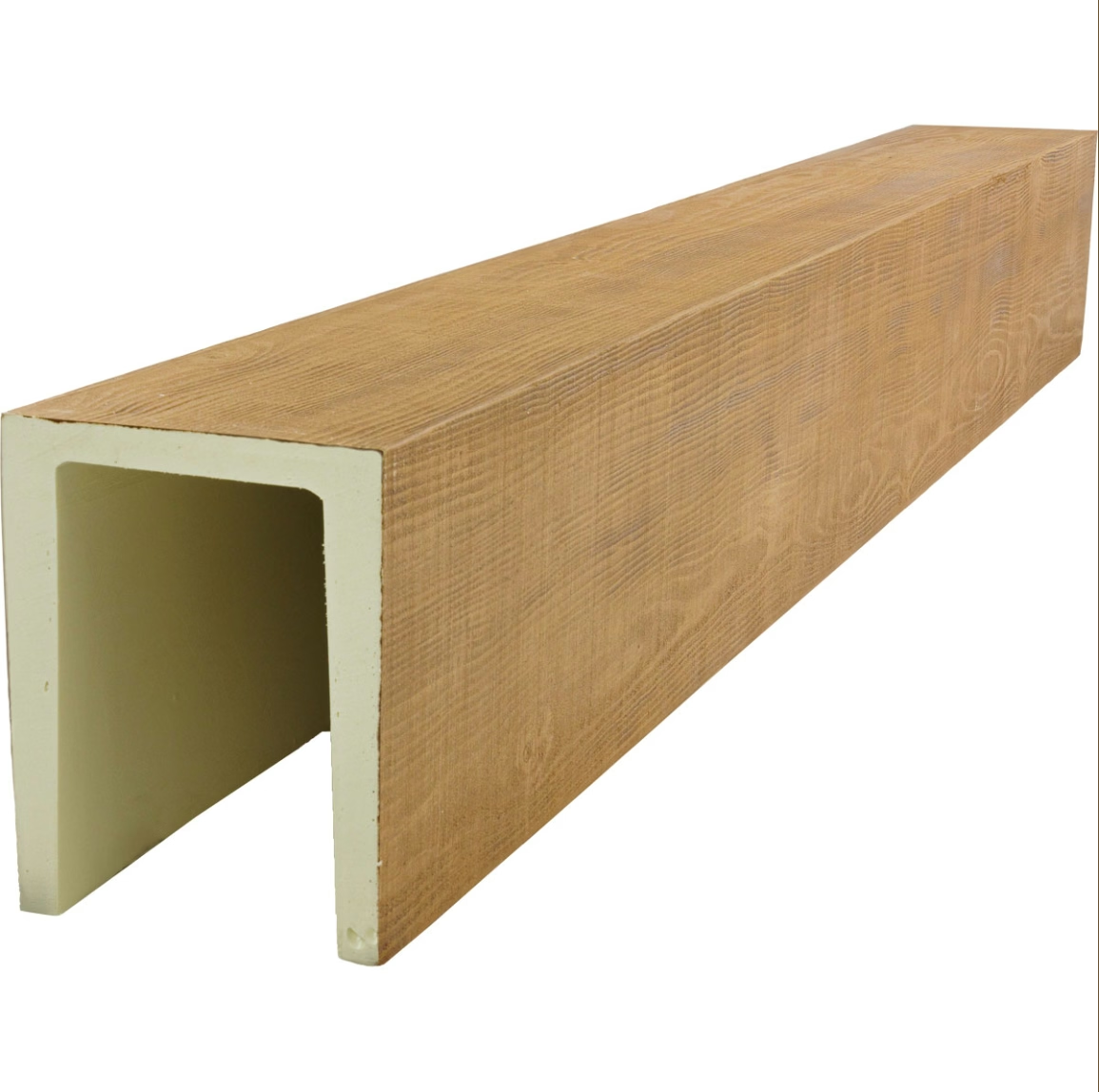
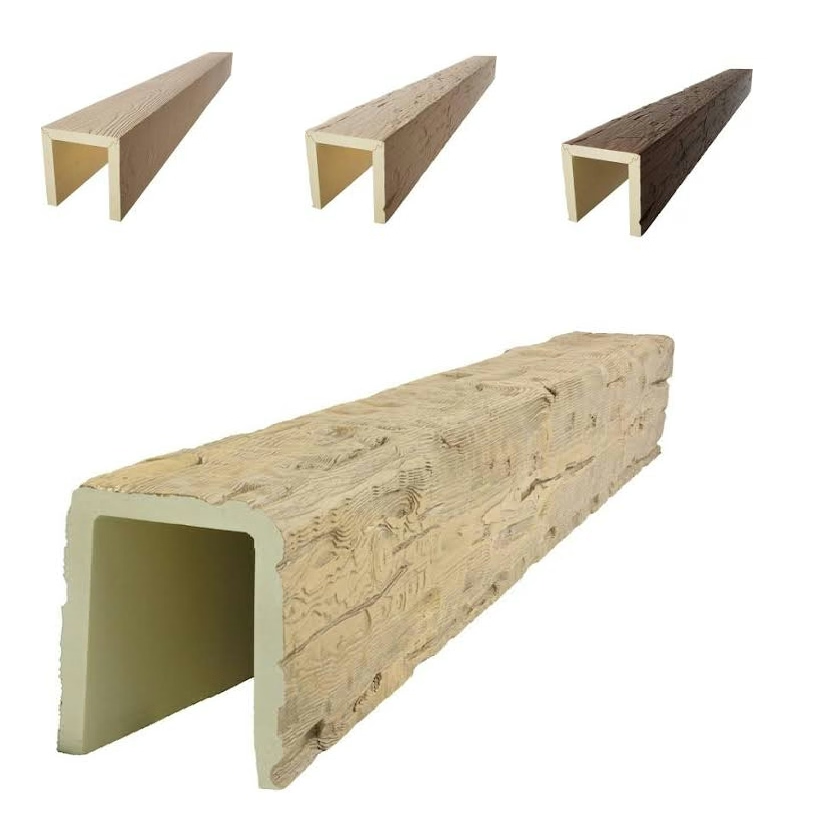
Polyurethane beams eliminate warping concerns through material properties that fundamentally differ from wood's characteristics. The molecular structure of polyurethane provides dimensional stability that wood cannot achieve regardless of treatment or design. Polyurethane does not contain the cellular structure that absorbs and releases moisture, meaning that environmental conditions produce no swelling or shrinking. Temperature changes cause negligible thermal expansion that remains within acceptable tolerances for ceiling installations. These properties remain constant throughout the product's service life, providing reliability that homeowners can trust.
Comparative testing between natural wood and polyurethane beams under controlled conditions demonstrates dramatically different behaviors. Identical temperature and humidity cycles that produce visible warping in wood beams leave polyurethane specimens unchanged. Accelerated aging tests that would reveal weaknesses in natural materials show no effects on polyurethane. Long-term exposure to conditions typical of residential and commercial environments produces no dimensional changes in quality faux beams. These testing results provide empirical validation for the theoretical advantages that material science predicts.
The practical implications of warping extend beyond the beams themselves to surrounding construction. A warped beam transfers unexpected loads to support structures and connecting elements, potentially causing secondary damage throughout the ceiling system. Drywall may crack where it meets trim that moves with warping beams. Paint may check and separate where substrate movement stresses the finish. Trim work may develop gaps that collect dust and admit drafts. These secondary problems create maintenance demands that multiply the original beam issue while making diagnosis and repair more complex.

Maintenance requirements that warping generates deserve quantification to understand total ownership costs. Natural wood beams in challenging environments may require annual inspection by professionals trained to identify early warning signs. Periodic refinishing addresses surface checking and weathering that accelerates with moisture cycling. Joint repair or replacement addresses separation that develops where beams meet other elements. These maintenance activities cost both money and time while offering no guarantee of preventing eventual replacement. Polyurethane beams require none of this attention, reducing true ownership costs while eliminating maintenance-related disruption.
Warranty coverage reflects manufacturer confidence in their products, and polyurethane beams typically carry significantly stronger warranties than natural wood alternatives. Wood beam warranties, when offered, often exclude warping damage as resulting from environmental conditions beyond manufacturer control. Polyurethane warranties typically cover dimensional stability directly, providing meaningful protection against the problems that plague natural materials. This warranty difference translates directly into reduced risk for property owners, who can trust that their investments will perform as expected without hidden exclusions.
Climate-specific considerations help professionals guide clients toward appropriate material selections. In temperate climates with moderate humidity variation, natural wood may perform adequately for clients willing to invest in regular maintenance. In severe climates—very dry, very humid, dramatically variable, or extreme in any dimension—polyurethane's advantages become decisive. Clients who cannot commit to maintenance schedules, who travel frequently leaving homes unoccupied, or who simply prefer their ceiling treatments to remain exactly as installed benefit substantially from polyurethane's warping immunity.
Real estate implications of warping-resistant materials merit consideration in property transactions. Homes featuring natural wood beams may require disclosure of maintenance history and any warping or repair work that has occurred. Prospective buyers aware of wood's behaviors may negotiate reduced prices or request maintenance escrows that complicate transactions. Properties with polyurethane beams present no such concerns, with ceiling treatments representing stable assets rather than potential liabilities. This transaction advantage often justifies polyurethane's initial premium for investment-minded property owners.
The decision between natural wood and polyurethane ultimately reflects values as much as practical considerations. Some homeowners deeply value the authenticity, history, and unique character that natural materials provide, accepting maintenance obligations as inherent to that authenticity. Others prioritize practical reliability and prefer investments that perform consistently without demanding ongoing attention. Both approaches represent legitimate choices; the key is understanding what each choice entails so that decisions align with actual preferences and capabilities. Polyurethane faux beams provide the latter: beautiful, stable, and maintenance-free.
Technical References
ASTM standards cited in every specification
Test Data
Lab results from internal testing program
Updated 2026
Reviewed against current product specs