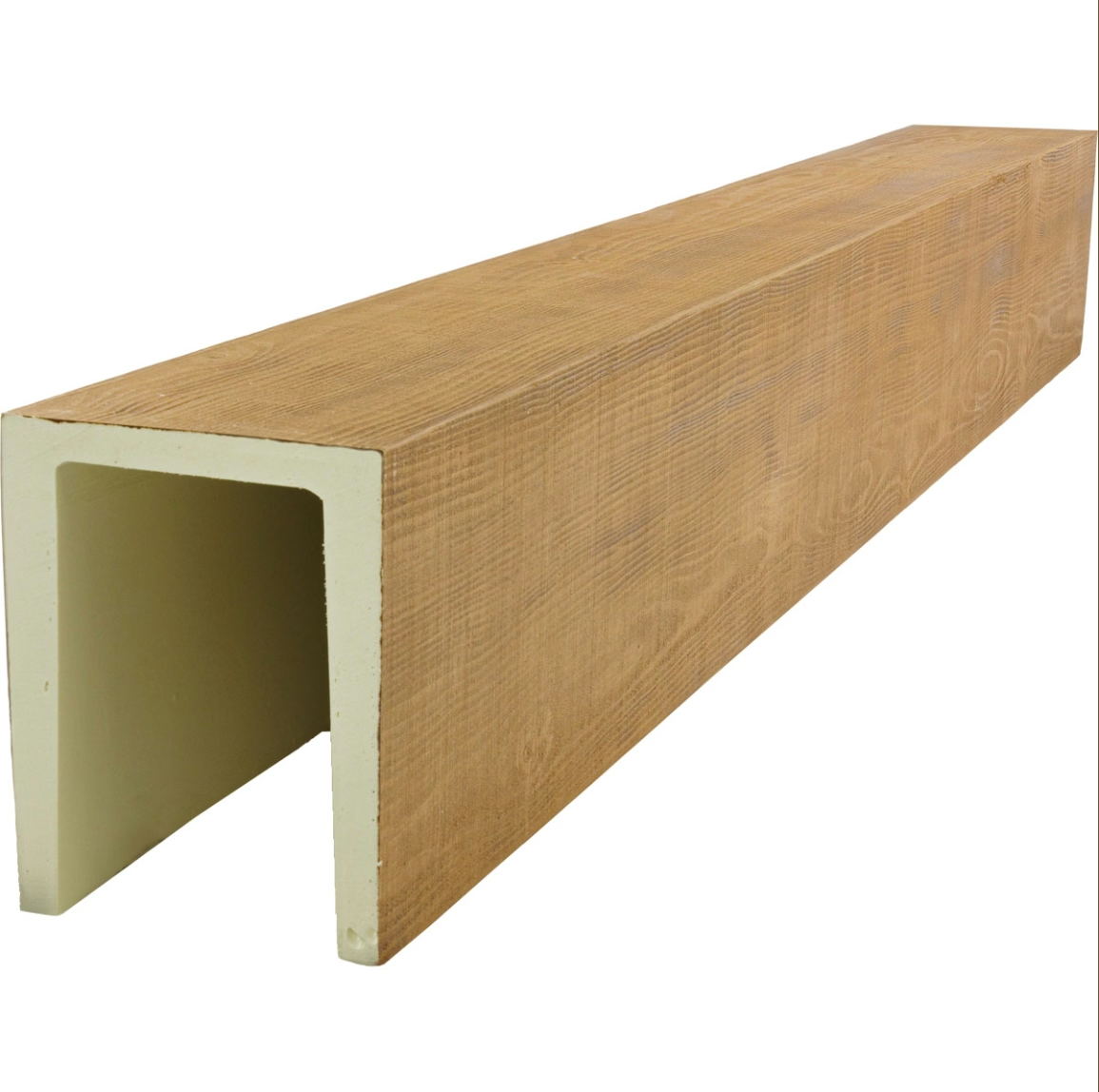
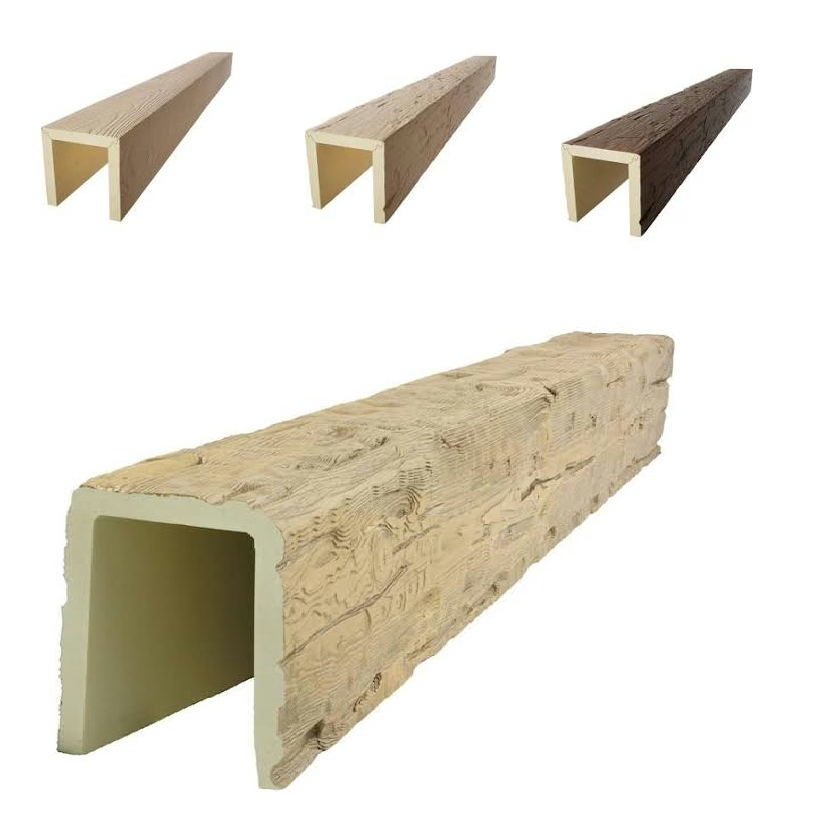
Globalization has transformed material sourcing across the construction industry, and faux wood ceiling beams are no exception. International suppliers offer product ranges, pricing structures, and manufacturing capabilities that regional sources cannot match. For businesses willing to navigate international logistics, global sourcing provides meaningful competitive advantages—if approached with appropriate understanding of the complexities involved.
The Case for Global Faux Wood Beam Sourcing
Understanding why global sourcing makes sense helps frame the investment required to do it successfully.
Manufacturing expertise concentrates in specific global regions. The polyurethane processing industry has developed specialized capabilities in areas where manufacturing infrastructure, technical expertise, and material supply chains align. These concentrations create centers of excellence that produce products unavailable elsewhere.
Price competitiveness reflects regional manufacturing economics. Labor costs, overhead structures, and material sourcing vary significantly between regions, creating pricing opportunities for buyers willing to engage international suppliers directly. These differences can translate to substantial savings on significant orders.
Product variety expands dramatically when restricting sourcing to a single country. Global sourcing provides access to design traditions, manufacturing techniques, and aesthetic sensibilities from multiple manufacturing cultures. The result is broader product selection that better serves varied design requirements.
Identifying Quality International Suppliers
Finding reliable international suppliers requires systematic evaluation approaches.
Trade platform presence provides initial supplier identification. Alibaba, Made-in-China, Global Sources, and similar platforms list thousands of faux wood beam manufacturers. However, platform presence alone indicates nothing about supplier quality or reliability. Platform membership provides convenience, but verification remains the buyer's responsibility.
Trade show attendance connects buyers with serious international suppliers. Major trade shows—including ICS in Las Vegas, High Point Market, and numerous regional events—attract manufacturers serious about international business. Face-to-face interaction at trade shows reveals communication capabilities, product knowledge, and business seriousness that platform transactions cannot convey.
Industry references from professional contacts provide trusted supplier recommendations. Architects, designers, and contractors with international sourcing experience can recommend suppliers who performed reliably on past projects. These references carry more weight than anonymous platform reviews.

Quality Verification for Remote Sourcing
Remote sourcing makes quality verification challenging but not impossible.
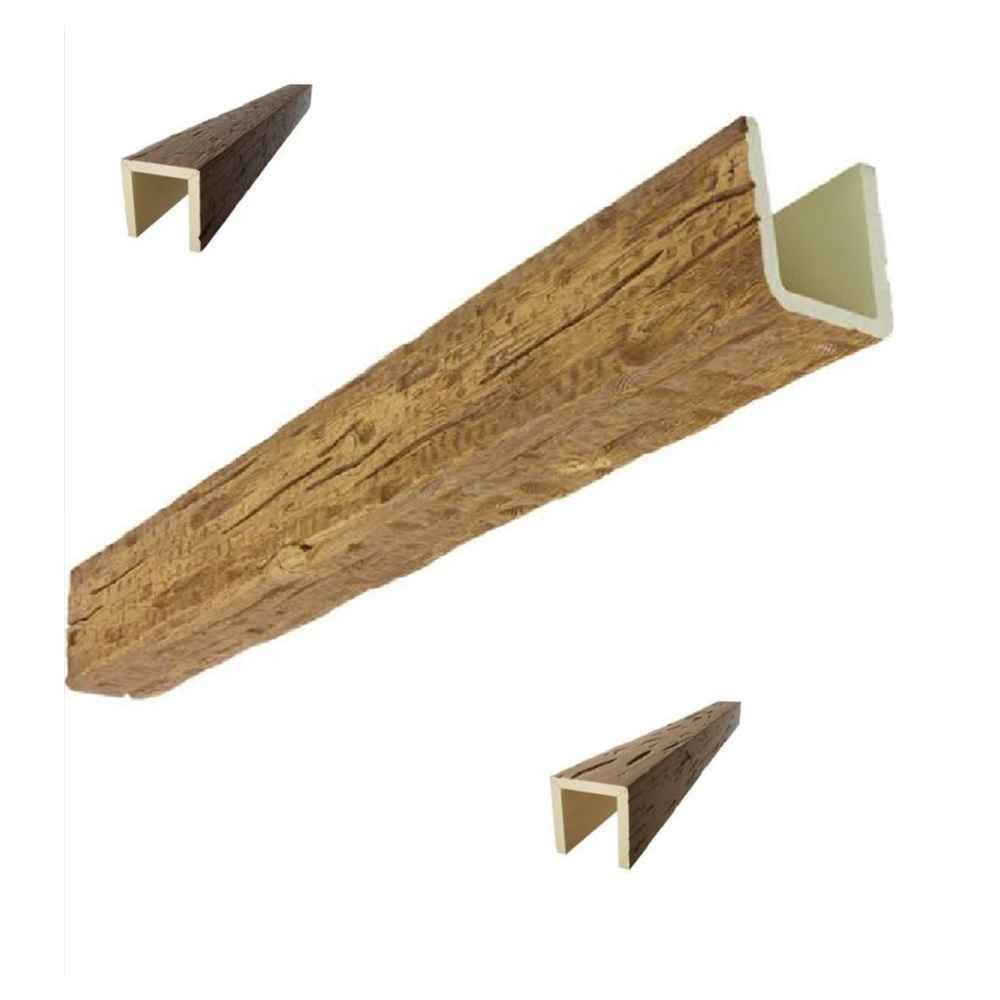
Sample evaluation provides essential product quality assessment. Request samples representing intended purchase products before committing to substantial orders. Evaluate samples for material density, surface quality, finish consistency, dimensional accuracy, and overall craftsmanship. No order should proceed without satisfactory sample review.
Factory audits verify supplier claims and production capability. Third-party inspection services conduct factory audits assessing manufacturing infrastructure, quality systems, production capacity, and operational management. These audits cost money but provide risk reduction proportional to order value.
Testing documentation demonstrates compliance with relevant standards. Request test reports documenting material properties, fire performance, and durability metrics. Reputable suppliers maintain comprehensive testing documentation and provide it readily to serious buyers.
Logistics and Shipping Considerations
International logistics significantly impact total cost and delivery reliability.
Freight mode selection balances cost, speed, and product characteristics. Sea freight offers lowest cost but longest transit times—typically four to eight weeks from Asian origins. Air freight provides speed but costs substantially more. Evaluate which mode fits project timeline flexibility and budget constraints.
Shipping terms define risk and cost allocation. Incoterms—standardized international commerce terms—specify exactly when goods transfer from seller to buyer, determining insurance requirements, customs clearance responsibilities, and cost allocation. Common terms for container shipments include FOB (Free on Board), CIF (Cost, Insurance, Freight), and DDP (Delivered Duty Paid).
Consolidation options reduce shipping costs for smaller orders. Rather than shipping full containers, consolidation services aggregate shipments from multiple buyers into complete containers, reducing per-unit shipping costs. These services work well for buyers with irregular ordering patterns or smaller volume requirements.
Customs, Duties, and Import Compliance
International purchasing introduces compliance requirements that domestic sourcing avoids.
Import duties apply to most manufactured goods crossing borders. Faux wood beams typically classify under specific Harmonized System codes that determine applicable duty rates. Understanding these classifications—and verifying supplier accuracy—prevents unexpected cost surprises.
Product compliance requirements vary by destination country. Fire safety standards, chemical content restrictions, and labeling requirements differ between jurisdictions. Reputable international suppliers understand these requirements for major markets and provide compliant products—but verification remains important.
Customs documentation requirements demand attention to detail. Commercial invoices, packing lists, bills of lading, and certificates of origin must accurately describe products, quantities, and values. Documentation errors cause clearance delays and potential penalties.
Payment Terms and Financial Risk Management
International transactions introduce payment risks that require careful management.
Payment methods carry varying risk levels. Wire transfers before shipment offer lowest fees but maximum risk—funds sent cannot be recovered if supplier fails to deliver. Letter of credit from banks provides payment protection but involves substantial fees and administrative complexity. Online payment platforms like PayPal offer intermediate protection with moderate fees.
Progressive payment approaches reduce risk exposure. Structuring payments in stages—deposit upon order confirmation, payment upon shipping evidence, balance upon delivery—matches payment to risk reduction throughout the transaction.
Credit checking international suppliers provides financial reliability assessment. Bank references, trade references, and credit reporting agency information help assess supplier financial stability. Suppliers resistant to providing references should raise immediate concerns.
Building Sustainable Global Sourcing Operations
Successful global sourcing requires infrastructure supporting ongoing operations.
Communication systems enable effective supplier relationships despite geographic distance. Email, messaging platforms, video conferencing, and project management tools maintain connection across time zones. Establishing communication rhythms that respect both parties' schedules improves relationship quality.
Quality control systems maintain standards across remote production. Pre-shipment inspection protocols, defect documentation procedures, and claim resolution processes ensure quality issues get addressed efficiently. Building these systems takes time but becomes invaluable for ongoing sourcing.
Supplier relationship development rewards long-term investment. International suppliers offer better pricing, priority allocation, and enhanced support to customers demonstrating consistent, significant volume. Building relationships through initial small orders, then expanding commitment as trust develops, achieves better outcomes than demanding immediate favorable terms.
Global sourcing of faux wood ceiling beams provides meaningful advantages for businesses with appropriate scale and operational capability. The investment in developing sourcing competence pays dividends through product access, cost reduction, and competitive advantage that domestic-only sourcing cannot match.
Technical References
ASTM standards cited in every specification
Test Data
Lab results from internal testing program
Updated 2026
Reviewed against current product specs