When selecting ceiling beams for residential or commercial projects, material choice significantly impacts long-term satisfaction. Real wood carries centuries of tradition and genuine natural beauty, but modern engineering has produced alternatives that exceed organic materials across most performance metrics. Polyurethane faux wood beams represent this advancement, offering practical advantages that accumulate throughout a product's service life.
Understanding why these synthetic products outperform traditional timber requires examining specific performance characteristics rather than relying on assumptions about natural versus manufactured materials. The evidence from real-world applications, material testing, and user experience consistently favors polyurethane in head-to-head comparisons.
Structural Stability Under Variable Conditions
Real wood is hygroscopic—it absorbs and releases moisture continuously in response to environmental conditions. This behavior creates dimensional instability that manifests as expansion, contraction, warping, and checking. Even well-maintained timber beams show seasonal movement that stresses joints, opens gaps, and gradually degrades appearance.
Polyurethane is dimensionally stable by chemical nature. The material neither absorbs moisture nor responds to humidity changes. Installations maintain consistent dimensions regardless of season, weather, or interior climate variations. Joints remain tight, gaps stay closed, and appearance remains uniform year after year.
This stability proves especially valuable in regions with extreme or variable climates. Real wood in humid summers may swell noticeably, while dry winters cause visible contraction. Spaces with variable occupancy—heavy use in summer, empty in winter—experience especially dramatic cycling. PU beams ignore these conditions, maintaining appearance and fit regardless of environmental stress.
Resistance to Biological Degradation
Wood's organic composition makes it vulnerable to various biological threats. Fungi cause rot in moist conditions. Insects including termites, carpenter ants, and wood-boring beetles can damage or destroy timber. Bacterial growth can occur in persistently damp environments. These threats require ongoing vigilance and preventive treatments to manage.
Polyurethane offers no such vulnerability. The synthetic material provides no nutrition for fungi, insects, or bacteria. Biological organisms simply ignore it, eliminating an entire category of potential damage. This immunity provides genuine value in environments where biological threats are common or where inspection access is limited.
The implications for building maintenance are significant. Properties in termite-prone regions can avoid the cost and complexity of termite prevention systems for beam installations. Damp basements that would quickly damage wood beams pose no problem for polyurethane. Beams installed in enclosed spaces where inspection is difficult benefit from not needing to worry about hidden biological activity.
Weather Exposure Performance
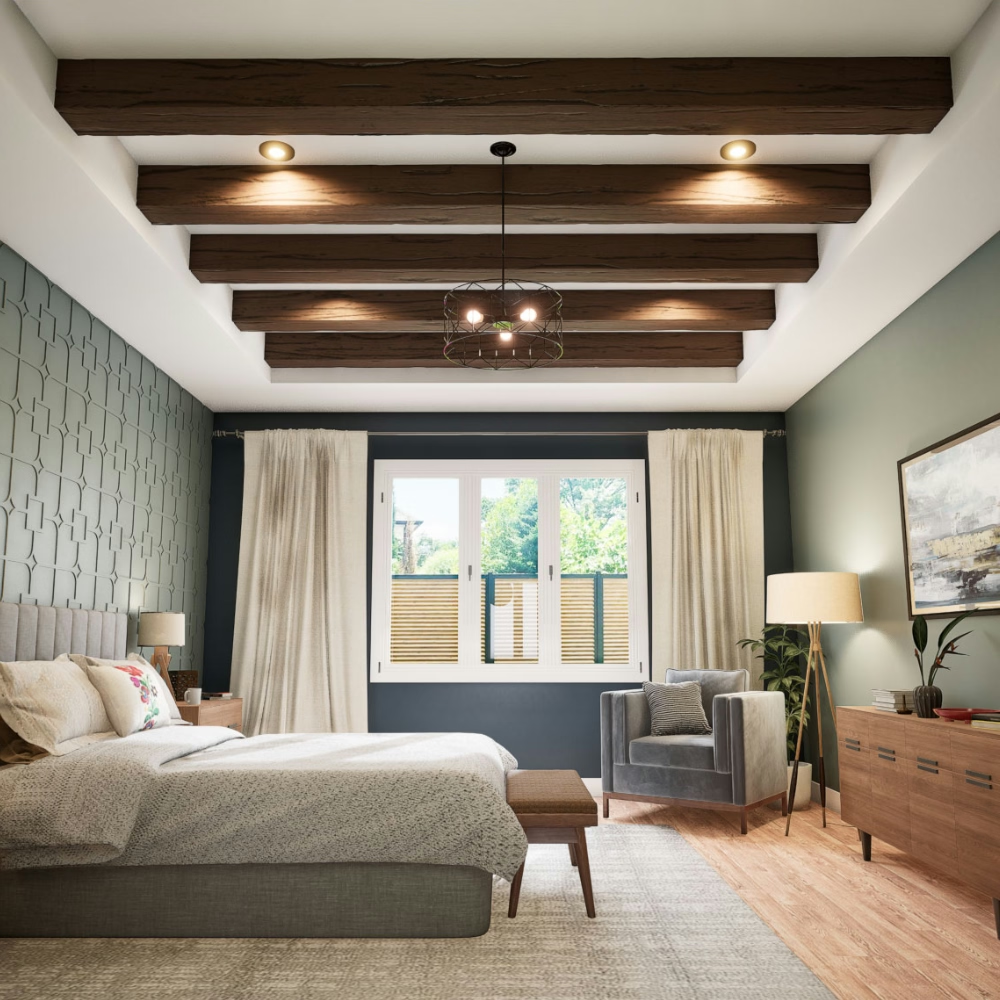
Interior beam installations face relatively benign conditions compared to exterior applications. Real wood used outdoors experiences accelerated degradation from UV radiation, precipitation, temperature extremes, and freeze-thaw cycling. Even protected exterior locations like covered porches see wood beams deteriorate faster than interior equivalents.
Exterior applications represent an area where PU faux wood beams dramatically outperform natural timber. Premium products include UV stabilizers that resist photodegradation, waterproof construction that prevents water intrusion damage, and freeze-thaw resistance that survives temperature cycling without cracking. These characteristics enable exterior beam installations that would quickly fail with natural wood.
The distinction matters for certain applications specifically. Pool enclosures, outdoor kitchens, covered patios, and similar structures benefit from materials that survive weather exposure gracefully. PU beams enable design intentions that natural wood cannot reliably execute, expanding the range of possible applications for decorative beams.
Thermal Expansion Characteristics
Temperature changes cause all materials to expand and contract, but the magnitude and consequences vary significantly. Real wood has relatively high thermal expansion coefficients, meaning noticeable dimensional changes with temperature swings. Combined with moisture-related movement, wood beams experience substantial stress during thermal cycling.
Polyurethane's thermal expansion is minimal and well-controlled. The material maintains dimensions across typical temperature ranges without the stress accumulation that affects wood. This stability benefits installations in areas with temperature variation, including spaces near heat sources like kitchens or below unconditioned attics.
The practical benefit is joint integrity over time. Wood beams under thermal stress gradually work fasteners loose, creating squeaks, gaps, and eventual failure. PU beams maintain fastener engagement indefinitely, preserving installation quality throughout extended service. The difference becomes apparent in buildings where temperature control varies substantially.

Fire Performance Characteristics
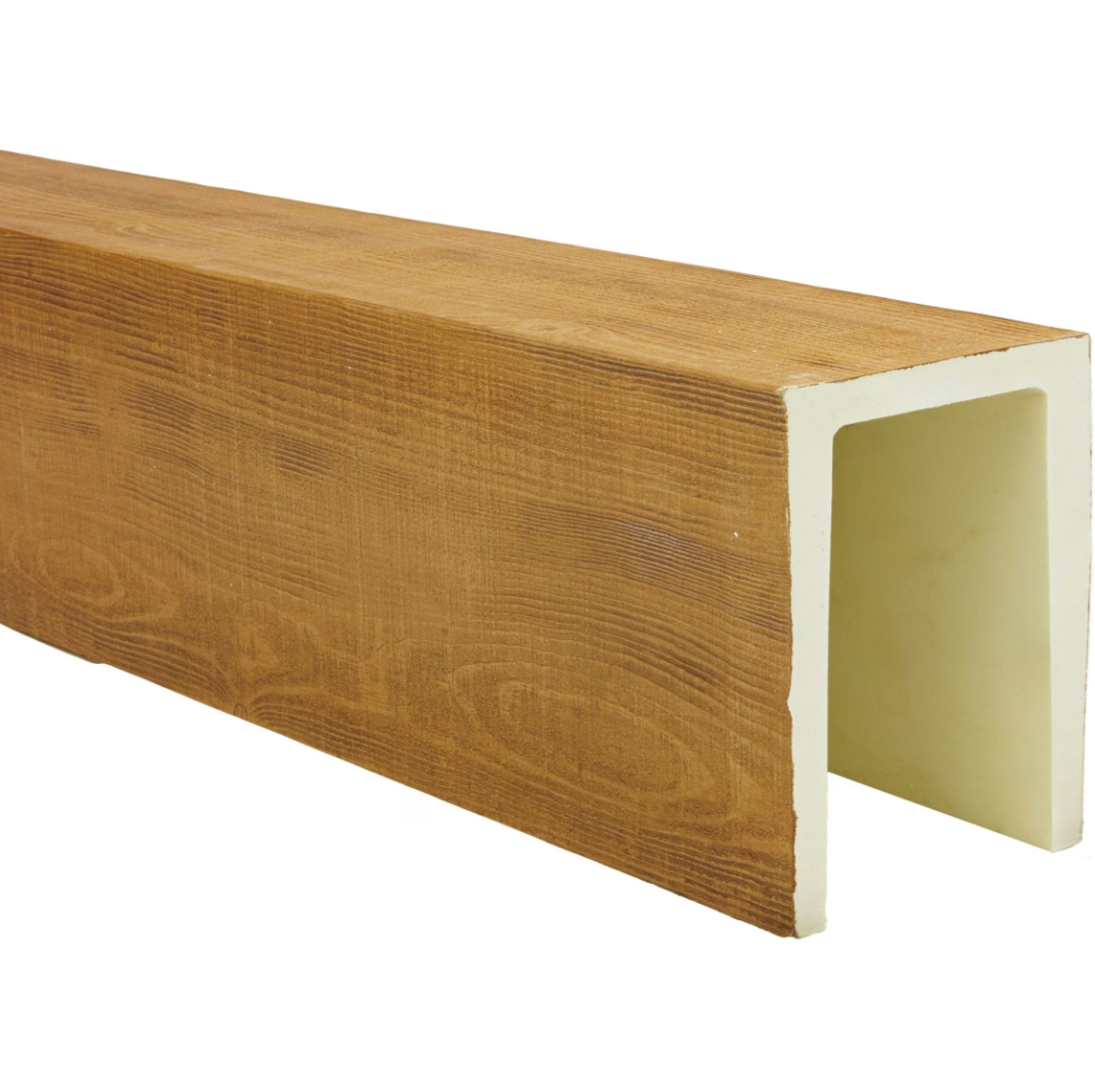
Building codes increasingly emphasize fire safety, and materials choice directly impacts fire risk. Real wood burns readily and contributes to flame spread, creating inherent safety concerns in certain applications. While fire-retardant treatments exist for wood, they add cost and may require reapplication.
Quality PU faux wood beams incorporate fire retardant chemistry during manufacturing. These additives reduce flammability, limit flame spread, and minimize smoke development during fire exposure. Many products achieve Class A fire ratings—the highest classification available for building materials. This performance provides meaningful safety benefits and may simplify code compliance.
The consistency of fire performance across a PU beam installation also matters. Natural wood's fire characteristics vary with species, moisture content, and grain orientation. Manufactured products deliver predictable, uniform fire performance throughout an installation, enabling accurate safety assessments and reliable code compliance.
Lifecycle Cost Comparison
Initial material prices don't tell the full cost story for any building material. Lifecycle costs include installation, maintenance, repair, replacement, and disposal—expenses that accrue throughout a product's service life. Comprehensive comparison reveals that PU faux wood beams often prove more economical despite potentially higher initial prices.
Installation costs favor PU substantially. Lighter weight reduces labor requirements. Easier handling speeds installation. No specialized equipment needed. These factors combine to reduce installation expenses significantly compared to timber alternatives. For commercial projects with many installations, the cumulative savings can be substantial.
Maintenance costs for real wood include periodic inspection, cleaning, refinishing, and repairs. Over a thirty-year period, these expenses can exceed the original material cost several times over. PU beams need only occasional cleaning—no refinishing, no repairs, no replacement. The maintenance cost differential alone may justify the initial price premium.
Replacement costs for wood beams can be substantial, particularly for ceiling installations that require scaffold or lift equipment to access. The disruption to building operations, the cost of equipment and labor, and the risk of damage during removal all add to replacement expenses. PU beams installed once should never need replacement, eliminating these costs entirely.
Design Flexibility Advantages
Natural wood limits design options through inherent material constraints. Available sizes depend on timber availability. Profiles are limited to what sawing can produce. Custom shapes require extensive milling operations. Specific colors require available stain grades or expensive custom finishing. These limitations constrain what designers can achieve.
Polyurethane manufacturing accommodates virtually any shape or size through mold-making processes. Custom profiles can be produced economically even for single installations. Non-standard dimensions can be specified without premium pricing for rare sizes. Color matching achieves accuracy impossible with natural materials that vary piece to piece.
This flexibility enables architectural visions that natural wood forecloses. Designers can specify exact beam proportions, unique profiles, and precise colors without compromise. The material serves the design rather than constraining it, expanding possibilities rather than limiting them.
Consistency and Quality Control
Natural materials inherently vary. Every tree is different, and wood from the same tree varies by location within the trunk, by growth ring spacing, and by countless environmental factors. This variability affects both appearance and performance, creating uncertainty that manufactured products eliminate.
Polyurethane beams are identical by design. Each beam emerges from the mold with consistent dimensions, texture, and color. Quality control ensures every product meets specifications. Installers know exactly what they're working with; designers know exactly what appearance to expect. This predictability simplifies project planning and execution.
The value of consistency becomes apparent in large installations. Spanning beams across a long room or installing multiple pieces throughout a property requires visual coherence that natural materials struggle to provide. PU beams deliver consistent appearance automatically, ensuring cohesive design execution throughout.
The reasons why polyurethane faux wood beams outperform real wood span practical performance, economic considerations, and design flexibility. These synthetic products represent material engineering applied to solve real problems that natural wood presents. The comprehensive advantages they offer explain their growing adoption across residential and commercial applications.
Choosing between natural and synthetic materials requires understanding what each offers, not relying on assumptions about manufactured versus organic origins. The evidence consistently demonstrates that PU faux wood beams deliver superior outcomes across the dimensions that matter most to building owners, contractors, and designers.
Technical References
ASTM standards cited in every specification
Test Data
Lab results from internal testing program
Updated 2026
Reviewed against current product specs


